Zip Blind Fabrics: Technical Textiles, Openness Factors & Performance Data
Last updated:
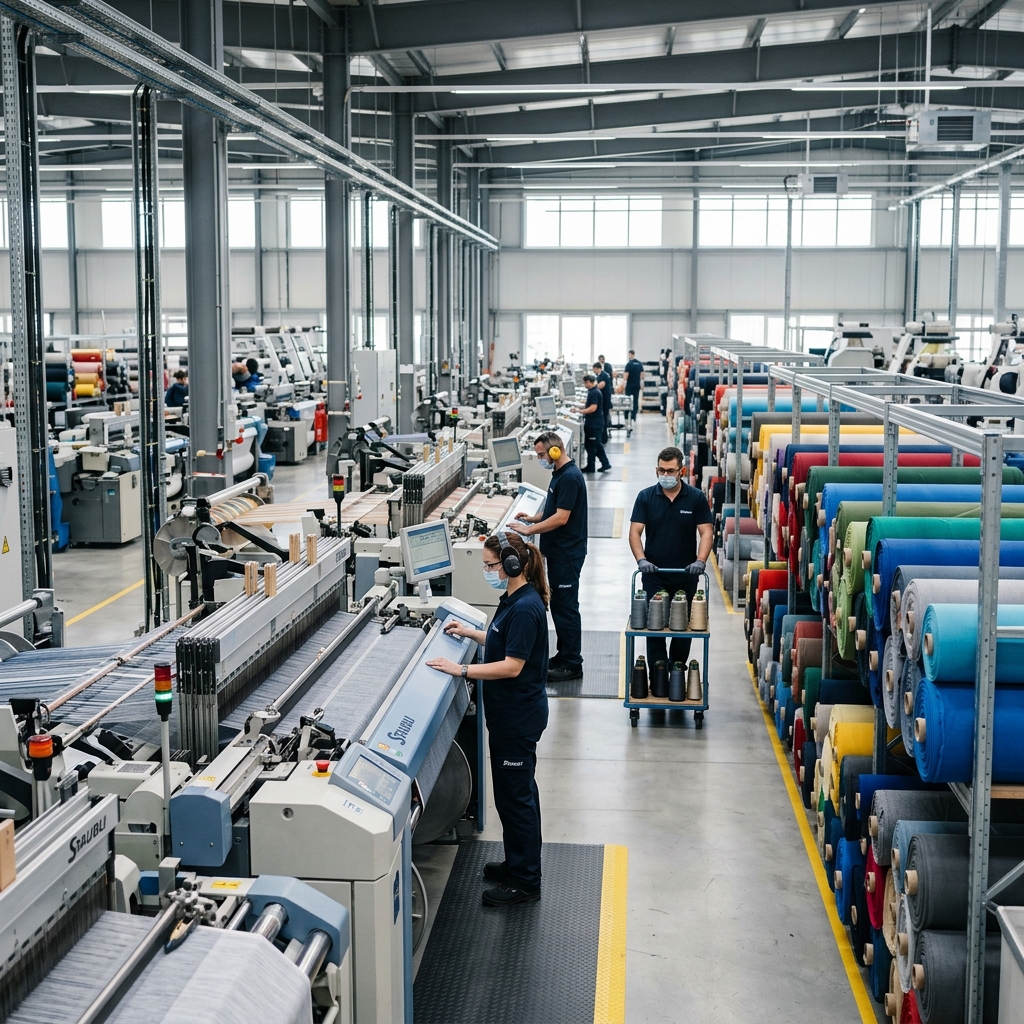
The fabric is the most performance-critical component of a zip blind system. Unlike decorative interior curtains, zip blind fabrics are engineered technical textiles designed to withstand UV radiation, wind load, temperature extremes, and repeated mechanical cycling over 10–15 years of outdoor use.
Selecting the correct fabric for a commercial project requires understanding openness factor, solar performance, fire rating, and material composition — not just color and aesthetics. Send your opening size, orientation and wind exposure and we will match fabric openness and weight to the application through request a quote, quoting the textile and the finished screen together.
Table of Contents
- Openness Factor: The Key Variable
- Fabric Materials: PVC, Fiberglass, HDPE
- Solar Performance Data
- Fire Ratings for Commercial Use
- Color & Aesthetics
- Fabric Maintenance & Lifespan
- Frequently Asked Questions
1. Openness Factor: The Key Variable
The openness factor (OF) is the percentage of the fabric surface that is open (perforated or woven with gaps). It is the single most important specification for zip blind fabric selection.
| Openness Factor | Solar Rejection | UV Blockage | Outward Visibility | Best Application |
|---|---|---|---|---|
| 1% | 99% | 99% | Very limited | Maximum sun control, privacy |
| 3% | 95% | 99% | Good | Standard commercial, restaurants |
| 5% | 90% | 98% | Excellent | View preservation, offices |
| 10% | 80% | 95% | Maximum | Insect protection, light filtering |
| 14% | 70% | 90% | Full | Minimal shading, maximum airflow |
Important: A lower openness factor does NOT mean less ventilation. Zip blind fabrics are "breathing" textiles — air circulates through the micro-perforations regardless of openness factor. The openness factor primarily affects light transmission and solar heat rejection.
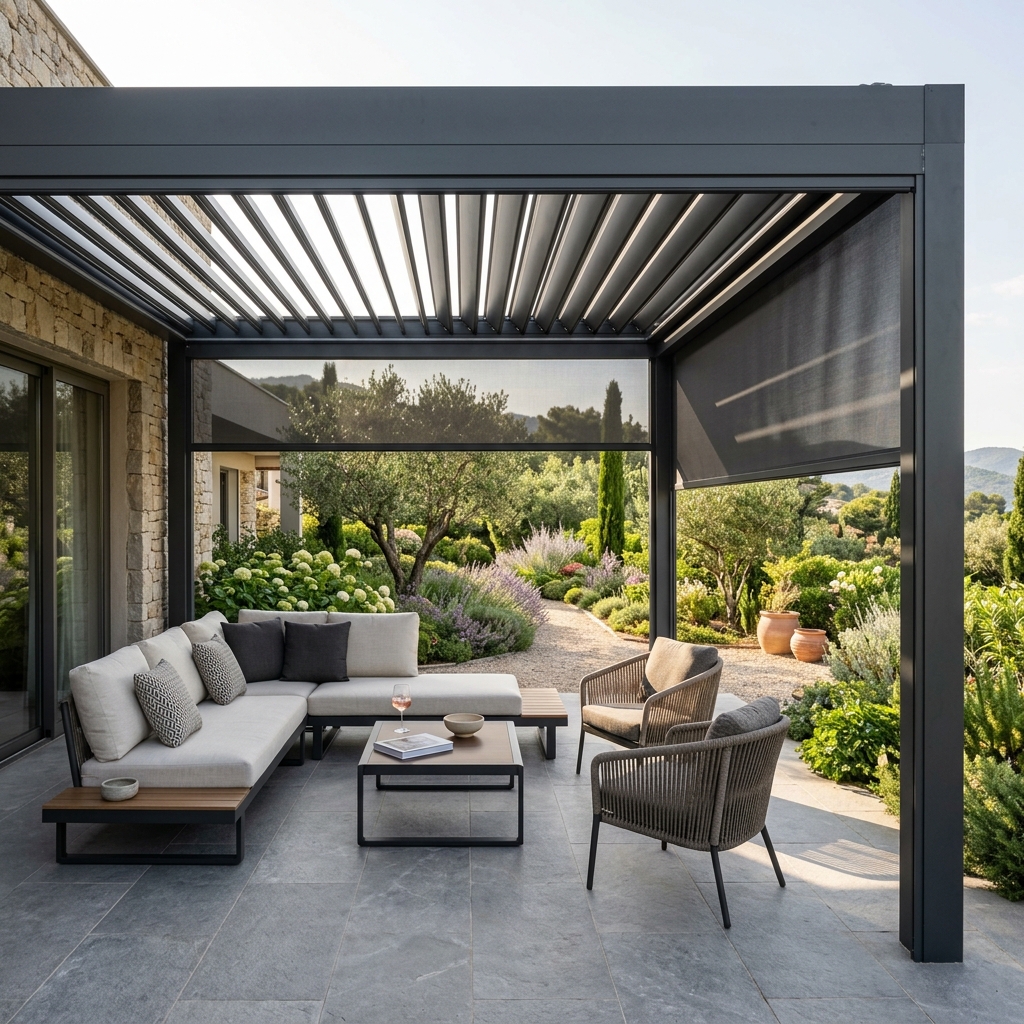
Visibility principle: Zip blind fabrics are designed so that occupants can see outward (from darker interior to brighter exterior) while preventing visibility from outside inward. This provides privacy without blocking the view.
2. Fabric Materials
PVC-Coated Polyester (Most Common)
The standard material for commercial zip blind applications.
Construction: Polyester yarn base fabric, coated on both sides with PVC compound, heat-welded at edges.
Properties:
- Tensile strength: 2,500–4,000 N/5cm (warp and weft)
- Tear resistance: 200–400 N
- Weight: 400–900 g/m²
- Temperature range: -20°C to +70°C
- Lifespan: 8–15 years (outdoor)
Disadvantages: Not recyclable, can become brittle in extreme cold, heavier than alternatives.
Fiberglass (Glass Fiber)
Premium material for applications requiring fire resistance or dimensional stability.
Properties:
- Fire rating: Class B1 (DIN 4102) — self-extinguishing
- Dimensional stability: No stretching or shrinkage
- Temperature range: -30°C to +80°C
- Lifespan: 10–20 years
Disadvantages: More expensive, cannot be welded (requires mechanical zipper attachment), less flexible (can crack if folded sharply).
Required for: Hotels, restaurants, and commercial buildings where fire regulations mandate Class B1 or better fabric.
HDPE (High-Density Polyethylene)
Lightweight, eco-friendly option for residential and light commercial use.
Properties:
- Weight: 200–350 g/m²
- UV stabilized: 10-year UV resistance
- Recyclable: 100% recyclable at end of life
- Temperature range: -15°C to +60°C
Disadvantages: Lower tensile strength than PVC, not suitable for high-wind environments, limited color range.
3. Solar Performance Data
Solar performance is measured by three key metrics:
Solar Factor (g-value): The fraction of total solar energy that passes through the fabric. Lower = better solar control.
Solar Transmittance (Ts): Direct solar radiation transmitted through the fabric.
Solar Reflectance (Rs): Solar radiation reflected by the fabric surface.
| Fabric Type | OF | g-value | Ts | Rs | Energy Saving |
|---|---|---|---|---|---|
| Dark 1% | 1% | 0.05 | 3% | 72% | 35–40% |
| Grey 3% | 3% | 0.10 | 8% | 65% | 25–35% |
| White 5% | 5% | 0.15 | 12% | 60% | 20–30% |
| Beige 10% | 10% | 0.25 | 20% | 50% | 15–25% |
Color effect on solar performance: Darker colors absorb more solar radiation (higher surface temperature) but reflect less into the interior. Lighter colors reflect more solar radiation but transmit slightly more. For maximum solar heat rejection, dark colors with low openness factor are most effective.
4. Fire Ratings for Commercial Use
Commercial buildings in the EU require fabric materials to meet specific fire performance standards:
| Standard | Classification | Requirement |
|---|---|---|
| DIN 4102 | Class B1 | Flame-retardant (Germany) |
| EN 13501-1 | Class C-s2,d0 | EU standard |
| BS 5867 | Type C | UK standard |
| NFPA 701 | Pass | USA standard |
For HoReCa projects: Always specify fire-rated fabric (Class B1 or equivalent) for restaurants, hotels, and public spaces. Building inspectors and fire authorities require documentation of fabric fire rating for commercial occupancy permits.
Fiberglass fabrics inherently meet Class B1 requirements. PVC-coated polyester requires fire-retardant additives in the PVC compound — verify with the manufacturer's test certificate.
5. Color & Aesthetics
Zip blind fabrics are available in hundreds of colors. Standard commercial color families:
- Neutral tones (white, cream, beige, grey, anthracite) — most popular for commercial projects
- Earth tones (sand, terracotta, brown) — popular for Mediterranean and resort settings
- Dark tones (charcoal, black) — maximum solar rejection, modern aesthetic
- Custom colors — RAL color matching available for large orders (minimum 500 m²)
- Lighter colors reflect more heat but show dirt more easily
- Darker colors absorb more heat (fabric surface temperature can reach 60–70°C in direct sun)
- Neutral greys provide the best balance of solar performance and aesthetics
- Consider the view from inside — fabric color affects the color cast of outward visibility
6. Fabric Maintenance & Lifespan
Cleaning procedure:
- Brush off loose dirt when fabric is dry
- Prepare mild soap solution (pH neutral, no solvents)
- Apply with soft brush or sponge
- Rinse thoroughly with clean water
- Allow to dry completely before retracting into cassette
Lifespan factors:
- UV exposure (south-facing installations degrade faster)
- Cleaning frequency (regular cleaning extends life significantly)
- Storage (cassette systems protect fabric when retracted)
- Coastal environments (salt air accelerates degradation — rinse with fresh water regularly)
Frequently Asked Questions
What openness factor should I choose for a restaurant terrace?
For restaurant terraces, 3–5% openness factor is the standard recommendation. This provides 90–95% solar heat rejection (keeping the terrace comfortable in summer), good outward visibility for diners, and complete insect protection. If the terrace has a particularly scenic view, 5–10% may be preferred to maximize visibility.Is fiberglass fabric required for commercial restaurants?
In most EU countries, fire-rated fabric (Class B1 or equivalent) is required for commercial food service establishments. Fiberglass fabric inherently meets this requirement. Fire-retardant PVC fabric also meets the requirement but requires a manufacturer's fire test certificate. Always check local building regulations and consult with the fire authority before specifying fabric for commercial projects.How often does zip blind fabric need to be replaced?
With proper maintenance, PVC-coated polyester fabric lasts 8–15 years in outdoor commercial use. Fiberglass fabric lasts 10–20 years. Factors that reduce lifespan: constant direct sun exposure, coastal salt air, infrequent cleaning, and storing fabric wet. A cassette housing that protects the fabric when retracted can extend lifespan by 30–50%.Can zip blind fabric be custom printed with logos or patterns?
Yes. Digital printing on zip blind fabric is available for large orders (typically minimum 100 m²). Printed fabric is used for branded restaurant terraces, retail storefronts, and event installations. UV-resistant inks are used to prevent fading. Note that printed fabric typically has a shorter lifespan than solid-color fabric due to ink degradation.More Frequently Asked Questions
Do you work with hotel chains and project buyers?Yes — we supply hospitality projects, distributors and multi-property programs.
Can systems be customized to site dimensions?
Yes — measure-based manufacturing is standard for ZIP screens, pergolas and many FF&E items.
What about motors and automation?
Somfy and comparable motor/control packages are available; integration scope defined per project.
Do you ship internationally?
Yes — FOB/CIF/DAP worldwide with export packing suited to the product.
How do we get project pricing?
RFQ with drawings, quantities, finishes and destination port.
For project-specific terms, contact WorldwideTradeX via RFQ.
← Zip Blind Systems: Complete B2B Guide for HoReCa & Commercial Projects