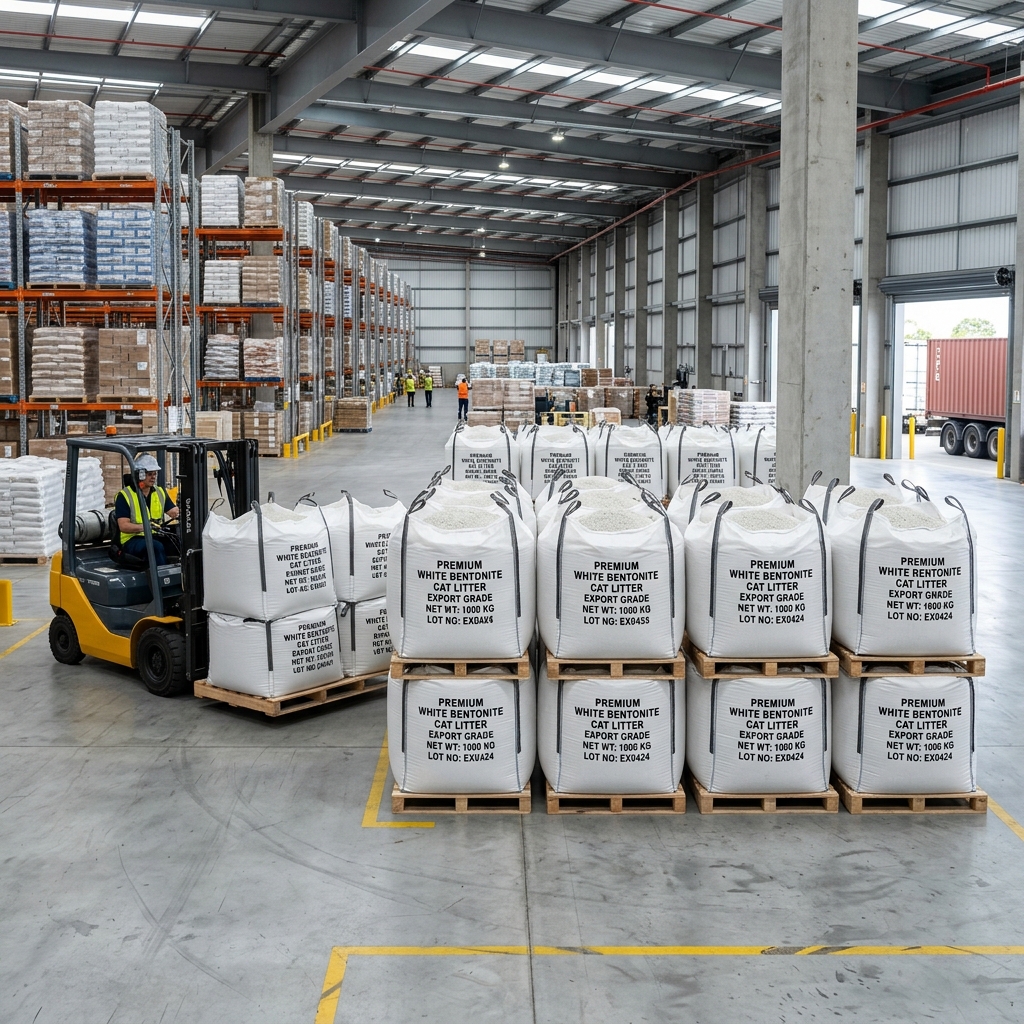
Bentonite Mine Turkey
Last updated:
The source of white bentonite cat litter: Turkey's Ordu-Fatsa region, typical technical ranges, mine-to-product process and how origin affects quality.
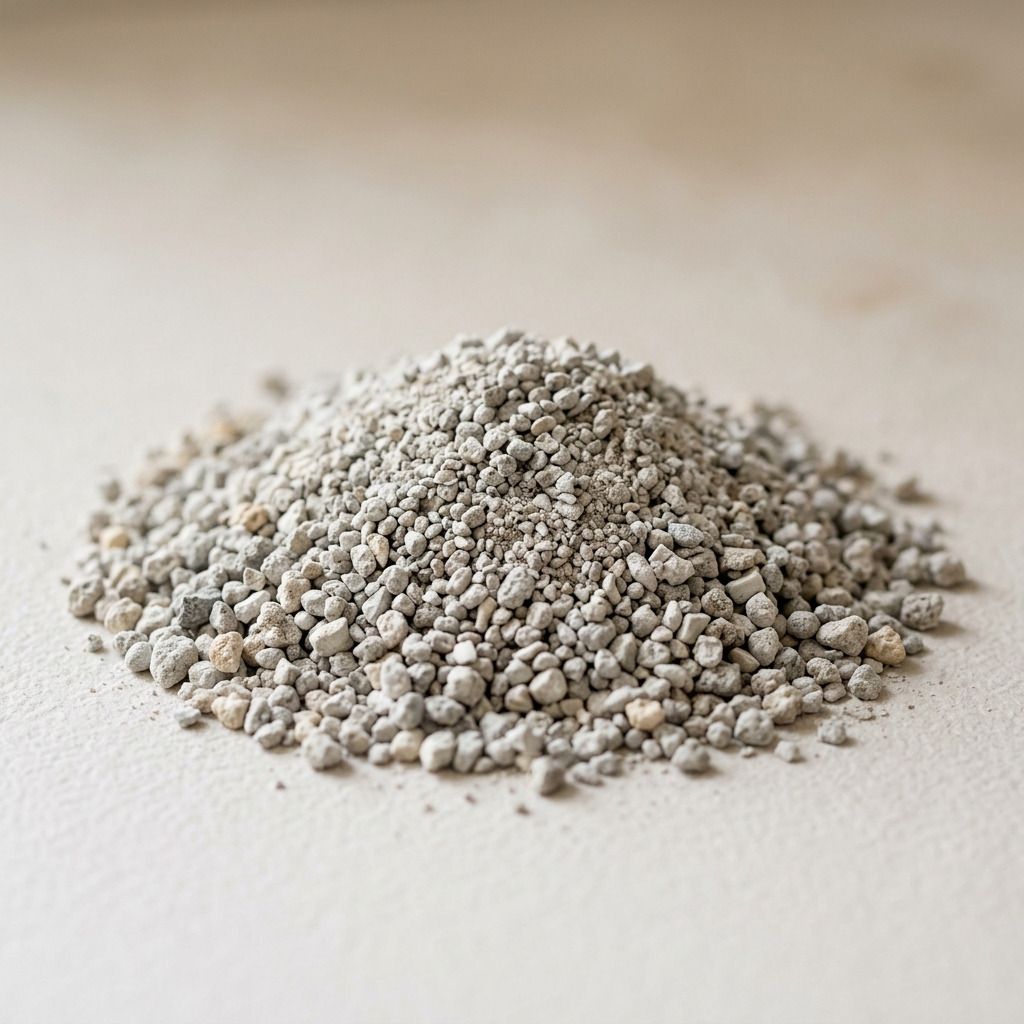
The Ordu-Fatsa corridor in northern Turkey is one of the best-known white bentonite sources: a calcium bentonite region whose formations are prized for high Montmorillonite content and a naturally white color. Percentage reserve claims circulating in marketing material are rarely documented — verify any figure against official statistics and the producer's current reports. This page explains why the region is known, which technical ranges are considered typical, and how mine origin affects litter quality. To discuss volumes and specifications, request a quote.
The Geology of Ordu-Fatsa White Bentonite
White bentonite forms through the hydrothermal alteration of volcanic ash (primarily rhyolitic tuff) under specific temperature, pressure, and chemical conditions. The Ordu-Fatsa region's Miocene-age volcanic deposits underwent ideal alteration conditions, producing calcium bentonite with:
- Montmorillonite content typically quoted at 85–95% — confirm per deposit and party
- Calcium-dominated exchange complex — the basis of the region's white-litter reputation
- Minimal iron (Fe₂O₃) impurities — the origin of the natural white color
- Consistent deposit depth and thickness — reliable large-scale extraction
Mine-to-Product Process
The production chain from mine to finished cat litter involves:
- Open-pit mining — bentonite extracted from surface deposits
- Primary crushing — raw ore reduced to manageable size
- Drying — moisture reduced to the target level for processing
- Milling — ore ground to target particle size
- Sieving and classification — granule size fractions (e.g. 0.5–1.5 mm, 0.5–2.0 mm, 0.5–2.5 mm)
- Quality testing — Montmorillonite content, moisture, bulk density, pH verification
- Scent/additive application — fragrance or activated carbon added if specified
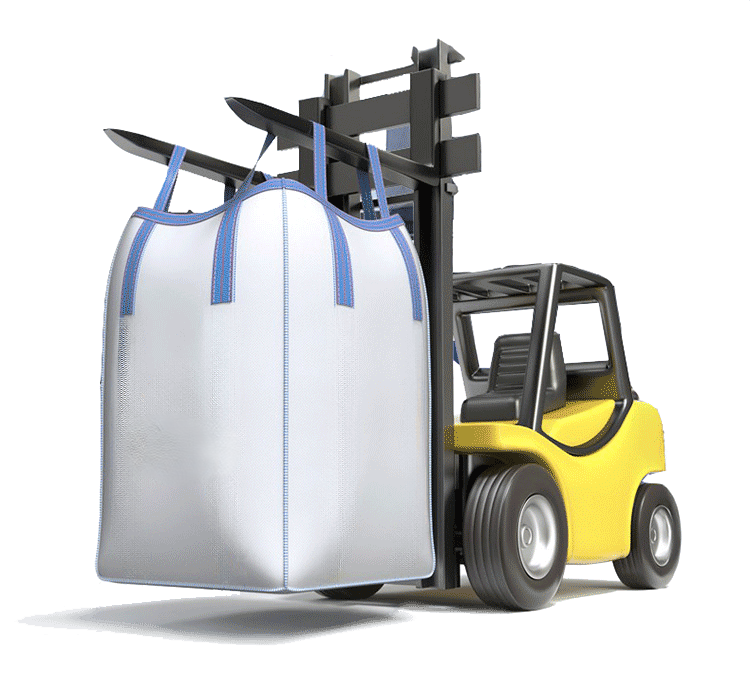
- Packaging — automated filling into retail bags or big bags
Why Mine Origin Matters for Cat Litter Quality
The quality of bentonite cat litter is fundamentally determined by the mineral source. Unlike synthetic cat litters (silica gel, wood pellets, paper), bentonite performance cannot be engineered — it is inherent to the mineral's geological properties.
Montmorillonite content is the key variable:
| Variable | Why it matters | How to verify |
|---|---|---|
| Montmorillonite content | Drives swelling and clump strength | Current CoA; test method (XRD or methylene blue) |
| Granule fraction | Affects tracking and scooping behaviour | Sample test with your own protocol |
| Moisture | Affects weight, durability and clumping | Batch CoA; tolerance defined in contract |
| Bulk density | Determines container payload and logistics | Producer specification |
| Color | Critical for white formulations | Colour reference fixed with an approved sample |
| Dust | Measurable end-user quality factor | Standardised test on the approved sample |
Consistency from batch to batch is what turns a good deposit into a reliable supply: approve a reference sample, require the batch reference on crate labels, and compare every lot against the approved sample.
Frequently Asked Questions
Where exactly is the white bentonite mine located?
The primary white bentonite deposits are in the Fatsa-Ünye corridor of Ordu province, on Turkey's Black Sea coast. The region lies east of Samsun on the Black Sea coast and has direct access to Black Sea shipping routes, which keeps export logistics straightforward.What makes Ordu-Fatsa bentonite different from other Turkish bentonite?
Ordu-Fatsa material is calcium-dominated and known for its natural white color; other Turkish deposits (Ankara, Eskişehir, Çankırı regions) show different mineralogical and colour profiles. Which source fits which application is determined by batch-level testing of Montmorillonite content and granulometry — a comparison of samples, not a general ranking.Is the bentonite mining environmentally regulated?
Yes. Bentonite mining in Turkey is regulated by the Turkish Ministry of Energy and Natural Resources under the Mining Law No. 3213. Environmental impact assessments are required for all mining operations. The open-pit mining method used for bentonite has a relatively low environmental footprint compared to underground mining.Can buyers visit the mine and production facility?
Yes. Site visits for qualified buyers and distributors can be arranged. WorldwideTradeX coordinates mine and production facility visits as part of the supplier qualification process for large-volume buyers.Supply Terms
- MOQ: typically full container (FCL); the exact minimum is fixed in the quotation
- Incoterms: FOB Ordu/Fatsa or CFR destination port
- HS Code: HS 2508.10 (bentonite, raw or processed)
- Payment: common pattern for first orders is advance before production + balance against shipping documents; LC (UCP 600) is negotiable for established buyers
More Frequently Asked Questions
What MOQ applies to chemical products?
Often container-scale (big bags, 50 kg sacks or bulk). Confirm per product in your RFQ.
Do you provide analysis certificates?
Yes — CoA per lot is standard; third-party inspection available on request.
How is moisture/fouling controlled in transit?
Proper packing, dry holds/containers and handling guidelines are specified per product.
Are private label packs available?
Retail and distributor branding is possible on selected lines subject to MOQ.
How is pricing determined?
Market-based with volume, packing and Incoterm factors — issued via RFQ.
For project-specific terms, contact WorldwideTradeX via RFQ.
For quantities, specifications and delivery schedules, contact us or call +90 505 679 78 03 — offers are prepared against your specification and destination port.