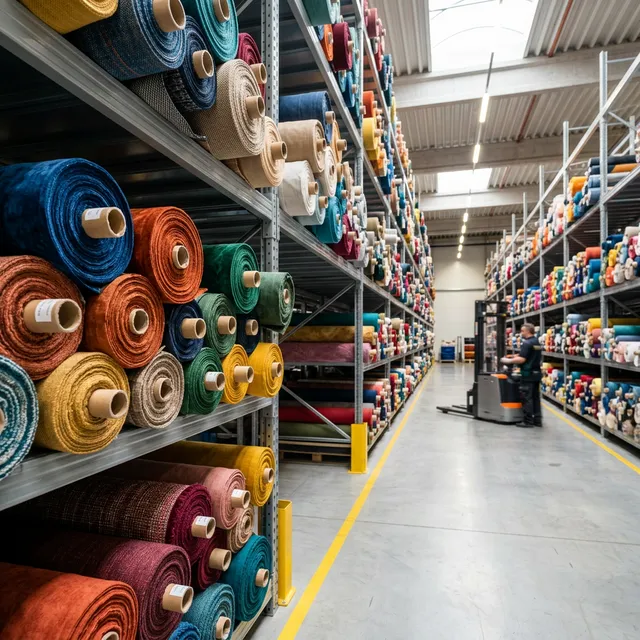
Navigating the complexities of global trade, especially when importing sensitive and high-value commodities like fabrics and textiles, demands a logistics partner with specialized expertise. At WorldwideTradeX, we understand that the timely, safe, and compliant delivery of your textile goods is paramount to your business's success. We are not fabric sellers; our sole focus is on providing comprehensive, end-to-end logistics solutions for businesses looking to import fabrics and textiles from China.
Our services are meticulously designed to streamline the entire import process, from factory gate in China to your warehouse in Russia, CIS countries, Turkey, or the Middle East. We leverage our extensive network, deep industry knowledge, and technological capabilities to offer a seamless experience, encompassing freight forwarding, intricate customs clearance, essential quality inspection, efficient cargo consolidation, and reliable door-to-door delivery. Trust us to transform complex supply chain challenges into smooth, predictable, and cost-effective operations for your valuable fabric shipments.
Table of Contents
- Why Use a Specialist Logistics Partner for Fabric Imports
- Our Fabric Logistics Services
- Freight Forwarding for Textiles
- Customs Clearance Expertise for Fabrics
- Quality Inspection for Textile Shipments
- Fabric Consolidation Services
- Warehousing & Distribution
- Door-to-Door Fabric Delivery
- China to Russia Textile Logistics
- China to CIS Fabric Shipping
- China to Turkey Textile Freight
- China to Middle East Fabric Logistics
- Quality Inspection Services
- Packaging & Container Loading
- Service Comparison: FCL vs LCL vs Express for Fabric Shipping
- Frequently Asked Questions (FAQ)
- Get a Freight Quote — Fabric & Textile Logistics
Why Use a Specialist Logistics Partner for Fabric Imports
Importing fabrics and textiles from China is far more intricate than simply moving general cargo. These goods possess unique characteristics that demand specialized handling, precise documentation, and a deep understanding of international trade regulations. Without an experienced logistics partner, businesses can face significant delays, unexpected costs, quality issues, and compliance risks that could jeopardize their supply chain and bottom line. This is where a dedicated `fabric logistics from China` expert becomes indispensable.
A specialist logistics provider, like WorldwideTradeX, offers unparalleled advantages. We possess a nuanced understanding of textile properties, from delicate silks requiring climate control to bulky denim needing robust packaging. Our expertise ensures that your goods are not only transported efficiently but also handled with the utmost care to prevent damage, moisture, or contamination. We navigate the ever-evolving `China fabric import logistics` landscape, including regional shipping nuances and specific port requirements, ensuring your cargo moves smoothly.
Beyond physical handling, our specialized knowledge extends to the complex web of customs regulations, tariffs, and product classifications specific to textiles in various destination countries. Incorrect HS codes or missing certifications can lead to substantial fines, seizure of goods, or costly delays. By partnering with us, you gain a vigilant ally who anticipates potential roadblocks, proactively manages documentation, and ensures strict compliance, minimizing risks associated with `textile customs clearance`. We transform potential headaches into a streamlined, reliable, and cost-effective import process, allowing you to focus on your core business: selling quality textiles.
Our Fabric Logistics Services
At WorldwideTradeX, we offer a comprehensive suite of services specifically tailored to meet the demands of `fabric logistics from China`. Our integrated solutions cover every aspect of the supply chain, ensuring your textile shipments arrive safely, on time, and within budget to Russia, CIS countries, Turkey, and the Middle East.
Freight Forwarding for Textiles
Whether you need to transport small fabric samples or multiple container loads of raw materials, our freight forwarding services are designed for flexibility and efficiency. We optimize routes and select the best carriers, providing options for:
- Sea Freight (FCL/LCL): The most cost-effective solution for bulk fabric shipments. We manage both Full Container Load (FCL) for large volumes and Less than Container Load (LCL) for smaller, consolidated shipments, ensuring optimal space utilization and cost savings. This is crucial for `FCL LCL fabric shipping`.
- Air Freight: For urgent fabric orders or high-value textiles, air freight offers the fastest transit times, connecting major production hubs in China to key destinations across Russia, CIS, Turkey, and the Middle East.
- Rail Freight: Particularly effective for `textile freight forwarding China to Russia` and CIS countries, offering a balanced combination of speed and cost-efficiency compared to sea freight, often with shorter lead times and direct connections.
- Multimodal Transport: Combining various modes to create the most efficient and economical route for your specific textile cargo.
Customs Clearance Expertise for Fabrics
Navigating the intricate customs regulations for textile imports can be daunting. Our dedicated team of customs brokers specializes in `textile customs clearance` for various destination countries. We handle all necessary documentation, tariff classifications (HS Codes), duty calculations, and compliance checks to prevent delays and ensure seamless entry. We stay updated on the latest import policies, quotas, and specific requirements for fabrics, preventing costly mistakes and facilitating a smooth process.
Quality Inspection for Textile Shipments
Protecting the quality of your fabric investment is paramount. We offer independent quality inspection services at various stages of your supply chain in China. Our experienced inspectors verify product specifications, identify potential defects, confirm quantities, and ensure proper packaging before shipment. This proactive approach minimizes risks, prevents costly returns, and safeguards your brand reputation.
Fabric Consolidation Services
For buyers with multiple suppliers in China or smaller order volumes, our consolidation services offer significant cost savings. We collect fabric shipments from various factories, combine them into a single FCL or LCL consignment, and then ship them to your destination. This reduces per-unit shipping costs, streamlines customs procedures, and minimizes administrative overhead, making `China fabric import logistics` more efficient for smaller businesses.
Warehousing & Distribution
Beyond transportation, we provide comprehensive warehousing and distribution solutions in China and at destination hubs. This includes short-term storage, cross-docking, inventory management, and preparing your fabric goods for onward distribution. Our secure facilities ensure your textiles are protected until they reach their final destination.
Door-to-Door Fabric Delivery
Our ultimate goal is to provide a hassle-free experience. Our door-to-door fabric delivery service ensures that once your order is ready at the Chinese factory, we manage every step until it arrives safely at your designated warehouse or facility. This includes pickup, international shipping, customs clearance at both ends, and final delivery, offering you complete peace of mind and a single point of contact for your entire `fabric logistics from China` operation.
Shipping Routes & Transit Times (China → Russia/CIS/Turkey/Middle East)
Understanding the optimal shipping routes and realistic transit times is crucial for effective supply chain planning, especially when dealing with the fast-paced world of fashion and textile production. WorldwideTradeX specializes in connecting China's vast textile manufacturing hubs with key markets across Russia, CIS, Turkey, and the Middle East. Our expertise in `textile freight forwarding China to Russia` and other regions ensures you receive reliable transit estimates and efficient service.
China to Russia Textile Logistics
Russia is a significant market for Chinese textiles, and we offer diverse routes to accommodate varying needs for speed and cost:
- Rail Freight (Trans-Siberian Route): A highly efficient option, particularly for central and western Russia.
- Origin Ports: Chongqing, Chengdu, Xi'an, Zhengzhou, etc.
- Destination Stations: Moscow, St. Petersburg, Yekaterinburg.
- Transit Time: Approximately 18-25 days from terminal to terminal.
- Sea Freight: The most economical choice for bulk shipments.
- Origin Ports: Shanghai, Ningbo, Qingdao, Tianjin, Guangzhou.
- Destination Ports: Vladivostok (with onward rail/road to western Russia), St. Petersburg (via Suez Canal).
- Transit Time: 35-45 days to St. Petersburg, 25-35 days to Vladivostok (excluding onward journey).
- Air Freight: For urgent deliveries.
- Origin Airports: Shanghai (PVG), Beijing (PEK), Guangzhou (CAN).
- Destination Airports: Moscow (SVO, DME), St. Petersburg (LED).
- Transit Time: 5-9 days.
China to CIS Fabric Shipping
Shipping `fabric logistics from China` to CIS countries (e.g., Kazakhstan, Uzbekistan, Kyrgyzstan, Belarus) often leverages multimodal solutions:
- Rail Freight: Direct rail connections are robust, primarily through Kazakhstan.
- Origin Points: Major Chinese rail hubs.
- Destination: Almaty, Tashkent, Minsk.
- Transit Time: 15-25 days.
- Road Freight: Often used in combination with rail or for specific landlocked destinations.
- Multimodal (Sea + Rail/Road): Shipments typically arrive at Black Sea ports (e.g., Poti, Batumi) or Baltic ports (e.g., Klaipeda) and then proceed by road or rail.
- Transit Time: Varies widely from 30-50 days depending on the final destination.
China to Turkey Textile Freight
Turkey, a major textile producer and consumer, imports significant volumes of fabric from China:
- Sea Freight: The primary mode for `China fabric import logistics` to Turkey.
- Origin Ports: Shanghai, Ningbo, Qingdao, Shenzhen.
- Destination Ports: Istanbul (Ambarli, Marport), Izmir, Mersin.
- Transit Time: 25-35 days for direct services.
- Air Freight: For time-sensitive, high-value textile goods.
- Origin Airports: Major Chinese international airports.
- Destination Airports: Istanbul (IST), Ankara (ESB).
- Transit Time: 5-8 days.
China to Middle East Fabric Logistics
The Middle East market (e.g., UAE, Saudi Arabia, Qatar) is characterized by a strong demand for diverse fabrics:
- Sea Freight: Most common and cost-effective.
- Origin Ports: Shanghai, Ningbo, Shenzhen, Guangzhou.
- Destination Ports: Jebel Ali (Dubai), King Abdullah Port (Saudi Arabia), Hamad Port (Qatar).
- Transit Time: 18-30 days to UAE, 25-35 days to other Gulf ports.
- Air Freight: For urgent fashion collections or high-end fabrics.
- Origin Airports: Major Chinese international airports.
- Destination Airports: Dubai (DXB, DWC), Riyadh (RUH).
- Transit Time: 4-7 days.
Customs & Documentation for Textile Imports
Successful `textile customs clearance` is the cornerstone of efficient `China fabric import logistics`. Fabrics and textiles are subject to a complex array of international trade regulations, specific tariffs, and non-tariff barriers that vary significantly from country to country. Mistakes in documentation or classification can lead to severe penalties, delays, and additional costs, impacting your entire supply chain.
WorldwideTradeX specializes in navigating these intricate requirements. Our expert team ensures that every shipment complies with both Chinese export regulations and the import laws of Russia, CIS countries, Turkey, and the Middle East. Key documents and considerations include:
- Commercial Invoice: Detailed description of goods, quantity, unit price, total value, incoterms, and currency. Crucially, specific and accurate descriptions of fabric type (e.g., 100% cotton woven fabric, polyester knit blend) are required.
- Packing List: Itemizes the contents of each package, including dimensions, weight, and marks. For fabrics, this often includes roll numbers, bolt lengths, or bale counts.
- Bill of Lading (B/L) / Air Waybill (AWB): The contract of carriage and title to the goods for sea and air freight respectively.
- Certificate of Origin (COO): Often required to determine eligibility for preferential tariffs under free trade agreements (if applicable) and to verify the manufacturing country. For textiles, this is a critical document.
- Harmonized System (HS) Codes: Accurate classification is paramount. Textiles have highly detailed HS codes that distinguish between raw materials, woven/knitted fabrics, synthetic/natural fibers, finished goods, etc. Misclassification can lead to incorrect duties or customs holds. Our specialists ensure correct HS code application for `textile customs clearance`.
- Import Licenses/Permits: Some textile categories or origins may require specific import licenses, particularly in certain CIS countries or for goods subject to quotas.
- Quality Certificates/Test Reports: Depending on the fabric type and destination country, certificates proving compliance with safety standards (e.g., flammability, azo dyes, formaldehyde content) may be required.
- Phytosanitary Certificates: If fabrics contain natural fibers like cotton, linen, or jute, some countries may require certificates to ensure they are free from pests and diseases.
- Declaration of Conformity: For certain textile products, especially those that come into contact with skin, a declaration that they meet health and safety standards might be needed.
Quality Inspection Services
For businesses importing `fabrics and textiles from China`, ensuring consistent quality is as critical as efficient logistics. Textile products are susceptible to various defects that can arise during manufacturing, handling, or packaging. A single batch of substandard fabric can lead to significant financial losses, production delays, and damage to your brand reputation. This is why WorldwideTradeX integrates robust quality inspection services as a vital component of our `fabric logistics from China` offering.
Our independent quality control team operates directly in China, providing impartial and thorough inspections at different stages of the production and shipping process. This proactive approach helps identify and rectify issues before they escalate, saving you time and money. Our key inspection services include:
- Pre-Production Check (PPC): Before mass production begins, we verify the quality of raw materials, components (e.g., dyes, yarns), and ensure the factory has the necessary equipment and capability to meet your specifications. This minimizes the risk of fundamental errors.
- During Production Inspection (DPI): As production is underway, our inspectors visit the factory to check the initial batches of fabric. We look for consistency in weave/knit, color matching, print accuracy, weight, and general quality against your samples and specifications. This allows for corrective action while production is still active.
- Pre-Shipment Inspection (PSI): This is a comprehensive final check performed when at least 80% of your fabric order is packed and ready for shipment. Our team conducts detailed visual inspections, measures key parameters (e.g., width, length per roll/bolt), verifies quantity, checks colorfastness, inspects for common defects (holes, pulls, stains, misweaves), and ensures the product matches approved samples. This is your last chance to confirm the quality before `FCL LCL fabric shipping`.
- Container Loading Check (CLC): We supervise the loading process at the factory or warehouse in China. This ensures that the correct quantities are loaded, products are properly handled, packaged, and secured within the container to prevent damage during transit. We also verify container integrity and sealing.
Packaging & Container Loading
The journey of `fabric logistics from China` to distant markets involves significant handling, potential temperature fluctuations, and movement. Proper packaging and strategic container loading are not merely logistical steps; they are critical protective measures that ensure your textiles arrive in pristine condition, ready for your production or sales floor. Poor packaging can lead to irreparable damage, moisture absorption, mildew, or contamination, rendering valuable fabric unusable.
Packaging Best Practices for Textiles:
- Moisture Protection: Fabrics are highly susceptible to moisture. We advise and ensure the use of waterproof inner linings (e.g., thick plastic sheeting, vacuum-sealed bags) for fabric rolls, bolts, and bales. Desiccants are often included to absorb ambient humidity, particularly for sea freight.
- Dust & Dirt Barrier: Each fabric unit should be individually wrapped or covered to protect against dust, dirt, and abrasion.
- Rolls vs. Bales vs. Cartons:
- Fabric Rolls: Often wrapped in plastic and then placed in sturdy cardboard tubes or cartons. These need to be stored horizontally to prevent crushing or deformation.
- Bales: Compressed and wrapped in protective layers (e.g., woven polypropylene). While space-efficient, bales need careful handling to avoid tears.
- Cartons: Used for folded fabrics or smaller items. These should be strong, stackable, and sealed with high-quality tape.
- Labeling: Clear, durable labeling on every package is essential, indicating product type, quantity, roll/bolt numbers, and destination. This aids in inventory management and `textile customs clearance`.
- Padding & Dunnage: For delicate fabrics or irregular shapes, additional padding or dunnage materials are used to fill voids and prevent shifting.
Strategic Container Loading:
Our experienced teams oversee the `FCL LCL fabric shipping` loading process to maximize space utilization and cargo security:
- Weight Distribution: Heavy items are placed at the bottom, and weight is evenly distributed across the container floor to prevent shifting and balance the load.
- Stacking Stability: Packages are stacked in an interlocking pattern to enhance stability. Fabric rolls are carefully positioned to avoid crushing.
- Void Filling: Any remaining spaces are filled with dunnage bags, wooden planks, or other void fillers to prevent movement during transit, which can cause friction damage to fabrics.
- Ventilation: For certain fabric types or long transit times, proper ventilation might be considered to prevent moisture buildup within the container, though direct ventilation is usually avoided for textiles to prevent contamination.
- Sealing: Once loaded, containers are securely sealed, and the seal number is recorded, providing an unbroken chain of custody for your `China fabric import logistics`.
Service Comparison: FCL vs LCL vs Express for Fabric Shipping
Choosing the right shipping method for your `fabric logistics from China` is crucial for balancing cost, speed, and efficiency. Each option — Full Container Load (FCL), Less than Container Load (LCL), and Express/Air Freight — caters to different shipment sizes, urgency levels, and budget constraints. Understanding their differences is key to optimizing your `China fabric import logistics`.
Here’s a comparison to help you decide which `FCL LCL fabric shipping` option or express service best fits your needs:
| Feature | Full Container Load (FCL) | Less than Container Load (LCL) | Express / Air Freight |
|---|---|---|---|
| Volume | High volume (full container, e.g., 20ft, 40ft, 40HQ) | Medium-low volume (shares container with other cargo) | Low volume, typically samples, urgent, or high-value |
| Cost | Per container; generally lowest per-unit cost for large volumes | Per cubic meter (CBM) or weight; higher per-unit cost than FCL | Highest per-unit cost |
| Transit Time | Moderate (25-45 days China-dest.) | Moderate to slightly longer (30-50 days China-dest. due to consolidation/deconsolidation) | Fastest (4-9 days China-dest.) |
| Flexibility | Less flexible for small orders; entire container booked | Highly flexible; ideal for smaller, regular shipments | Very flexible; ideal for urgent or time-sensitive goods |
| Customs | Direct customs process; fewer potential delays | Requires consolidation/deconsolidation; may experience slightly more complex customs clearance due to mixed cargo | Relatively fast customs process, especially for samples |
| Handling | Less handling, reduced risk of damage | More handling due to consolidation/deconsolidation | Less handling than LCL, but goods handled individually |
| Suitability for Fabrics | Best for large orders, bulk raw materials, seasonal collections | Ideal for smaller replenishments, diverse fabric types from multiple suppliers, or if you don't fill a full container | Perfect for urgent samples, new fashion lines, high-value fabrics, or emergency stock replenishment |
| Visibility | High; track specific container | Moderate; tracking at consolidated shipment level | High; real-time tracking from pickup to delivery |
| Risk Factors | Low damage risk due to dedicated space | Slightly higher damage risk due to co-mingling and more handling points | Low damage risk if properly packaged |
Choosing between these options depends heavily on your specific business requirements, inventory management strategies, and the urgency of your `textile freight forwarding China to Russia`, CIS, Turkey, or Middle East shipments. Our experts can help you analyze your needs and recommend the most suitable and cost-effective solution for your `fabric logistics from China`.
Frequently Asked Questions (FAQ)
What types of fabrics and textiles can you ship from China?
We handle a comprehensive range of fabrics and textiles, including woven fabrics (cotton, linen, denim, silk, wool), knitted fabrics (jersey, fleece, rib), synthetic fabrics (polyester, nylon, spandex), non-woven materials, specialized technical textiles, trims, accessories, and raw materials like yarn. Our expertise covers the unique handling and customs requirements for each type of `fabric logistics from China`.
How do you ensure the quality of fabrics during transit?
Quality assurance is a multi-faceted process. Firstly, we offer optional `quality inspection services` in China (pre-production, during production, pre-shipment) to verify goods before they even leave the factory. Secondly, we implement stringent packaging guidelines, ensuring fabrics are protected from moisture, dust, and physical damage. Finally, our experienced team supervises container loading to ensure proper securing and stability, minimizing movement and potential damage during `FCL LCL fabric shipping`.
What documents are typically required for `textile customs clearance` from China?
Key documents generally include a Commercial Invoice, Packing List, Bill of Lading/Air Waybill, Certificate of Origin, and an accurate Harmonized System (HS) Code for each fabric type. Depending on the destination (Russia, CIS, Turkey, Middle East) and specific fabric, additional documents such as import licenses, quality certificates, or declarations of conformity may be required. Our customs experts will guide you through the exact requirements for your specific `China fabric import logistics`.
What are the typical transit times for fabric shipments from China to Russia, CIS, Turkey, or the Middle East?
Transit times vary significantly based on the shipping method and destination:
- Sea Freight: Generally 25-45 days to major ports (e.g., Istanbul, Jebel Ali) and 35-45 days to St. Petersburg (via Suez).
- Rail Freight: 18-25 days for `textile freight forwarding China to Russia` (Moscow) or CIS (Almaty).
- Air Freight: 4-9 days for express shipments.
Can you handle door-to-door delivery for my fabric orders?
Yes, absolutely. Our door-to-door service is designed for maximum convenience. We manage the entire `fabric logistics from China` process, from picking up your fabrics at the supplier's factory in China, handling all international transportation (sea, air, rail), managing `textile customs clearance` at both ends, and finally delivering the goods directly to your designated warehouse or facility in Russia, CIS, Turkey, or the Middle East.
Get a Freight Quote — Fabric & Textile Logistics
Tell us your shipment details and we'll send you a competitive freight rate within 24 hours.
Don't want to fill the form?
Contact us directly — we respond within 5 minutes
→ Digital Textile Printing: DTF, DTG & Sublimation · Comprehensive HoReCa & Hospitality Solutions: Technical Guide