Digital Textile Printing & Neon Fabric Design: B2B Supply Guide
Last updated:

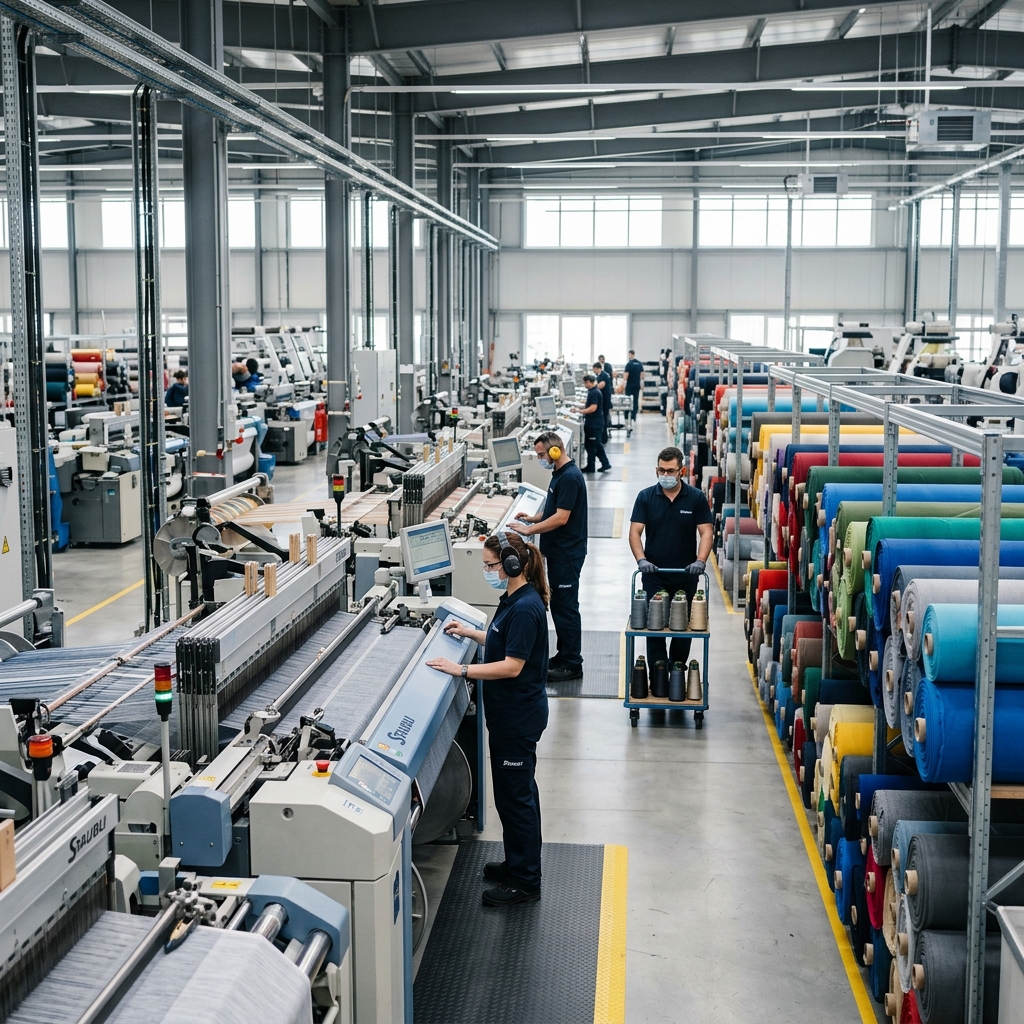
Digital textile printing has transformed the fabric industry — enabling unlimited color reproduction, photographic-quality patterns, and short-run production without the setup costs of traditional screen printing. For importers, wholesalers, and home textile brands, Turkish digital printing manufacturers offer world-class output quality combined with competitive pricing and fast turnaround.
WorldwideTradeX connects buyers with certified Turkish digital textile printing manufacturers specializing in neon fabric printing, custom pattern development, and home textile production. We facilitate B2B sourcing from design concept to finished fabric roll, with full export documentation and logistics support.
Services Overview
1. Digital Fabric Printing
Direct-to-fabric digital printing using industrial inkjet technology. Produces photographic-quality images, unlimited colors, and complex gradients directly onto fabric without screens or plates.
Technology types:
- Reactive printing — for natural fibers (cotton, linen, viscose). Dyes bond chemically with fiber for wash-fast, vibrant results
- Acid printing — for protein fibers (silk, wool, nylon). Produces rich, saturated colors
- Pigment printing — for all fiber types. No steaming required, suitable for mixed-fiber fabrics
- Sublimation printing — for polyester and synthetic blends. Heat-transfer process producing brilliant, fade-resistant colors
- Print width: 160cm–320cm (depending on machine configuration)
- Resolution: 600–1440 dpi
- Color gamut: 16 million+ colors (CMYK + extended gamut)
- Minimum order: 50–100 meters per design
- Repeat size: Unlimited (digital, no physical repeat constraint)
2. Neon & Fluorescent Fabric Printing
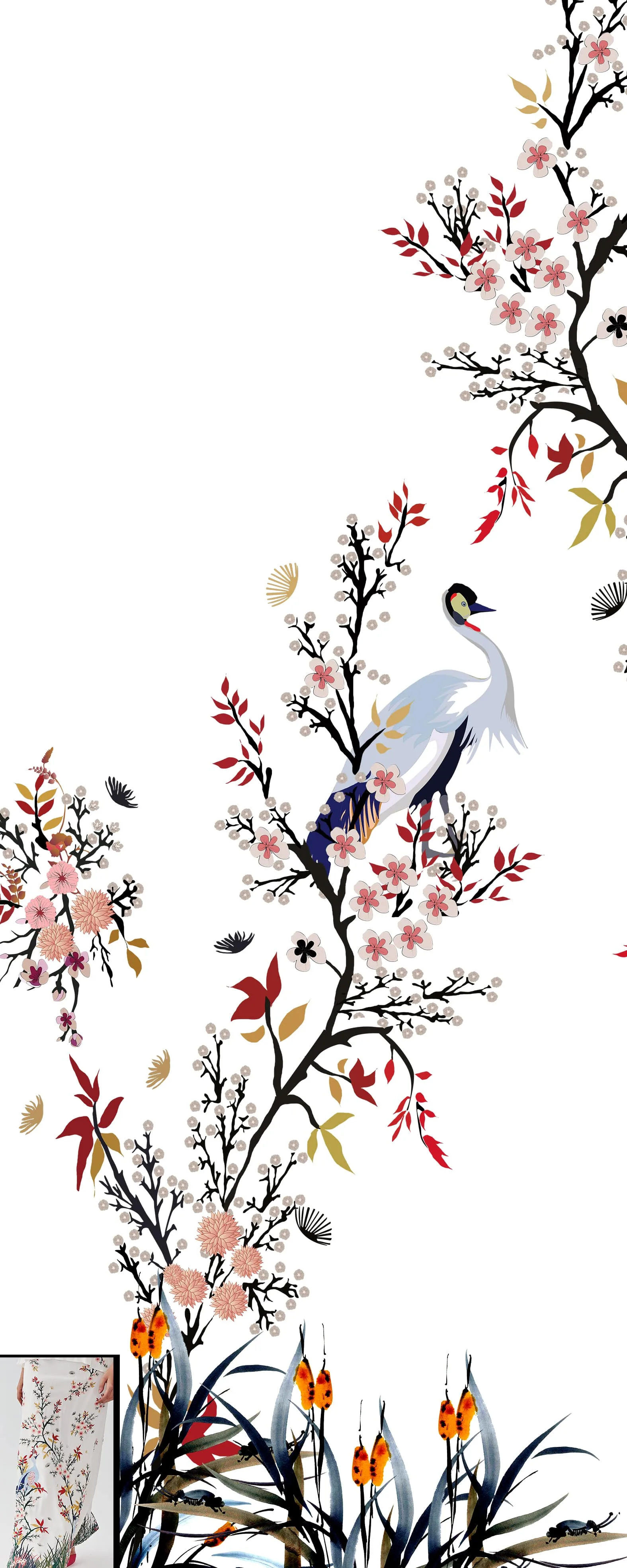
Neon and fluorescent fabric printing uses specialized UV-reactive and high-chroma inks that produce intensely bright, eye-catching colors beyond the standard CMYK gamut. These fabrics are used in fashion, sportswear, event decoration, and retail display.
Neon printing capabilities:
- Fluorescent reactive inks — neon yellow, neon pink, neon orange, neon green on cotton/viscose
- UV-reactive sublimation — glows under blacklight, used for event and nightclub textiles
- High-chroma pigment — maximum brightness on mixed-fiber fabrics
- Neon + standard color combination — mixed designs with both neon accents and standard colors in single pass
- Fashion and streetwear collections (seasonal neon trend fabrics)
- Sportswear and activewear (high-visibility training apparel)
- Event and festival decoration (tablecloths, banners, backdrops)
- Retail visual merchandising (display fabrics, window dressing)
- Children's apparel and accessories (bright, playful patterns)
- Swimwear and beachwear (UV-resistant neon prints)
- Neon inks require specific fabric pre-treatment for optimal adhesion
- Wash fastness: Grade 4–5 (ISO 105-C06) with proper fixation
- Light fastness: Grade 3–4 (ISO 105-B02) — neon colors fade faster than standard; UV-protective finishing available
- Sublimation neon on polyester achieves superior light fastness (Grade 5–6)
3. Custom Pattern Design
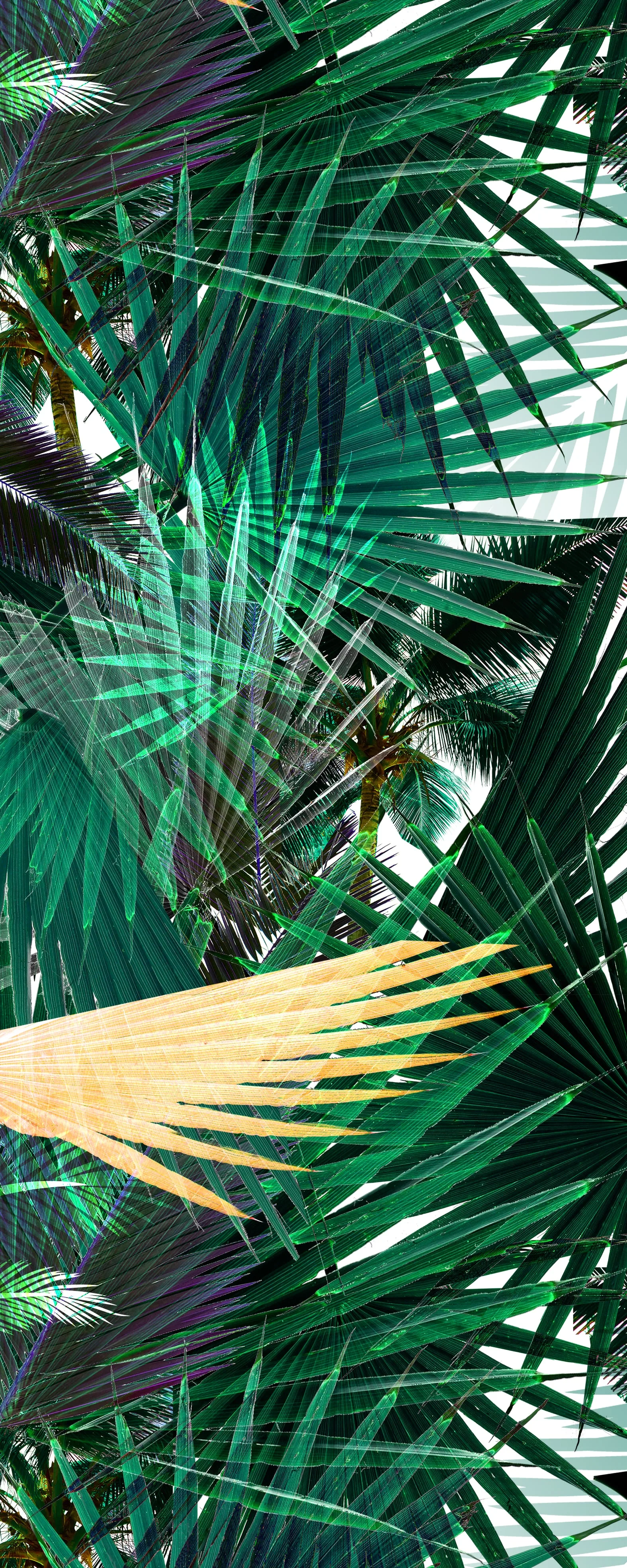
In-house design studios develop original patterns for buyers who need exclusive or semi-exclusive fabric designs. Services range from adapting buyer-supplied artwork to creating entirely new pattern collections.
Design services:
- Pattern adaptation — converting buyer's artwork, logo, or concept into print-ready repeat pattern
- Original pattern development — creating new designs based on trend briefs, mood boards, or market direction
- Colorway development — producing the same pattern in multiple color combinations (typically 3–6 colorways per design)
- Repeat engineering — setting up seamless tile repeats (straight, half-drop, brick, mirror)
- Scale adjustment — resizing patterns for different end uses (apparel vs. home textile vs. accessories)
- Adobe Illustrator (.ai, .eps) — vector artwork
- Adobe Photoshop (.psd) — raster artwork at 150+ dpi at final print size
- PDF (print-ready, embedded fonts and images)
- TIFF (uncompressed, 150+ dpi at final size)
- Pattern adaptation: 3–5 business days
- Original design: 7–14 business days
- Strike-off (physical sample): 5–7 business days after design approval
- Production: 2–4 weeks after strike-off approval
4. Home Textile Production
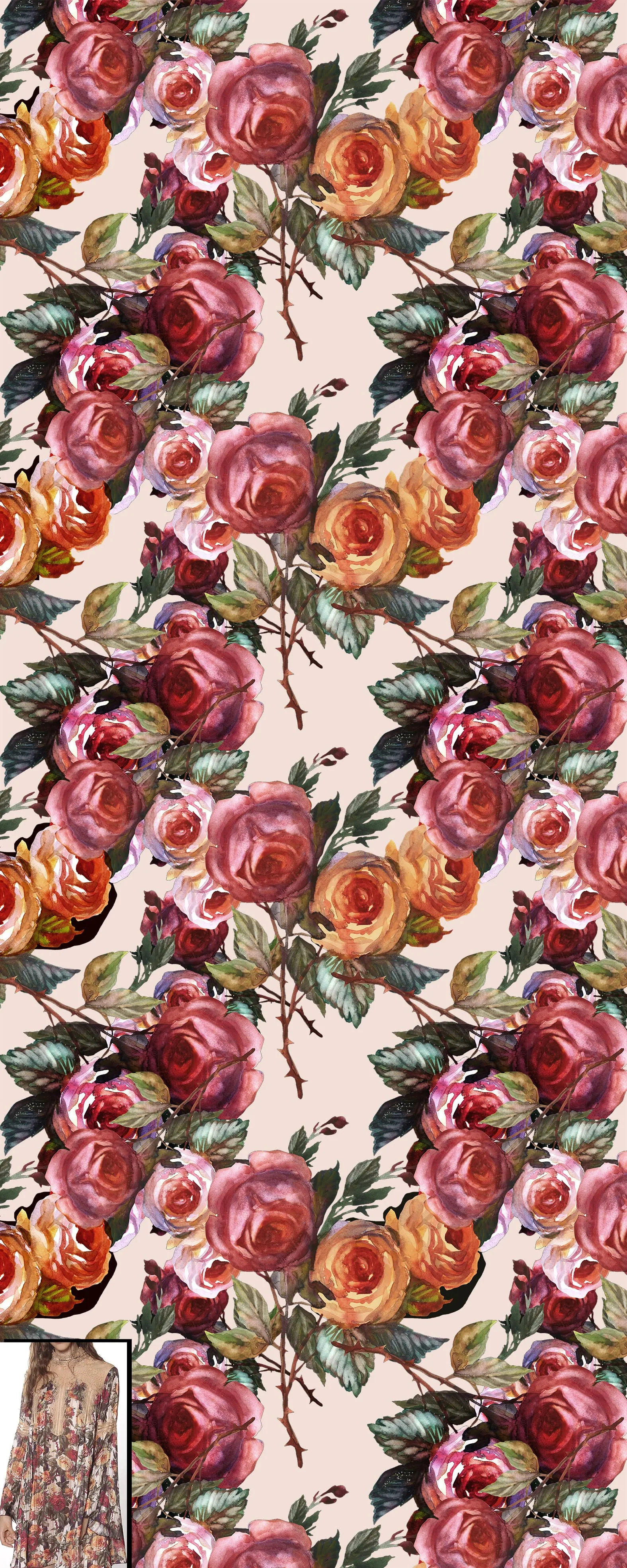
Finished home textile products manufactured with digitally printed fabrics. Suitable for retail brands, interior designers, and hospitality procurement.
Product categories:
Bedding:
- Duvet covers (single, double, king, super king)
- Pillowcases and shams
- Fitted and flat sheets
- Bed runners and decorative cushions
- Tablecloths (standard and custom sizes)
- Table runners
- Napkins and placemats
- Overlay cloths for event catering
- Printed curtain panels (eyelet, pencil pleat, tab top)
- Cushion covers (various sizes, zip or envelope closure)
- Decorative throws and blankets
- Base fabric: 100% cotton percale (200–400 thread count), cotton-polyester blend, microfiber
- Weight: 90–200 g/m² depending on application
- Finishing: Softening, anti-wrinkle, anti-pilling treatments available
- Certifications: OEKO-TEX Standard 100 (no harmful substances)
Technical Specifications
Fabric Base Options
| Fabric | Fiber | Weight | Best For | Print Method |
|---|---|---|---|---|
| Cotton Poplin | 100% Cotton | 110–130 g/m² | Apparel, home textile | Reactive |
| Cotton Satin | 100% Cotton | 130–160 g/m² | Bedding, luxury apparel | Reactive |
| Viscose Twill | 100% Viscose | 100–130 g/m² | Fashion, scarves | Reactive/Acid |
| Polyester Satin | 100% Polyester | 80–120 g/m² | Sportswear, event | Sublimation |
| Polyester Chiffon | 100% Polyester | 50–75 g/m² | Scarves, overlays | Sublimation |
| Cotton-Poly Blend | 50/50 or 65/35 | 120–160 g/m² | Workwear, uniforms | Pigment |
| Linen-Cotton | 55% Linen / 45% Cotton | 150–200 g/m² | Home textile, bags | Reactive |
Quality Standards
- Color consistency: Delta E < 2.0 between production runs (spectrophotometer verified)
- Wash fastness: ISO 105-C06 Grade 4–5 (reactive and acid inks)
- Rub fastness: ISO 105-X12 Grade 4 dry, Grade 3–4 wet
- Dimensional stability: < 3% shrinkage after washing (pre-shrunk fabrics available)
- Certifications: OEKO-TEX Standard 100, GOTS (Global Organic Textile Standard) available on request
B2B Ordering & Logistics
Minimum Order Quantities
| Service | MOQ |
|---|---|
| Digital fabric printing (existing design) | 50 meters/design |
| Digital fabric printing (new design) | 100 meters/design |
| Neon/fluorescent printing | 100 meters/design |
| Finished home textile products | 200 pieces/SKU |
| Private label (custom packaging) | 500 pieces/SKU |
Pricing Structure
- Fabric printing: $3–8/meter depending on fabric base, ink type, and quantity
- Design fee: $50–200 per design (waived for orders above 500 meters)
- Strike-off sample: $30–80 per colorway (credited against production order)
- Finished products: Quoted per piece based on fabric, construction, and finishing
Payment Terms
- T/T (Bank Transfer): 30% deposit, 70% before shipment
- LC (Letter of Credit): Available for orders above $10,000
- Payment currency: USD, EUR
Export & Shipping
- Packaging: Fabric rolls on cardboard tubes, wrapped in polybag and kraft paper. Finished products in polybag + carton
- HS Codes: 5208 (woven cotton fabrics), 5407 (woven synthetic fabrics), 6302 (bed/table linen)
- Incoterms: FOB Istanbul, CIF destination port, EXW factory
- Lead time: 3–5 weeks from design approval to shipment
- Shipping: Sea freight (FCL/LCL) or air freight for urgent orders
Frequently Asked Questions
What is the difference between reactive and sublimation digital printing?
Reactive printing uses water-based dyes that chemically bond with natural fibers (cotton, linen, viscose). It produces soft-hand fabric where the print is part of the fiber — not a coating on top. Sublimation printing uses heat to transfer dye into polyester fibers, producing brilliant colors with no hand-feel change. Reactive is preferred for apparel and home textiles requiring softness; sublimation is preferred for sportswear and synthetic fabrics requiring durability and color vibrancy.Can neon colors be reproduced accurately in digital printing?
Standard CMYK digital printing cannot reproduce true neon/fluorescent colors because these colors emit light beyond the standard color gamut. Specialized fluorescent inks (available in reactive and sublimation systems) are required. The result is visually neon but not identical to Pantone fluorescent swatches — a physical strike-off sample is always recommended before production approval for neon designs.What file resolution is required for digital textile printing?
For fabric printing, artwork should be provided at minimum 150 dpi at the final print size. For large-format prints (curtains, tablecloths), 72–100 dpi at final size is acceptable. Vector artwork (AI, EPS) is preferred as it scales without quality loss. Avoid upscaling low-resolution images — pixelation in the source file will appear in the printed fabric.Is OEKO-TEX certification available for digitally printed fabrics?
Yes. Manufacturers using OEKO-TEX certified inks and base fabrics can provide OEKO-TEX Standard 100 certification for finished printed fabrics. This certifies that the fabric contains no harmful substances at levels that could be dangerous to human health. Required for baby products and skin-contact apparel in EU markets. Certification documentation provided with shipment.What is the typical lead time for a private label home textile order?
For a new private label program: design development (1–2 weeks) + strike-off approval (1 week) + production (3–4 weeks) + quality control and packing (3–5 days) = approximately 6–8 weeks total. For repeat orders with approved designs: 3–4 weeks. Rush production (2–3 weeks) available at 15–20% premium for orders above 500 pieces.Can patterns be printed on both sides of the fabric?
Double-sided printing is possible on certain fabrics using a two-pass process, but color registration between sides is approximate (±2–3mm). For most applications, single-sided printing with a white or natural reverse is standard. Reversible designs are typically achieved by printing the same pattern on both sides in a single pass on thin fabrics where ink penetrates through.More Frequently Asked Questions
Do you work with hotel chains and project buyers?Yes — we supply hospitality projects, distributors and multi-property programs.
Can systems be customized to site dimensions?
Yes — measure-based manufacturing is standard for ZIP screens, pergolas and many FF&E items.
What about motors and automation?
Somfy and comparable motor/control packages are available; integration scope defined per project.
Do you ship internationally?
Yes — FOB/CIF/DAP worldwide with export packing suited to the product.
How do we get project pricing?
RFQ with drawings, quantities, finishes and destination port.
For project-specific terms, contact WorldwideTradeX via RFQ.
← Comprehensive HoReCa & Hospitality Solutions: Technical Guide