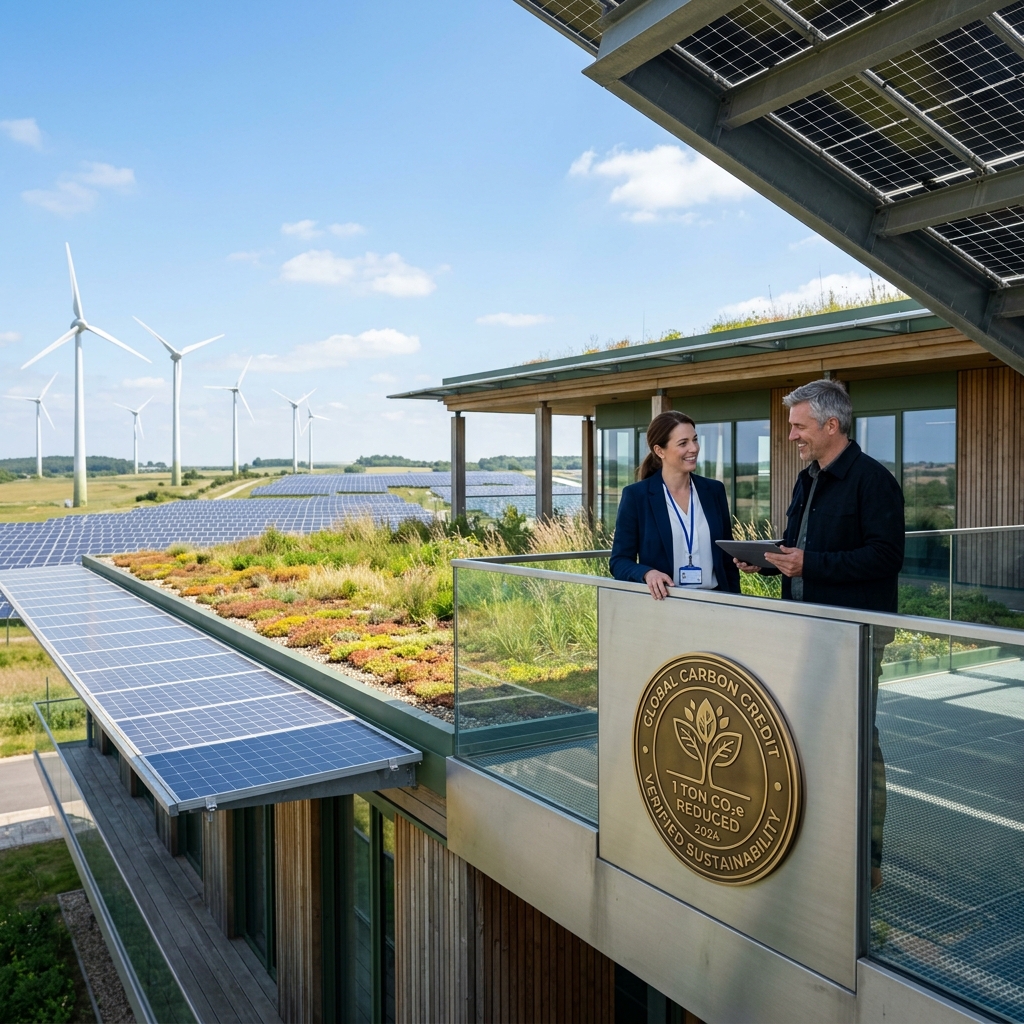
Carbon emissions are no longer just an environmental concern — they are a trade compliance requirement. The EU Carbon Border Adjustment Mechanism (CBAM), Scope 3 reporting mandates, and ESG investor pressure have made carbon accounting a core business function for commodity traders, exporters, and industrial manufacturers.
At WorldwideTradeX, we help our clients navigate the carbon compliance landscape while maintaining competitive supply chains.
Table of Contents
- CBAM: The Carbon Border Tax
- Scope 1, 2 & 3 Emissions
- Supply Chain Carbon Tracing
- Carbon Footprint Calculator
1. CBAM: The EU Carbon Border Adjustment Mechanism
The EU CBAM entered full enforcement in January 2026, requiring importers of steel, aluminum, cement, fertilizers, hydrogen, and electricity to pay for the embedded carbon emissions in their products.
Who is affected:
- Exporters of covered commodities to the EU
- EU importers sourcing from non-EU countries
- Traders handling CBAM-covered goods in EU supply chains
- Calculate embedded emissions per tonne of product
- Obtain CBAM certificates from EU authorities
- Report quarterly to the EU CBAM registry
- Pay for certificates at the EU carbon price (ETS price)
2. Scope 1, 2 & 3 Emissions
The GHG Protocol divides emissions into three scopes:
- Scope 1: Direct emissions from owned/controlled sources (company vehicles, on-site combustion)
- Scope 2: Indirect emissions from purchased electricity and heat
- Scope 3: All other indirect emissions across the value chain — the largest and most complex category for traders
3. Supply Chain Carbon Tracing
Accurate carbon reporting requires tracing emissions at every step of the supply chain — from mine or farm to end user. This includes:
- Primary production: Mining, refining, agricultural processing
- Transport: Sea freight, road, rail — each mode has a different emissions factor
- Processing: Energy-intensive transformation (steel, aluminum, cement)
- Last mile: Distribution and delivery to end customer
4. Carbon Footprint Calculator
Use our free corporate carbon footprint calculator to estimate your Scope 1, 2, and 3 emissions across transport, manufacturing, and trade operations.
5. CBAM Cost Worked Example: Rebar Export to the EU
Numbers make CBAM concrete. Consider 10,000 tonnes of Turkish rebar (EAF-produced) entering the EU in 2027, the first year of full certificate purchasing:
| Step | Calculation | Result |
|---|---|---|
| Embedded emissions | 0.8 t CO2e/t rebar (EAF route, verified) | 8,000 t CO2e |
| Free-allocation phase-in | 2027: ~74% still free → CBAM on 26% | 2,080 t chargeable |
| Certificate cost | 2,080 t x EUR 65 (typical ETS band) | EUR 135,200 |
| Per-tonne impact | 135,200 / 10,000 t | EUR 13.5/t |
The same rebar via a BF-BOF route (2.1 t CO2e/t) would carry roughly 3x the certificate bill. The strategic conclusion for exporters: verified low-carbon production data is now a commercial asset, not a compliance chore. Exporters who can hand buyers a verified emissions figure negotiate from strength; those who cannot get the buyer's default (worst-case) assumption applied.
6. Decarbonization Levers Available to Turkish Producers
Ranked by payback period for a typical mid-size steel or cement producer:
| Lever | Investment level | Payback | Emission impact |
|---|---|---|---|
| Energy efficiency retrofits (motors, heat recovery) | Low | 1-3 years | 5-15% |
| Power purchase agreements (renewable electricity) | Medium | 3-6 years | Scope 2 to near-zero |
| Scrap ratio increase (EAF routes) | Medium | 2-5 years | Large (Scope 1) |
| Fuel switching (natural gas / biomass kilns) | Medium-high | 4-8 years | Moderate to large |
| Green hydrogen pilot (DRI routes) | High | 10+ years | Transformational |
Buyers running supplier scorecards increasingly weight the first two rows most heavily — they are cheap, fast and verifiable. A supplier that documents an efficiency program and a renewable PPA can often hold pricing through CBAM phase-in where competitors cannot.
7. What Buyers Should Ask Exporters (Document Checklist)
A CBAM-ready supplier file should contain:
- Plant-level emission intensity statement — t CO2e per tonne of product, split direct (Scope 1) and indirect (electricity).
- Verification statement — who verified it and against which method (ISO 14064-3 or EU CBAM methodology).
- Production route declaration — EAF vs BF-BOF, kiln type, fuel mix (this determines the default-value risk).
- CBAM registration status — whether the exporter's EU customer has them registered as a reporting installee.
- Quarterly reporting capability — the exporter must feed data to the EU importer's CBAM declaration; confirm who compiles it.
8. Beyond CBAM: Buyer-Side Carbon Requirements
CBAM is the loudest signal but not the only one. International buyers now layer several carbon asks onto tenders:
- Corporate buyer science-based targets — large EU retailers and construction groups with SBTi commitments cascade Scope 3 reduction obligations into procurement scoring.
- EPDs (Environmental Product Declarations) — common in construction materials; an EPD per product line answers most tender carbon questions at once.
- Product carbon footprint requests — increasingly a line item in RFQ forms for metals, cement, glass and chemicals.
Frequently Asked Questions
What commodities are covered by CBAM in 2026?
CBAM covers: steel and iron, aluminum, cement, fertilizers (urea, ammonia, nitric acid, mixed fertilizers), hydrogen, and electricity. The EU plans to expand coverage to additional sectors after 2026.
How is the CBAM certificate price determined?
CBAM certificate prices are linked to the EU Emissions Trading System (ETS) carbon price, which fluctuates based on market supply and demand. In 2025–2026, ETS prices ranged from €50–€80 per tonne of CO₂.
Carbon Knowledge Hub
- CBAM 2026: Complete Guide for Exporters
- Scope 1, 2 & 3 Emissions Explained
- Supply Chain Carbon Tracing
- Free Carbon Footprint Calculator
→ Global Chemical & Fertilizer Trading: Technical Guide · Global Metals & Minerals Trading: Technical Sourcing Guide · Global Energy Trading: Securing the Flow of Fuel