Zip Screen Technology & Wind Resistance
Last updated:
Zip Screens represent the pinnacle of outdoor shading engineering. Unlike traditional roller systems, zip screen systems provide a hermetically sealed...
Zip Screens represent the pinnacle of outdoor shading engineering. Unlike traditional roller systems, zip screen systems provide a hermetically sealed environment capable of withstanding significant atmospheric pressure — making them the go-to solution for demanding commercial and residential applications.
Table of Contents
- The Zipper Channel System
- High-Performance Fabric: Serge Ferrari & Copaco
- Wind Resistance & Structural Ratings
- Technical Specifications Table
1. The Zipper Channel Mechanism
The core innovation is the high-frequency welded zipper system attached to the fabric edges. This zipper is locked into self-lubricating PVC inserts within the aluminum side tracks.
- 100% Perimeter Seal: Eliminates light gaps and prevents fabric blow-outs.
- Insect Protection: Acts as a hermetically sealed barrier when fully deployed, ideal for dining patios.
- Smooth Operation: Tension-balanced tracking for silent and consistent movement.
2. Fabric Technology: Solar Heat Management
We utilize micro-perforated technical textiles from global leaders Serge Ferrari (France) and Copaco (Belgium).
Solar Rejection: Blocks up to 90% of heat before* it reaches the glazing.
- UV Shielding: Capped at 99% protection, preventing interior furniture degradation.
- Visual Transparency: 3% - 5% openness factor allows for external views while maintaining privacy.
3. Wind Resistance & Reliability
These systems are certified for high-velocity environments, making them ideal for coastal resorts and high-rise balconies.
- Certification: Tested up to Class 6 Wind Load (steady speeds of 130 km/h).
- Durability: All aluminum components are 6063-T6 grade with thermoset powder coating.
4. Technical Specifications: Zip Screen Systems
| Component | Standard / Metric | Performance Grade |
|---|---|---|
| Max Width | Up to 600cm | Single Unit |
| Wind Class | Class 6 (EN 13561) | High Velocity |
| Material | 6063-T6 Aluminum | Corrosion Resistant |
| Fabric | PVC Coated Polyester | Fire Retardant (B1) |
| Automation | Somfy / RTS / IO | Smart Home Ready |
HoReCa Knowledge Hub
- Zip Blind Models: Vertical vs. Cassette
- Water Treatment: RO & Scale Prevention
- Outdoor Furniture: Martindale Ratings
Frequently Asked Questions
What is a zip blind and how does it differ from a standard roller blind?
A zip blind has a zipper track system on both sides that locks the fabric edge into an aluminum guide rail. This eliminates fabric flutter in wind and creates a sealed perimeter, making it suitable for outdoor use up to wind speeds of 120–140 km/h. Standard roller blinds have no side guides and are only suitable for indoor or sheltered applications.What wind resistance rating should I look for in outdoor zip blinds?
For exposed terraces and facades, look for systems tested to EN 13561 (external blinds standard) with wind class 4 or 5 (up to 28 m/s / 100 km/h). High-performance systems with reinforced guide rails and tensioned bottom bars can withstand class 6 (up to 140 km/h). Always check the manufacturer's certified test report.What fabric types are available for zip blinds and what are their properties?
Main fabric categories: PVC-coated polyester (high durability, easy cleaning, 5–15 year lifespan), fiberglass (fire-resistant, dimensionally stable), and solar control fabrics (openness factor 1–10% for glare reduction while maintaining view). Transparent PVC panels are used where full weather protection with visibility is required.How are zip blind systems motorized and controlled?
Zip blinds are motorized with tubular motors (Somfy, Nice, Elero) integrated into the roller tube. Control options: wall switch, remote control, smartphone app (via Somfy TaHoma or similar home automation), or building management system (BMS) integration. Wind and sun sensors enable automatic operation for protection and energy management.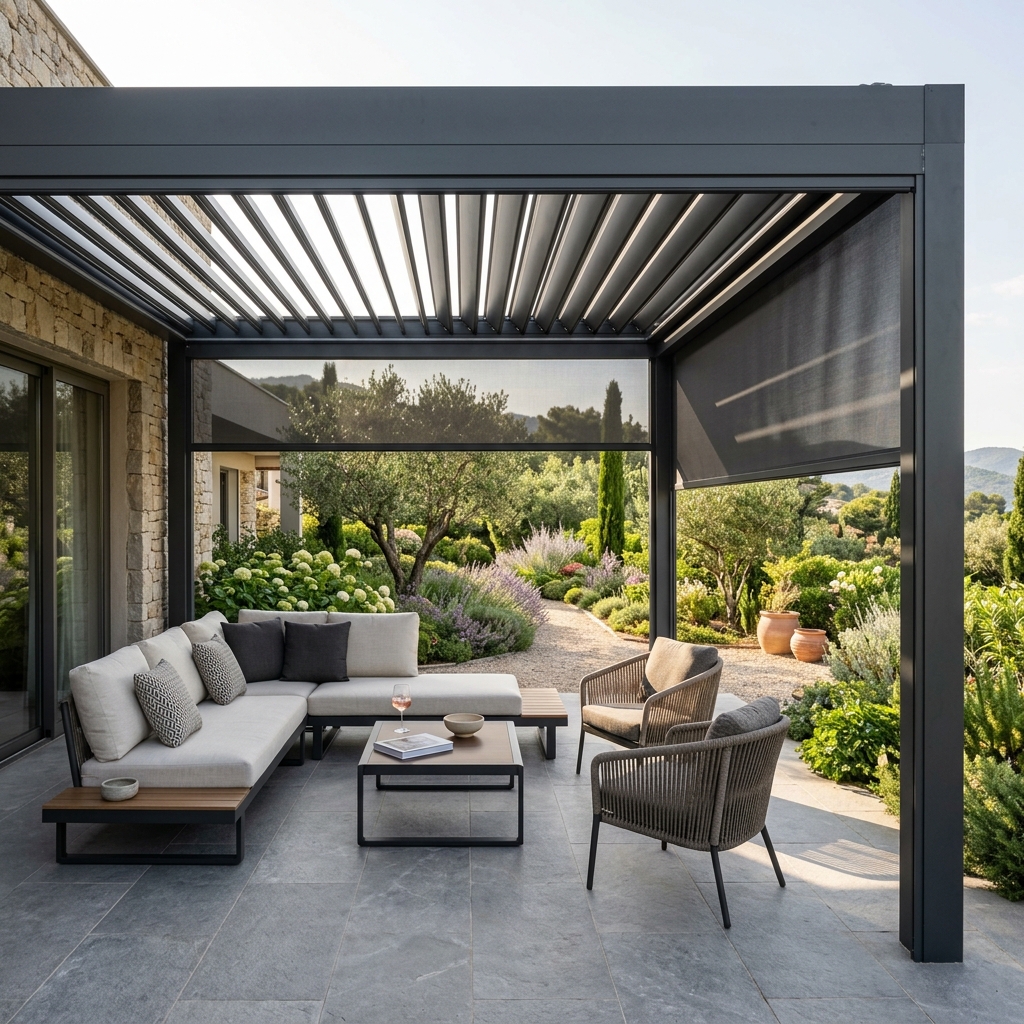
Related Topics
Request Project Quote | Back to HoReCaMore Frequently Asked Questions
Do you work with hotel chains and project buyers?Yes — we supply hospitality projects, distributors and multi-property programs.
Can systems be customized to site dimensions?
Yes — measure-based manufacturing is standard for ZIP screens, pergolas and many FF&E items.
What about motors and automation?
Somfy and comparable motor/control packages are available; integration scope defined per project.
Do you ship internationally?
Yes — FOB/CIF/DAP worldwide with export packing suited to the product.
How do we get project pricing?
RFQ with drawings, quantities, finishes and destination port.
For project-specific terms, contact WorldwideTradeX via RFQ.