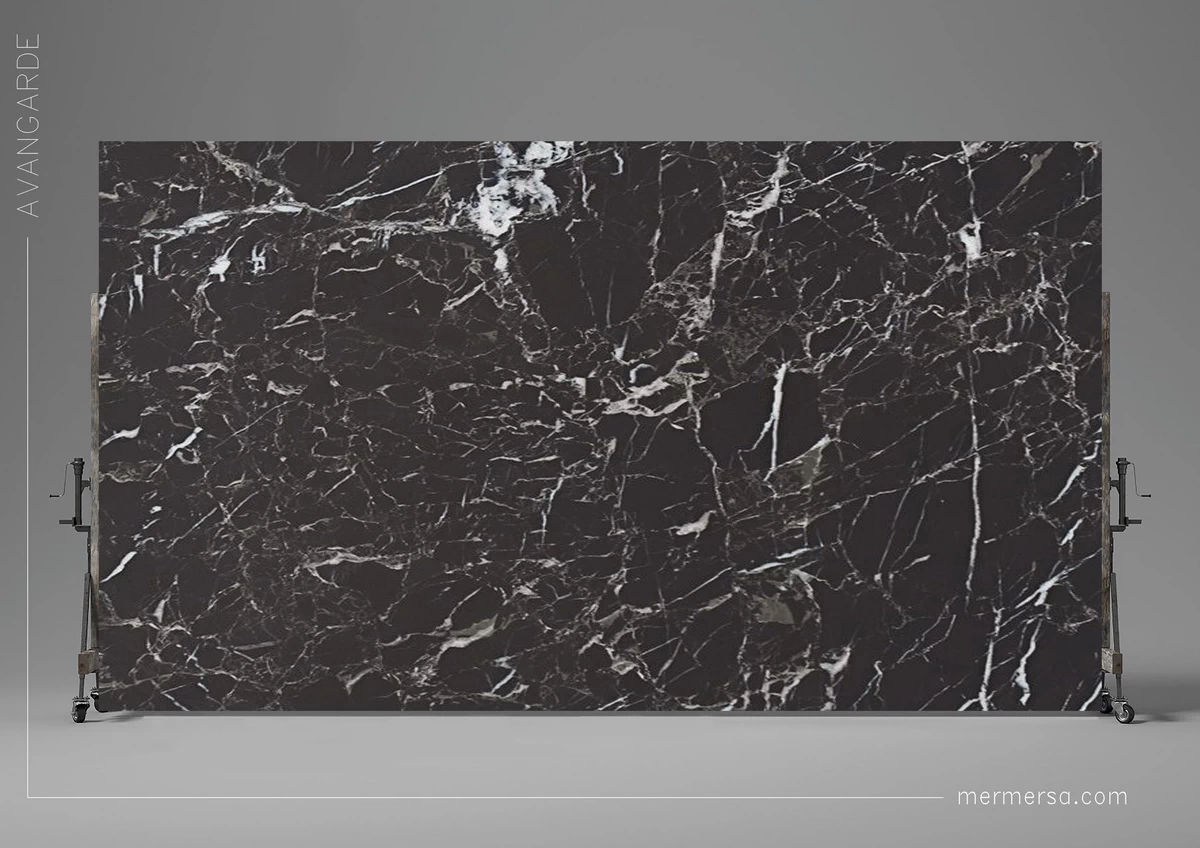
Marble Care for Commercial Projects
Marble is calcium carbonate, so acids etch its surface and liquid can penetrate a porous stone and stain it. A sealer slows that penetration but does not stop etching, so commercial care combines the right finish for the area, daily dry and neutral cleaning, a prompt response to spills and periodic honing when the surface has finally worn.
How should commercial marble be cared for?
Commercial care differs from domestic care in one way: the floor or wall belongs to a facility with staff, budgets and records, so the goal is not a pristine surface but a predictable one. Four habits carry most of the result:
- Dry removal first. Grit dragged in on shoes is the main abrasive on any floor, so mats at entrances — a walk-off zone, not a doormat — and dry mopping before wet cleaning change how fast a finish wears.
- Neutral cleaning, correct dilution. Marble is cleaned with a pH-neutral cleaner diluted per the manufacturer's instructions. Concentration guessed from the bottle is the most common way a neutral product is used destructively: too strong leaves residues that dull the surface, too weak does nothing.
- Spills answered in minutes, not next shift. Etching begins on contact; staining follows how long a liquid sits. The response plan therefore has a "first response" step written down — blot, do not wipe, use the right poultice — rather than left to whoever finds it.
- A record of what was done. Which areas were cleaned with which method, when the sealer was last applied, when honing was last carried out. Without those records, every later problem looks like a stone defect instead of a maintenance gap.
Why does marble etch and stain?
Two different mechanisms, and confusing them produces the wrong fix.
Etching is a surface chemical change. Marble's calcite reacts with acids — the everyday list includes vinegar, wine, citrus, some descalers and some bathroom cleaners — and the reaction removes a microscopic layer of polish or honed texture. What is left is a dull spot: not a deposit sitting on the stone, but a change in the surface itself. Etching happens whatever the finish, and its visibility depends on the finish: a mark that advertises itself on a polished floor is barely noticeable on a brushed one.
Staining is penetration. A liquid — oil, wine, coffee, ink, organic matter — enters the pore structure and sits there. It requires porosity and time rather than chemistry, which is why the two mechanisms need different responses: an etch is corrected by reworking the surface, a stain by drawing the substance back out.
A third, related issue is soiling: dirt held in the pores or in the relief of a textured finish, which looks like a stain and often cleans like one, but is neither. And a fourth is wear — the gradual loss of polish in traffic lanes, which is mechanical, not chemical. Four problems, four different responses, and a maintenance plan only works if the diagnosis comes first.
What does sealing do and not do?
An impregnating sealer is a treatment that soaks into the near-surface pore structure and reduces how quickly liquids are drawn in. It is worth stating clearly what that buys:
- It buys time. A spill that would penetrate in seconds is slowed, which turns a permanent stain into a wipe-up — provided somebody is there to wipe it. A sealer does not make a floor spill-proof; it changes the window in which a response works.
- It does not stop etching. Etching is a chemical reaction on the surface; sealers work below it. A sealed polished floor etches exactly as an unsealed one does.
- It does not stop wear. Traffic polishes and abrades the surface regardless of treatment.
- Its duration is a property of the product and the exposure, not a promise. Re-application belongs to the product data sheet and the traffic the area actually sees — not to a number quoted from memory.
Daily and periodic cleaning
Table A: area, method, products to avoid, note
| Area | Method | Products to avoid | Note |
|---|---|---|---|
| Lobby floor | Dry removal (mats, dust mop), then damp mopping with pH-neutral cleaner per manufacturer's instructions | Acidic descalers, vinegar-based cleaners, abrasive powders, bleach-based products | Highest grit load in the building; the mat zone does more for the finish than any polish |
| Corridors | Same sequence as lobby, on the programme the traffic warrants | Same as lobby; also unwritten "extra concentrate" dosing | Long runs show traffic polish first; that is a re-honing question, not a cleaning one |
| Bathroom floors and walls | Prompt wipe-down after use; damp cleaning with neutral cleaner; drying of wet areas after cleaning | Bathroom descalers (typically acidic), limescale removers, disinfectant products used beyond label instructions | Water sitting on honed stone is a maintenance issue; pooling around fittings should be answered with drying, not stronger chemistry |
| Kitchen / bar tops | Blot spills immediately; wipe with neutral cleaner; dry afterwards | Vinegar, citrus, wine spills left to dry; harsh scouring pads | Bar tops see acids daily; the first response matters more than the weekly deep clean |
| Exterior paving | Dry sweeping; water rinse with a stiff brush; neutral cleaner where needed | De-icing salts where they can be avoided, strong solvents | Texture traps soil; brushing follows the relief. Local climate and product advice govern frequency |
Crystallisation deserves one honest line: it is a machine process that renews a polished surface using friction and a treatment compound, and it is appropriate for some floors and inappropriate for others. Whether it suits a particular stone and finish is a question for the stone and product suppliers, not a standing item on a schedule.
No frequency in this table is a fact — every row is read as "per the manufacturer's instructions and the traffic the area actually sees". Frequencies are set by the facility's own cleaning contract.
Stain types and first response
Table B: stain, first response, when to call a specialist
| Stain | First response | When to call a specialist |
|---|---|---|
| Oil (cooking, cosmetics, tanning) | Blot at once; lift residue with an absorbent poultice applied per product instructions, renewed until it draws nothing further | When the first applications draw nothing, or the stain covers a large area of a guest-facing surface |
| Wine, coffee, tea | Blot; neutral-clean the area; apply poultice if a shadow remains after drying | When a dried shadow persists after repetition — it may be etching rather than staining, which is a resurfacing job |
| Rust | Do not improvise; keep the area dry and ask for advice before any chemistry | Immediately — rust often traces to metal contact (a fitting, a trolley wheel) and the source should be found first |
| Ink | Blot, do not wipe; test any solvent on an inconspicuous area first | Almost always — solvents can damage the finish, and testing on the actual floor is part of the judgement |
| Organic (food, plant matter, biological) | Lift; neutral clean; poultice if needed | When it recurs in the same place — recurrence usually points at a source, not at the stone |
The pattern in the middle column: blot rather than wipe, apply the smallest intervention first, test before chemistry, and give a poultice time to work rather than scrubbing. The pattern in the right column: anything that recurs, resists, or involves an unknown chemistry belongs to a professional who works on the actual stone. Etch marks — the dull spots from acid contact — sit in the sixth FAQ below, because they are not stains at all.
Re-polishing and honing: when it is needed
A stone surface eventually needs reworking for one of three reasons, and each has a different fix:
- Traffic polish and light scratching. A honed floor develops patches of sheen; a polished floor accumulates fine scratches. Both are surface conditions. Diamond honing — grinding the surface with diamond tooling to a chosen finish — restores the intended texture, and re-polishing follows where polish is the specified finish. This is a scheduled refurbishment, done area by area with the space out of use.
- Etching in exposed positions. Marks around bar tops, vanities and entrances are corrected the same way: the surface is reworked. Small local repairs are possible but read differently from the surrounding field; on visible floors, whole-area reworking is usually the honest option.
- Staining that did not respond. If the substance has gone deep, reworking may be the only route — which is exactly why the first-response table exists.
A maintenance-plan template for hotels
Task, owner, frequency, records
| Task | Who | How often | Record kept |
|---|---|---|---|
| Entrance mat and dry removal check | Housekeeping / cleaning contractor | Per manufacturer's instructions and entrance traffic | Weekly check log |
| Damp cleaning of guest-area floors with pH-neutral cleaner | Cleaning contractor | Per manufacturer's instructions and observed traffic | Cleaning log per area |
| Bathroom wipe-down and drying | Housekeeping | After cleaning, per instructions | Included in room log |
| Spill first-response (blot / poultice) | Whoever finds it — trained at induction | On occurrence | Incident note: area, substance, action taken |
| Sealer application or renewal | Specialist or trained in-house team | Per the sealer's product data sheet and area exposure | Data sheet + date + area on the plan |
| Inspection of guest-facing surfaces | Facilities manager | Per the facility's own schedule | Snag-style list with photos |
| Re-honing / re-polishing decision | Facilities manager with the stone supplier | When inspection shows the surface has worn | Quotation and scope note before work |
| Annual review of the plan | Facilities + procurement | Annually | Updated plan version |
Two notes on using the template: "per manufacturer's instructions" is the frequency for every row that touches a product, because neither this page nor a supplier may honestly state a number; and the records column is the point — a plan without records cannot tell you whether the sealer you think was applied last year actually was. The plan sits naturally inside the wider project documentation prepared at handover.
How the finish and variety choice change maintenance
Maintenance is partly decided before anything is installed. The earlier pages of this site make the argument in detail, but the short version for a facility manager:
- Finish sets how damage reads. Polished shows etching and scratching most clearly; honed hides wear better; brushed and antique textures camouflage marks by relief. A lobby that expects heavy traffic is choosing its future maintenance load when it chooses the finish — see finishes.
- Variety sets how much the stone absorbs. Porosity varies between stones, which affects both staining risk and how a sealer behaves; the values belong on the technical data page.
- Application sets the method. Floor care, countertop care and exterior paving are three different regimes — flooring and countertops carry the application-specific detail.
- The room's life sets the frequency. A hotel corridor and a hotel ballroom are the same finish with different exposure; the plan follows the traffic.
Frequently Asked Questions
Does sealing stop etching?
No. An impregnating sealer works inside the pore structure and slows liquid penetration; etching is a chemical reaction between acids and the calcite at the surface, above where the sealer works. Sealing buys response time against stains and makes cleaning easier — it does not make the surface immune to acid contact, and no product should be sold or specified on the claim that it prevents etching permanently.
Which cleaners damage marble?
Anything acidic — vinegar-based products, limescale and bathroom descalers, many citrus cleaners — etches the surface; strong alkalis and solvents can also damage or dull it; abrasive powders and scouring pads scratch. Bleach-based and disinfectant products should be used only as the label directs. The safe default is a pH-neutral cleaner diluted per the manufacturer's instructions, with a test patch in an inconspicuous place whenever a new product enters the building.
How often should marble be sealed?
Follow the sealer's product data sheet, adjusted for what the area actually sees: a hotel entrance and a lobby wall are not the same exposure, and a data sheet written for a residential kitchen does not settle a corridor's schedule. Re-application is also triggered by water behaviour you can observe — if liquids stop beading and start soaking in, the treatment is due for review. Nobody can quote an interval honestly without the product and the traffic.
Can etch marks be removed?
Yes, by reworking the surface — honing or re-polishing the affected area so the etched layer is ground away and the finish is restored. Small local repairs are possible but tend to read differently from the surrounding field, particularly on polished floors, so on visible surfaces whole-area reworking is usually the better result. Deep or numerous marks on a floor that cannot be taken out of use easily are a planning problem as much as a stone one.
Is honed or polished easier to maintain?
Honed is easier to live with day to day: it hides wear and etching far better, so cleaning lapses show less. Polished needs more disciplined dry removal and prompt spill response because every mark reads against a reflective field. Neither is maintenance-free — the honest comparison is which kind of neglect shows first, and honed forgives more of it. Choose per area rather than globally; the finishes page sets out the trade-offs.
Who is responsible for maintenance after delivery?
Whoever operates the building, under whatever contract the facility signs with its cleaning or maintenance provider — delivery transfers the stone, not a service. What the supplier can do at handover is provide the documents the plan runs on: finish and variety details, sealer data sheet, cleaning product instructions and any test results the specification required. This page describes the methods; it does not offer a maintenance service, and no such service is implied by anything here.
Sources and standards
- General chemistry: calcite (calcium carbonate) reacts with acids, which is why etching occurs; stated qualitatively, with no figures, no pH values beyond "pH-neutral", and no product claims.
- Cleaning and sealing guidance follows manufacturers' product data sheets and safety data sheets: every frequency in this article is expressed as "per manufacturer's instructions", because a fixed interval would be an invention.
- No chemical brand names, no sealer lifetimes, no claims that any product prevents etching or stains permanently, no health claims, and no maintenance service offered by the group.
- Care methods connect to the specification choices made earlier: finish (see finishes) and the values on the technical data page.
Related pages
Marble · Finishes · Flooring · Countertops · Hotel and project supply · Technical data and standards · Request a quote