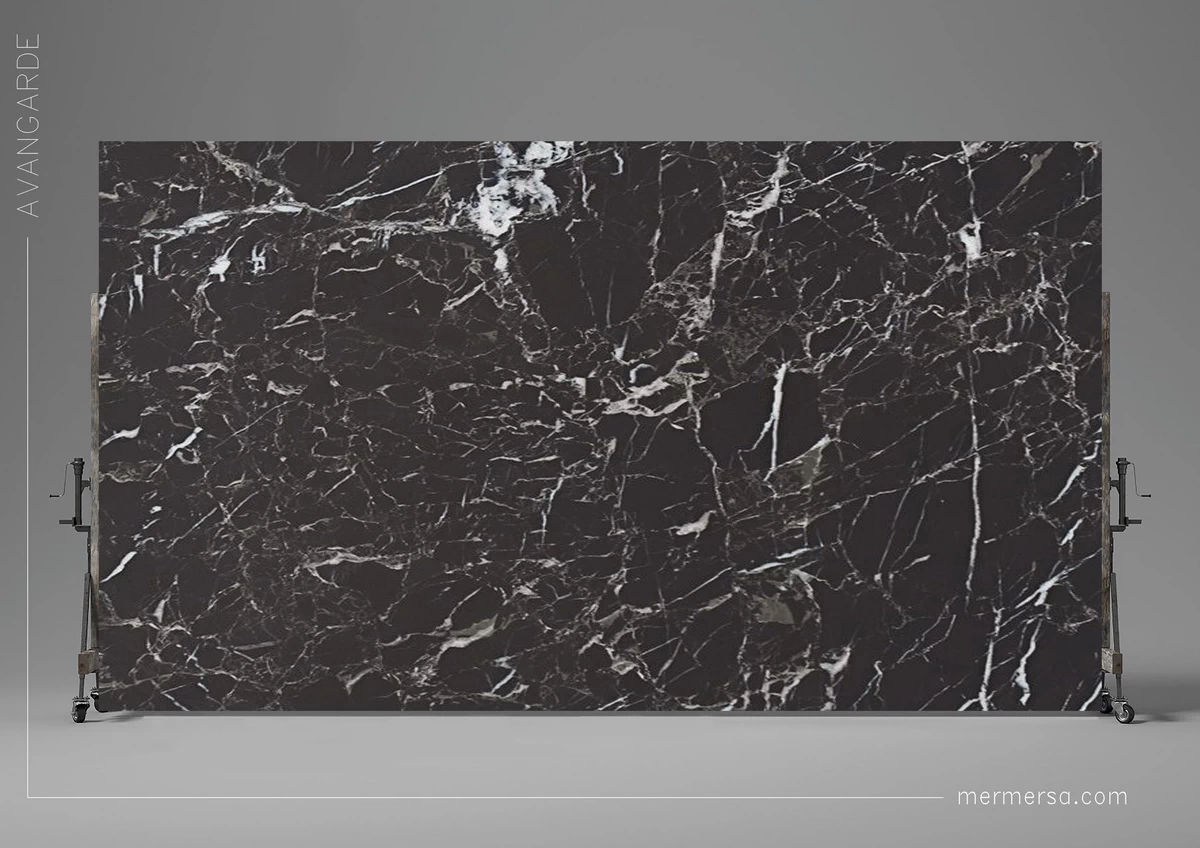
Marble Quality Inspection, Tolerances and Claims
A marble quality inspection compares the delivered goods with the specification that was agreed: stone, grade, thickness, finish, dimensions and packing. Natural variation in shade and vein pattern is part of the product and is not a defect; cracks, repairs that were never approved and thickness outside the agreed tolerance are, and the difference between the two is what an inspection exists to establish before anything is installed.
What does a marble quality inspection check?
Five things, in the order they are usually discovered on site:
- Identity. Is the stone in the crates the stone that was ordered and approved — the trade name, the origin if it was specified, the colour family and the approved sample reference.
- Quantity and dimension. Pieces against the packing list, and dimensions against the order: length, width, thickness, squareness for slabs and panels.
- Surface and structure. Whether the face is what it should be for the finish ordered, whether there are cracks, open fissures, edge chipping or resin repairs that were not agreed, and whether the back of a slab is sound if it will be fixed to a wall.
- Workmanship. Flatness, calibration where it was ordered, straightness of cut edges, and consistency of the nosing and edge profiles on stairs.
- Packing and paperwork. Crate condition, labelling, bundle or lot numbers that tie the goods to the order and to the test reports, and the documents that should accompany the shipment.
Inspection checklist
| Item | What to look at | Acceptable? | Evidence |
|---|---|---|---|
| Stone identity | Trade name, colour family, origin if specified, against the approved sample | Agreed spec, or a deviation to be judged | Photograph of the piece next to the approved sample |
| Shade and vein movement | How far the crate varies from the reference | Natural, within the agreed range | Photos of several pieces across the crate |
| Thickness | Measured at defined points, not at one spot | Within the agreed tolerance only | Caliper readings with the piece identified |
| Length, width, squareness | Cut edges and corners | Within the agreed tolerance | Tape or square readings per piece |
| Finish | Honed, polished, brushed or tumbled as ordered, over the whole face | Agreed spec | Low-angle daylight photo of the face |
| Cracks and fissures | Across the face and along the edges | Defect unless expressly accepted | Close-up photo with a scale in frame |
| Resin and repairs | Fills in holes, veins and fissures; edge repairs | Acceptable only where agreed and disclosed | Low-angle photo; note the location of each fill |
| Mesh backing | Whether a fibrous mesh is bonded to the back | Acceptable only if it was specified | Photo of the back of the slab |
| Flatness and lippage | Slabs and large tiles laid out or sighted along the edge | Within the agreed tolerance | Straightedge result; photo along the edge |
| Edge chipping | Corners, arrises and nosings | Defect, unless within an agreed tolerance | Close-up photo with a scale |
| Packing | Crate condition, banding, dunnage, moisture damage | No transit damage | Photos of every crate before unloading, plus the condition on arrival |
| Labels and documents | Lot or bundle numbers, packing list, reports | Numbers match the order and the reports | Photo of the label; copy of the documents |
The "evidence" column is the point of the table. A claim is won or lost on what was recorded at the moment of discovery, and a photograph of a crate after it has been opened, handled and stacked tells a different story from one taken before unloading.
Natural variation vs defect: what is normal?
Natural stone is not a manufactured surface, and a fair share of what importers meet first is variation rather than fault. The line is usually drawn like this:
| Observation | Normally treated as | Why |
|---|---|---|
| Shade moving between slabs of the same name | Natural variation | Different blocks and beds of the same quarry are never identical |
| Vein pattern differing piece to piece | Natural variation | The vein is the stone's history, not a printed repeat |
| Colour banding within one slab | Natural variation | Part of the geological layer the slab was cut from |
| A hairline fissure sealed by the producer, disclosed as such | Natural, if disclosed and agreed | Fissures are normal in veined stone and are routinely stabilised |
| A crack that opens, runs to an edge or flexes | Defect | Structure, not appearance |
| Resin applied to conceal a crack rather than to fill pores | Defect unless approved | The treatment changes what was bought |
| Thickness outside the agreed tolerance | Defect | Dimension, and it changes what the piece can do |
| Finish differing from the approved sample | Defect | It is a specified parameter |
| Broken piece, chipped arris, delaminated mesh | Defect | Handling or packing failure |
| Wet, stained or crushed packaging | Defect in packing | It puts the goods at risk even where the stone survives |
Two useful tests keep the conversation factual. First, would this variation still be acceptable if the pieces were laid in their intended positions? A shade movement that looks dramatic in a stacked bundle often disappears once the floor is laid in the sequence agreed. Second, was it disclosed? Disclosed resin in a vein and concealed resin under a crack are the same material and two different claims.
How do grades A/B/C work in practice?
There is no universal definition. A, B and C (or first, second, third choice) are supplier-specific sortings: each producer sets what each grade means for its own blocks and its own market, and the words are not portable between suppliers. A grade that counts as first choice in one yard can sit closer to a second choice elsewhere — not because anyone is being careless, but because the criteria were never standardised.
National schemes exist as examples rather than rules: India's IS 1135:1993 sorts marble into four groups A to D by natural flaws, and ASTM C503 classifies marble by mineralogical composition for the US market. Neither applies to a Turkish export order automatically, and mixing them in a contract — citing a grade from one scheme against a product standard from another — is how disputes start.
The practical answer is to define the grade in writing for your own order: name the grade, attach the approved sample, state which characteristics the grade covers (shade range, vein density, permitted repairs, permitted fissures) and what percentage of the delivery may fall outside it. A grade that is not written down is an opinion. The properties and their test methods are separate questions, covered in technical data and test standards.
Resin, mesh and repairs: how to ask and how to see them
Resin is used for two legitimate purposes — filling open pores and voids so the surface can be cleaned, and stabilising a fissure — and one illegitimate-looking one: hiding a crack. The material does not tell you which purpose was served; the disclosure does.
Ask in writing, before production: whether resin is applied, of what type, where it is expected (pores, veins, fissures, edges), whether the pieces will be disclosed individually, and whether a fibre-glass mesh will be bonded to the backs of slabs. Mesh is common on weaker or heavily figured material to keep slabs whole during handling; it is a legitimate variant when specified, and an unwelcome surprise when not.
To see it: view the slab in low-angle daylight, looking along the face rather than at it. Resin reads as a faint film that catches the light differently from the surrounding stone, and fills in veins show as smoother streaks. On the back, a bonded mesh is visible as a regular fibrous layer; ask for a photograph of the back of each bundle if you cannot attend in person.
None of this is automatically a defect. It becomes one when it was not agreed, when it conceals structure rather than filling surface, or when it is present in a quantity the specification did not allow.
Pre-shipment inspection options
Three arrangements buyers use, with different costs and different weights at a claim:
- Your own staff. The cheapest to arrange and the most consistent if the same people inspect repeatedly; it depends entirely on their training and on a written checklist they actually use.
- A third-party inspection company. An independent company — SGS, Intertek and Bureau Veritas are names that appear in this role — inspects against your specification and issues a report before the goods leave. It costs money per visit and takes time in the schedule, and it gives you a document produced by a party with no stake in the sale.
- No formal inspection. Common on small orders; it saves the fee and moves all the risk to the arrival inspection, where your evidence and your contract terms do the work.
Arrival inspection and the claim window
The claim window — the period after arrival within which defects must be notified — is a contract term, and it should be agreed before the goods are made rather than discovered afterwards. Some defects announce themselves immediately; others appear only when the crates are opened or when the stone is laid. Agree in writing which kinds of observation must be reported within how many days of arrival, and what happens if the window is missed.
Sequence matters more than speed. Photograph every crate before opening, record the condition of the packaging, open and inspect against the packing list, and give notice in writing within the agreed window with the evidence attached. The export documents and customs page covers the paperwork the shipment arrives with; this step is about what you find when the paperwork has already been checked.
Documenting damage: photos, packing condition, notes
An evidence pack for a claim is assembled at the moment of discovery, and it contains:
- Photos of every crate before unloading, showing banding, dunnage and any visible impact damage, with the lot number in frame.
- Photos after opening, before moving the pieces, so the position of the damage inside the crate is on record.
- Close-ups with a scale — a ruler or a coin in the frame gives size, and close-ups without scale rarely settle anything.
- Notes on the delivery receipt before signing: "two crates with crushed corners, photographs taken" written on the receipt is a record made at the time, which is the only kind that persuades anyone later.
- Retained packaging where the damage involves the packing itself, until the claim is resolved — the crate is part of the story of how the piece was handled.
- The documents: packing list, delivery note, reports, and the order and approved-sample reference the goods are being compared against.
Typical claim outcomes as contract options
Worth writing into the contract before the order, because each has different consequences for a project on site:
- Credit note — the value of the rejected material is credited. Fast to agree, and it leaves you to source the replacement yourself, which on a live project can be the expensive part.
- Replacement — the same material, corrected, re-sent. The right answer when the floor cannot be completed without it, and the slowest one.
- Price adjustment — the material is accepted as it is at a reduced value. Works when the deviation is visual rather than structural and the pieces can still be used where variation was already acceptable.
Frequently Asked Questions
Is shade difference between slabs a defect?
Usually not. Shade and vein movement between slabs of the same trade name is natural variation, because different blocks and beds of the same quarry are never identical. It becomes a dispute when the movement exceeds what was agreed for the order, which is why the acceptable range should be written down against the approved sample before production.
What is resin filling in marble?
Resin is applied to fill open pores and voids so the surface cleans properly, and to stabilise fissures in veined material. It is disclosed and acceptable when agreed; it is a problem when used to conceal a crack or when the quantity applied exceeds what the specification allowed. Ask in writing before production where fills are expected.
How do I know if slabs are mesh-backed?
Ask before ordering, and check the back of the slabs when they arrive — a bonded fibre-glass mesh shows as a regular fibrous layer over the rear face. If you cannot attend, request a photograph of the back of each bundle. Mesh is a legitimate variant when specified and a dispute when it is not.
Who inspects before shipment?
Whoever the contract says: your own staff, an independent inspection company such as SGS, Intertek or Bureau Veritas, or nobody, with all risk moved to arrival. Whoever it is, they need the written specification, the approved sample and the acceptance criteria — without those, the report describes what was seen rather than passing or failing anything.
How long do I have to claim?
Whatever the contract says — the claim window is a term to be agreed, not a number anyone can look up. Set it in the contract, distinguish between defects visible on arrival and those that only appear once crates are opened or stone is laid, and agree what happens if the window is missed.
What photos prove breakage?
Wide shots of the crate before unloading showing its condition and the lot number, shots after opening showing where the piece sat, and close-ups of the break with a scale in the frame. The piece's identification mark should appear in at least one frame so the claim attaches to a specific item.
Can I reject a whole lot?
Only if the contract allows it and the evidence supports it — typically where the stone is not the stone ordered, where the deviation runs through the delivery rather than sitting in individual pieces, or where agreed tolerances are breached systematically. Where the problem is confined to specific pieces, rejection is usually proportionate to those pieces, which is why the inspection records item by item rather than by lot alone.
Sources and standards
- CEN-CENELEC — publisher of the European product standards named in passing (EN 12058 for floors, EN 1469 for cladding); editions to be confirmed before use in a contract.
- ASTM International — publisher of ASTM C503, which classifies marble by mineralogical composition for the US market.
- BIS — Bureau of Indian Standards — publisher of IS 1135:1993, cited only as an example of a national grading scheme by natural flaws.
Related pages
Marble overview · Marble buyer's guide · Technical data and test standards · Blocks, slabs and tiles compared · Packing and container loading · Export documents and customs · Request a quote