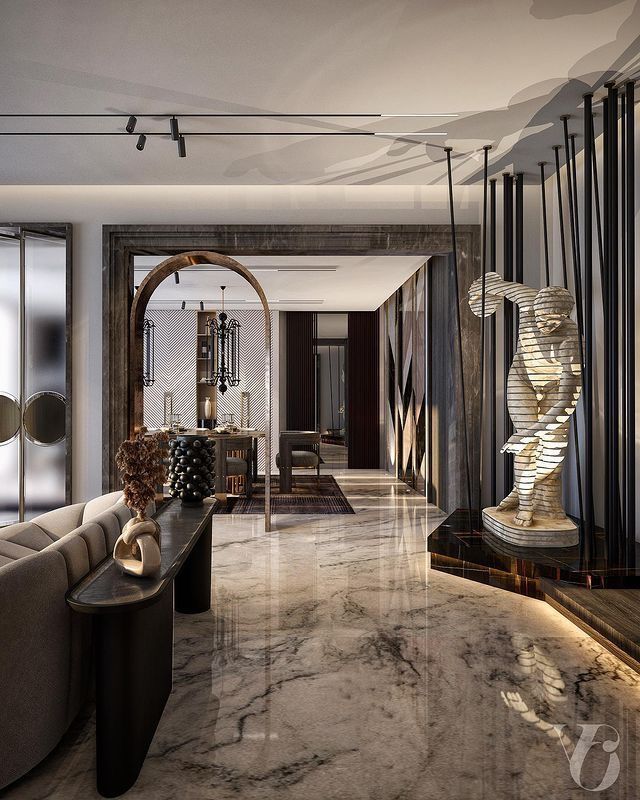
Marble Flooring — Tiles, Patterns & Bookmatching
Last updated:
Turkish marble flooring for hotels, villas and commercial projects: tiles, large slabs, bookmatched and geometric layouts, finishes and how to order.
Turkish marble flooring is supplied as modular tiles or large-format slabs in finishes such as polished, honed and antique. Buyers choose the stone, thickness and layout for the space, then confirm slip-resistance needs, packing and delivery terms; listed formats include tiles from 300 × 300 mm and slabs up to 3300 × 2000 mm. Share the floor plan and use conditions to request a suitable quotation. Send the area, tile size and finish through request a quote and we will quote marble flooring with matching skirting.
Marble Varieties for Flooring
Bright floors
Soft movement

Warm flooring

Elegant contrast

Contemporary
Textured grip
Product Specifications
| Attribute | Options |
|---|---|
| Formats | Tiles (rectified), large-format slabs, mosaics, medallions, decorative borders, feature strips |
| Tile Sizes | 300×300 mm, 400×400 mm, 600×600 mm, 600×900 mm, 800×800 mm, 600×1200 mm, 900×900 mm, 1200×1200 mm |
| Slab Sizes | Standard: 2600×1600 mm, 2800×1600 mm, 3000×1800 mm; Jumbo: up to 3300×2000 mm |
| Thickness | 10 mm (tiles with underfloor heating), 15 mm (standard tiles), 20 mm (commercial grade) |
| Patterns | Herringbone, chevron, basketweave, Versailles (French), modular grid, diamond set, brick bond, random ashlar |
| Borders & Medallions | Custom geometric borders, circular/oval medallions, corner rosettes, feature strips with contrasting stone |
| Surface Finish | Polished (high gloss), honed (matte, 30–50 GU), brushed (textured), tumbled (aged), flamed (R10–R11 grip) |
| Edge Type | Rectified (sharp, minimal grout line), beveled, tumbled, bullnose (step edges) |
| Slip Resistance | R9 (polished, dry areas only) to R11 (flamed, wet areas); anti-slip treatment available for all finishes |
Marble Varieties for Flooring
| Variety | Colour | Veining | Best For | Key Feature |
|---|---|---|---|---|
| Carrara White | White-grey | Soft veining | Residential | Classic, budget-friendly, timeless |
| Statuary | White | Bold grey veins | Hallways | High-impact entrance statement |
| Crema Marfil | Beige | Uniform, subtle | Whole-home | Warm, versatile, hides dirt well |
| Negro Marquina | Black | White veins | Bathrooms | Elegant contrast, modern feel |
| Travertine Noce | Brown | Pitted texture | Outdoor areas | Durable, natural grip when honed |
| Emperador Light | Light brown | Dark veining | Commercial | Hard-wearing, scratch resistant |
Applications & Use Cases
- Entrance halls – Bookmatched full-slab floors for grand first impressions
- Living areas – Large-format tiles (600×1200 mm) with minimal 2 mm grout lines
- Bathrooms – Heated honed marble floors with anti-slip treatment
- Hotels – Patterned Versailles or herringbone marble in lobbies and corridors
- Retail spaces – Durable honed marble on high-traffic sales floors
- Outdoor patios – Flamed travertine with open joints for drainage
Layout & Bookmatching
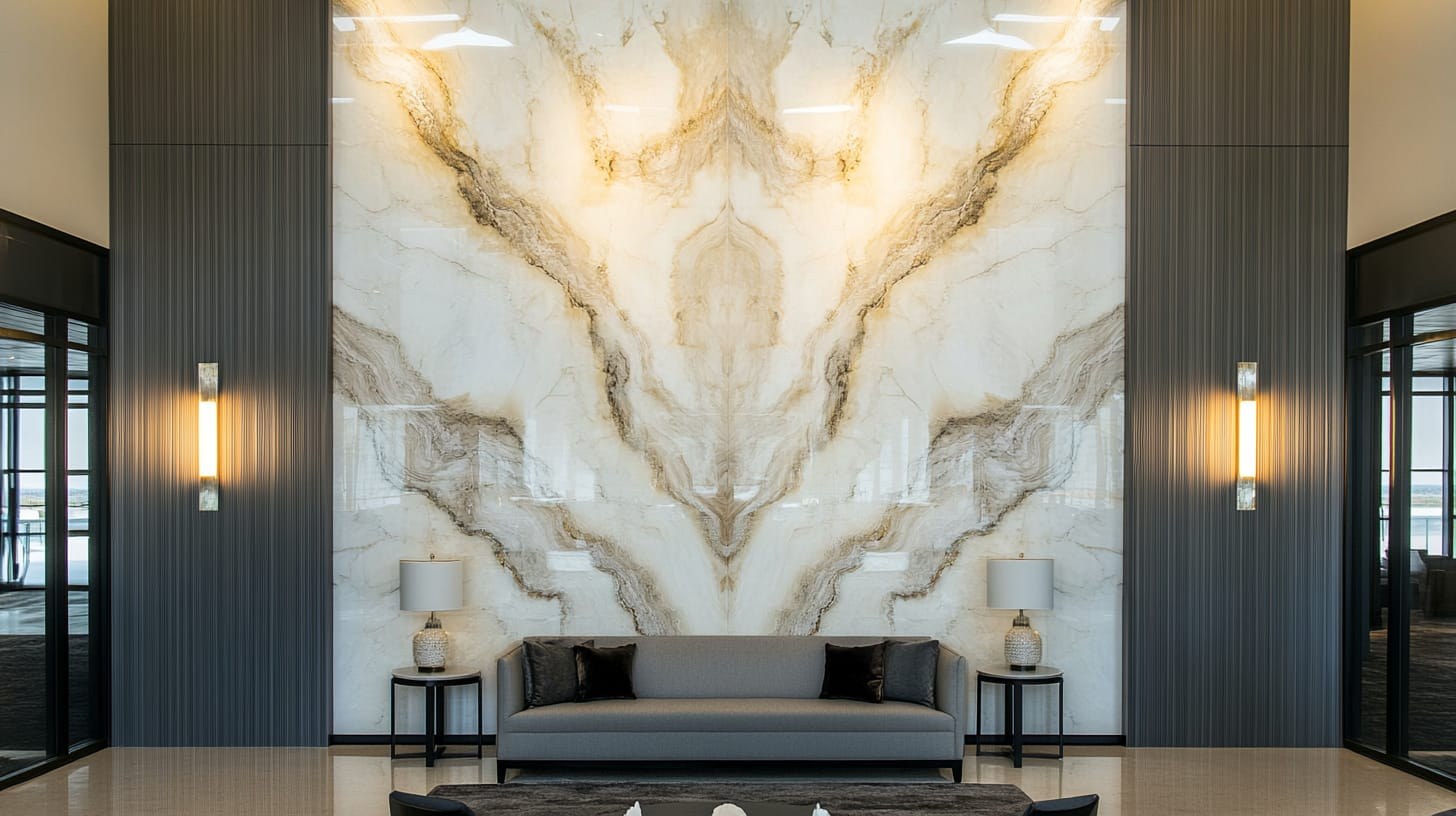
We provide digital layout plans before fabrication. Bookmatching mirrors adjacent tiles or slabs for continuous vein patterns — ideal for entrance halls and feature areas. Four-book and radial bookmatching are available for medallion effects around dining tables or circular entryways.
FAQ
Is marble flooring suitable for high-traffic areas?
Yes, when sealed and finished with a honed or brushed surface. Harder varieties like Emperador and Crema Marfil are recommended for commercial applications. Polished marble may show wear patterns over time in heavy-use areas.
What finish is best for bathroom floors?
Honed or flamed finishes provide better slip resistance than polished. Combined with underfloor heating, marble bathroom floors are comfortable, warm, and safe. We recommend R10 minimum for wet areas.
How do I maintain marble flooring?
Sweep or vacuum with a soft brush attachment daily. Mop weekly with pH-neutral stone cleaner and clean water. Reseal every 12–18 months. Use entrance mats to trap grit. Felt pads under furniture legs prevent scratches.
Can I install marble flooring over underfloor heating?
Yes. Marble conducts heat efficiently, making it one of the best stone choices for heated floors. Use flexible tile adhesive and ensure the subfloor is properly prepared. Maximum surface temperature should not exceed 27°C.
What grout colour should I use with marble tiles?
White marble: light grey or white grout. Beige marble: matching cream grout. Dark marble: charcoal or black grout. Epoxy grout is recommended for stain resistance in kitchens and bathrooms.
Can marble tiles be cut into custom patterns on site?
We pre-cut all tiles and patterns in our CNC workshop. Herringbone, chevron, and Versailles patterns are dry-laid and numbered before delivery for straightforward installation.
Related categories: Marble Stairs · Marble Wall Cladding · Marble Windowsills
Contact us on WhatsApp for pricing and lead times: +90 505 679 78 03
← Turkish Marble & Natural Stone — Wholesale Supplier & Exporter