Sky 1600 Shock-Absorber Ceiling Zip Screen for Terraces
Last updated:
Sky 1600 is the shock-absorber ceiling zip screen in our manufacturing partner's range. A damper arrangement makes the screen open and close smoothly by remote, while the zip rails keep fabric stable in wind. Breathable fabric adds insect protection and privacy, so it suits terraces, pergolas and balconies under glass.
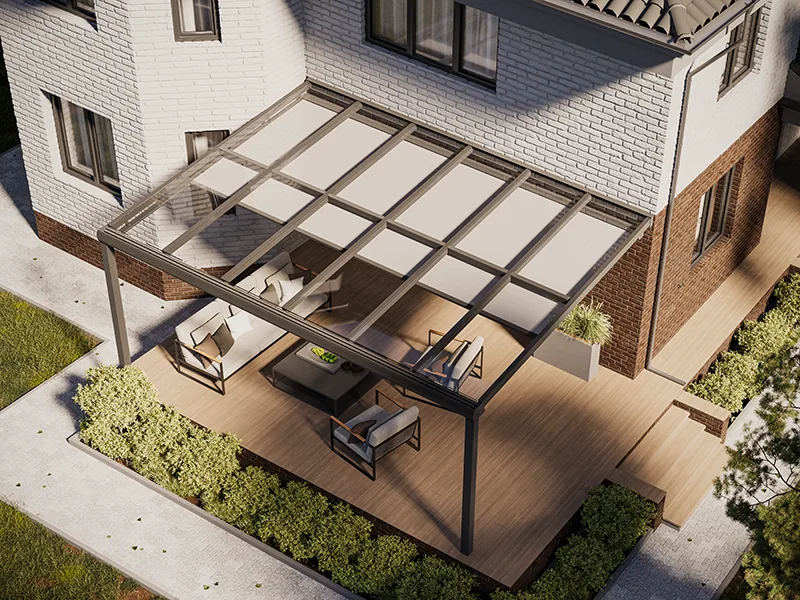
Aerial view of a pergola covered by Sky 1600 shock-absorber ceiling zip screen fabric
What sets Sky 1600 apart
Every ceiling zip screen has the same basic job: carry fabric across the top of a space while a rail holds both edges. Sky 1600 differs in how the movement is controlled. Instead of relying on a plain spring, it uses a shock-absorber system, a damped mechanism that governs how the fabric travels in and out.
The practical result, according to the manufacturer, is a screen that is easy to open and close and that behaves calmly when it is driven by remote control. For a hotel terrace or a restaurant roof, where staff operate the screen many times a season and guests sit beneath it, smooth and quiet movement matters more than it does on a private balcony.
The manufacturer also lists the series as compatible with smart systems, remote controlled, suitable for outdoors, wind-protected, insect-proof, private and made with breathable fabric. If you want to compare it with the spring-type version, see Sky 1500.
How the damper changes the way the screen behaves
A plain spring pulls at the fabric with a force that changes as it extends. A damped element, the way a gas strut or hydraulic damper works in other products, resists sudden movement in both directions. On a ceiling screen this has three useful effects:
- Controlled travel. The bottom bar does not snap or lurch when the drive starts or stops.
- Steady tension. The fabric is kept flat along the span rather than going slack at intermediate positions.
- Less wear. Gentler movement is easier on the fabric, the rails and the fixings over thousands of cycles.
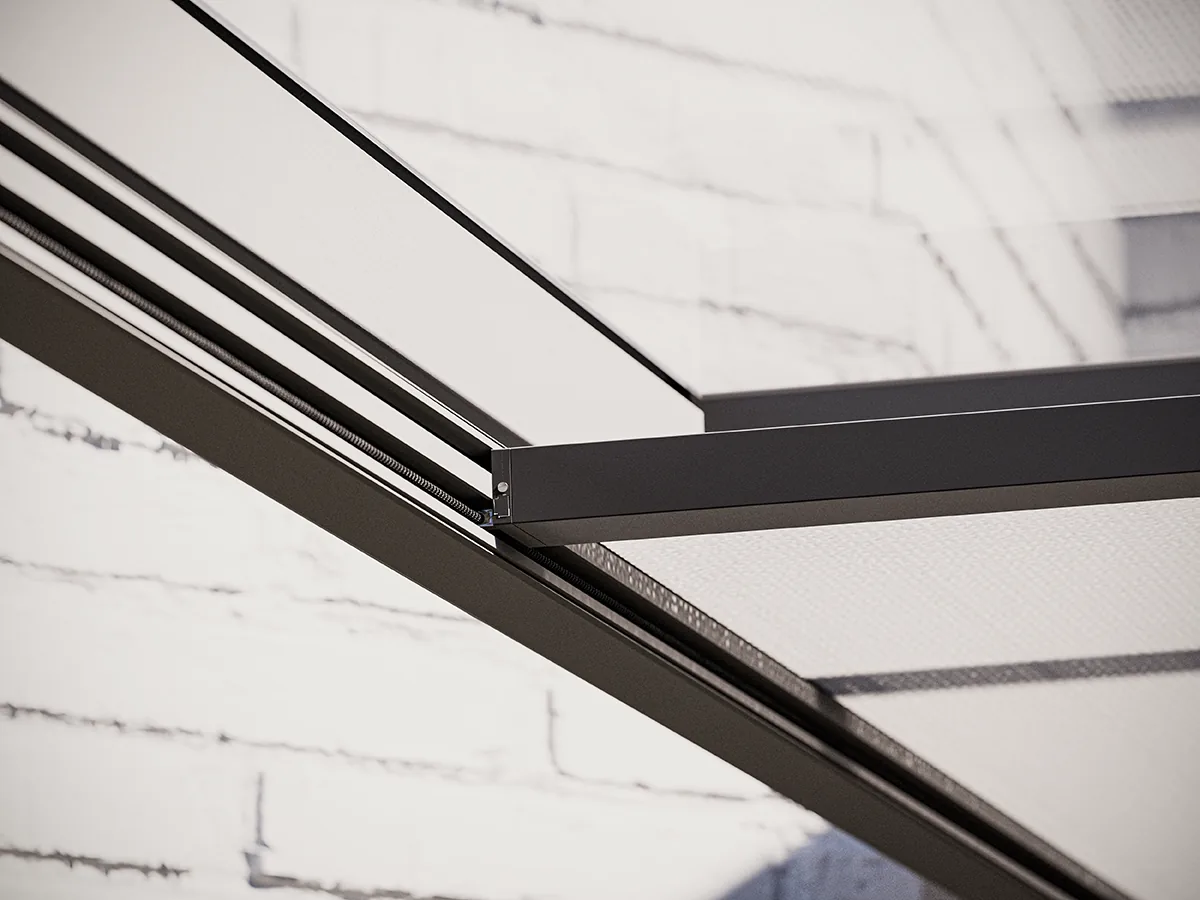
Bottom bar and rail detail of a Sky 1600 shock-absorber ceiling zip screen
Construction details worth checking
The photographs of the system show the parts a specifier should look at before approving a design:
- The headbox and its end caps, which house the roller and drive and are the visible edge of the product.
- The bracket connection, where the unit meets the pergola or building. Its position decides how the loads reach the frame.
- The zip rail profile, which captures the fabric bead along both sides.
- The bottom bar, which carries the fabric edge across the span and finishes the screen when closed.
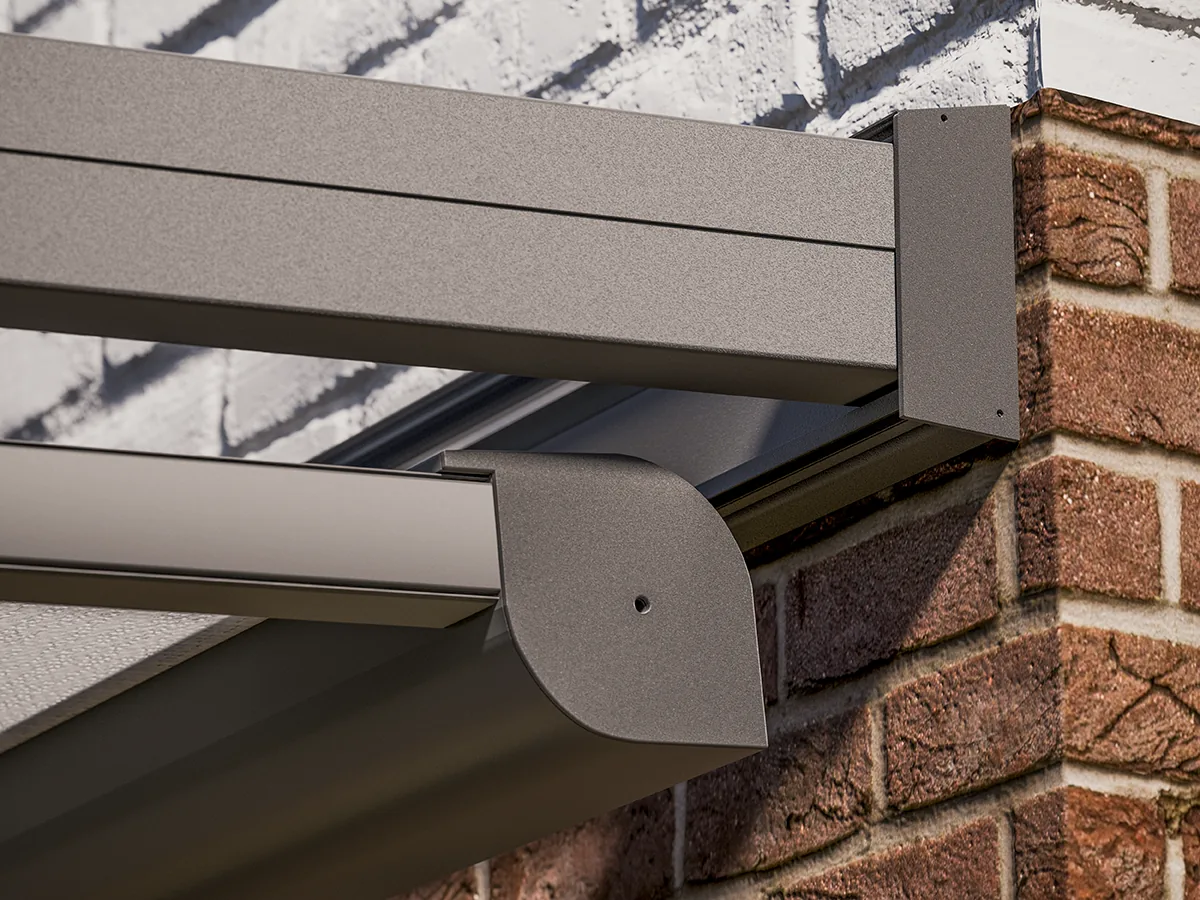
Headbox end cap detail of a Sky 1600 ceiling zip screen
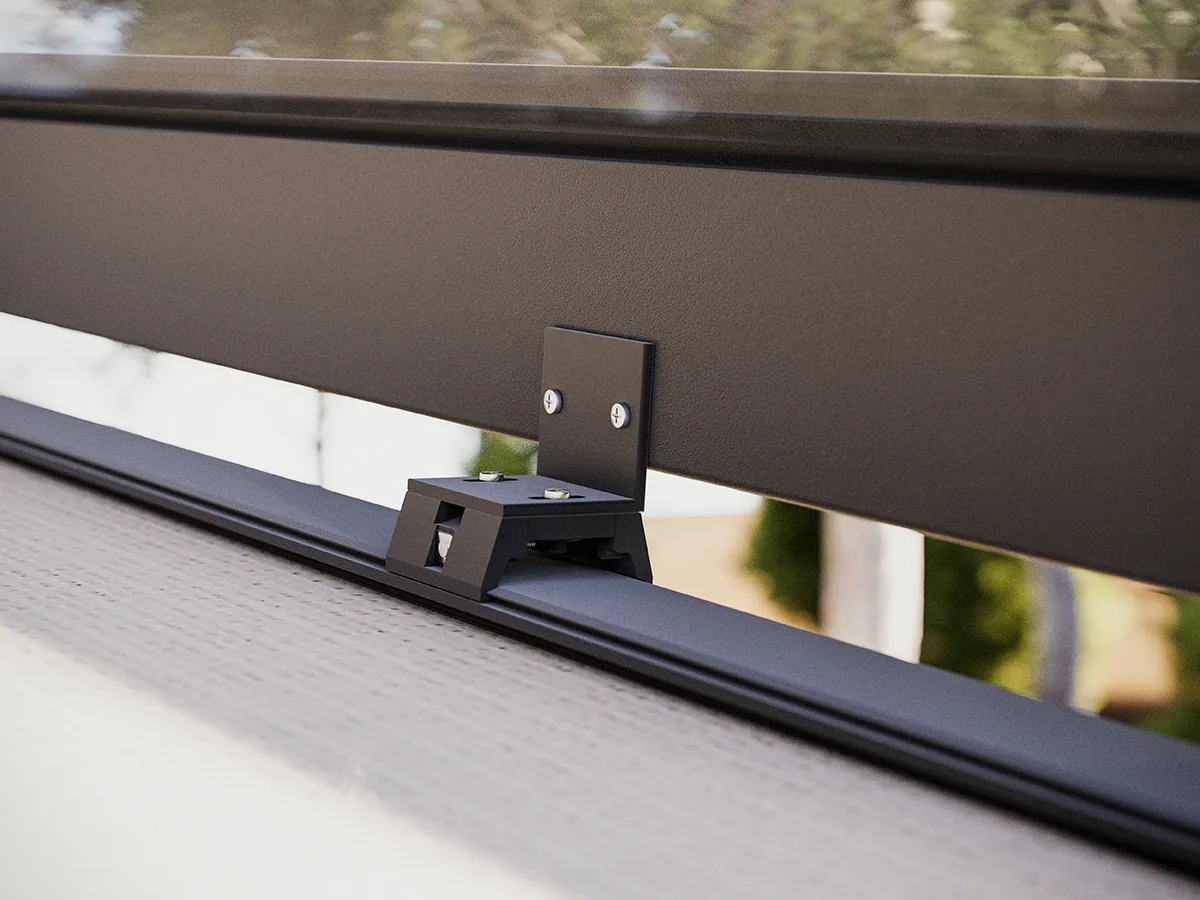
Bracket connection of a Sky 1600 shock-absorber ceiling zip screen to its support structure
Where it works best
- Hotel and restaurant terraces where the screen is operated daily and noise or jerky movement would be noticed.
- Villa terraces and garden rooms that want controlled shade and insect protection at the touch of a button.
- Pergolas and balconies with large glass areas, the same applications as the spring model, particularly when the span is wide.
- Smart buildings, where the screen follows a schedule or reacts to sensors.
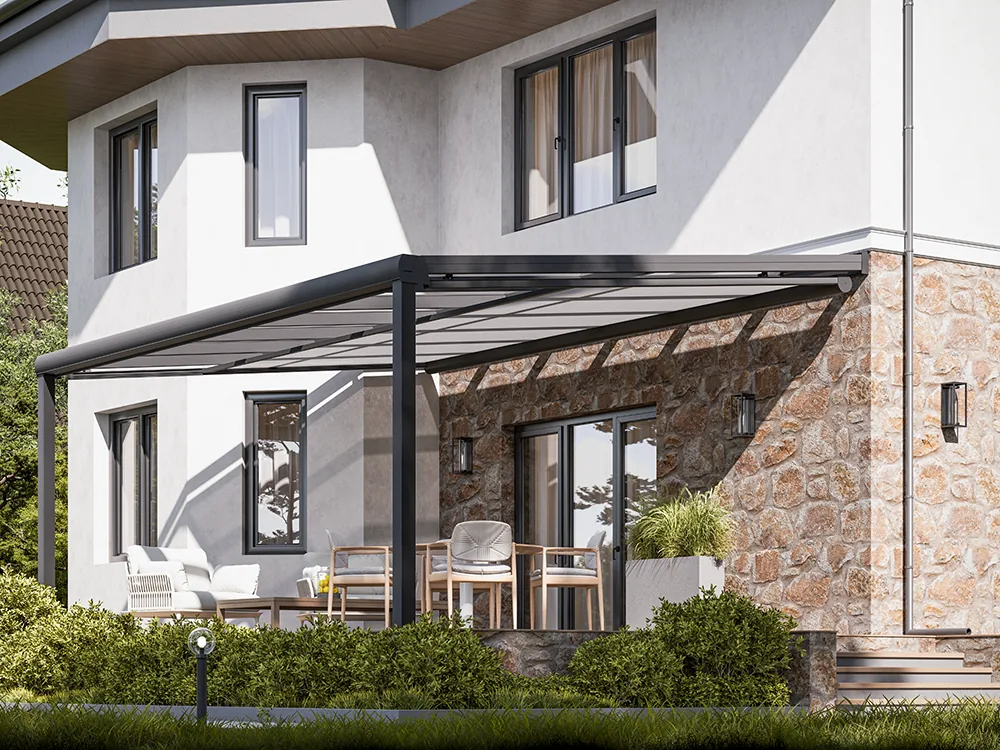
Villa terrace with a Sky 1600 shock-absorber ceiling zip screen drawn over the seating area
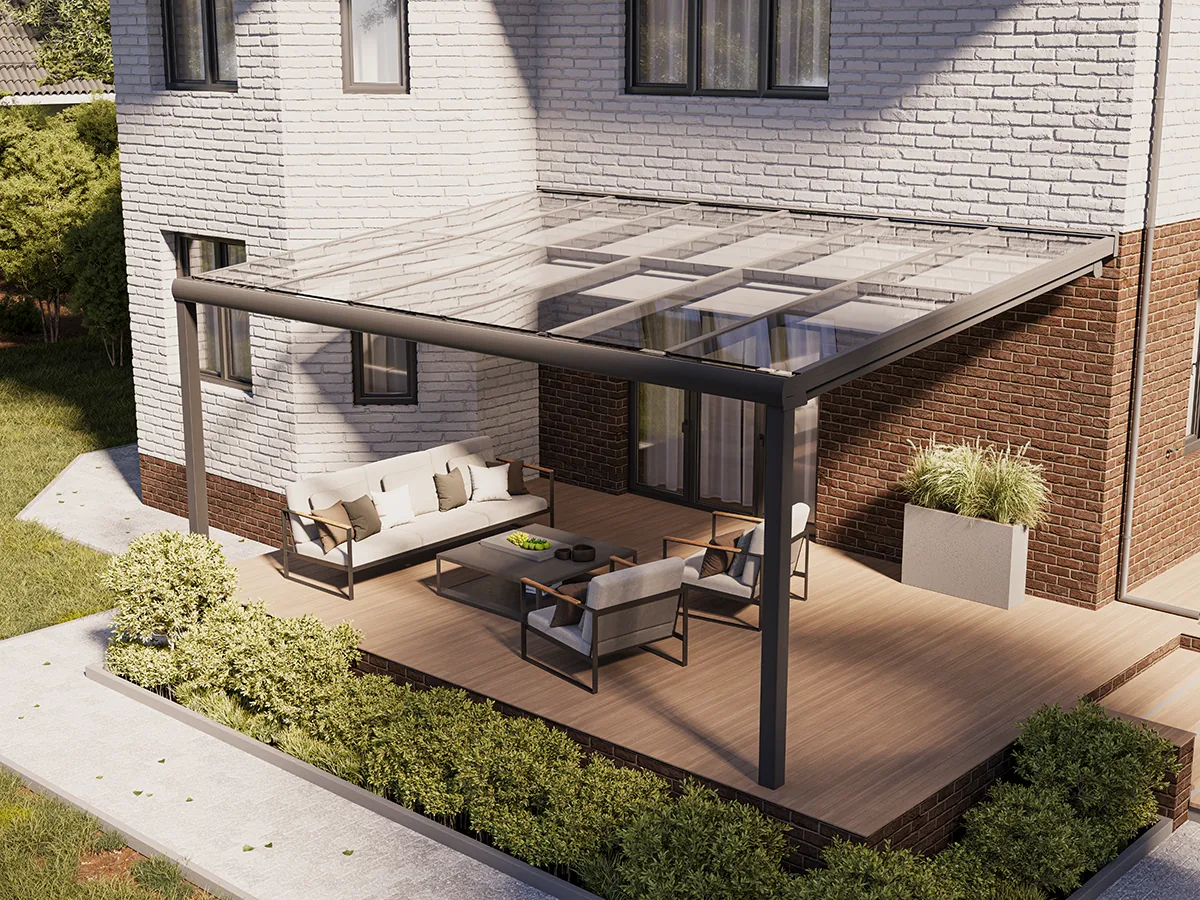
Top-down view of a Sky 1600 shock-absorber ceiling zip screen over a terrace
Fabric and comfort
The fabric is breathable: air passes through the weave, so the space under the screen does not become a sealed oven. At the same time it blocks sun and UV, stops insects, and gives privacy because people on the inside can look out while those outside cannot easily look in. Colours and fabrics are offered in a range; see the fabric collection guide for how to choose between solid, opaque and mesh options. Benefits for energy use, such as lower summer cooling demand and less winter heat loss, depend on the fabric and what the screen covers.
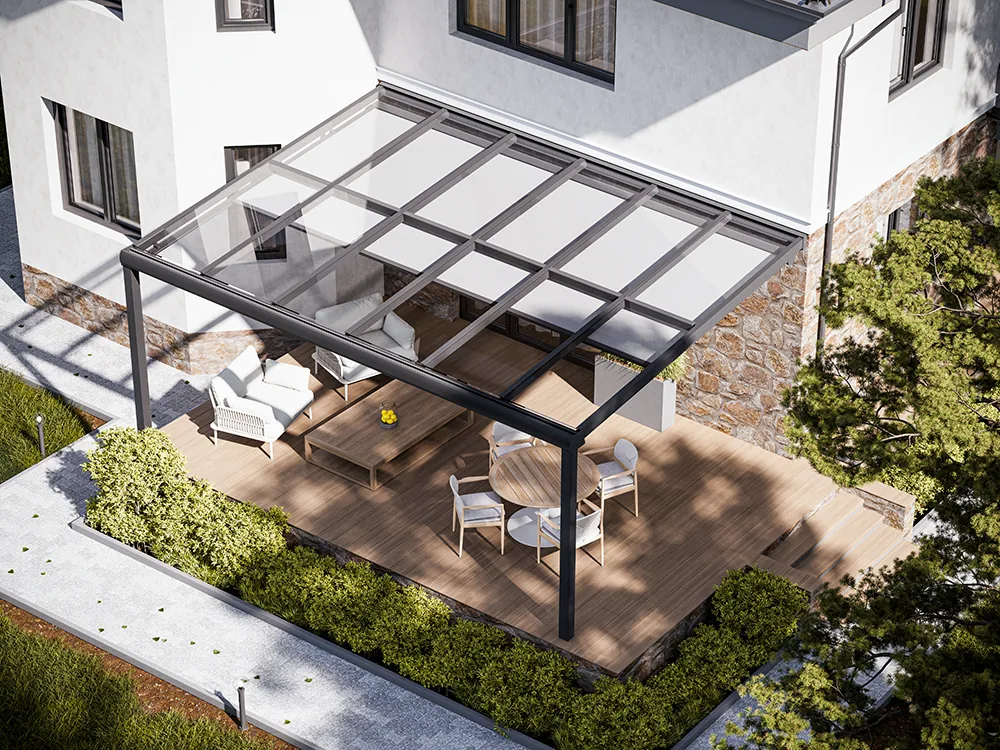
Garden terrace with a Sky 1600 ceiling zip screen seen from the surrounding lawn
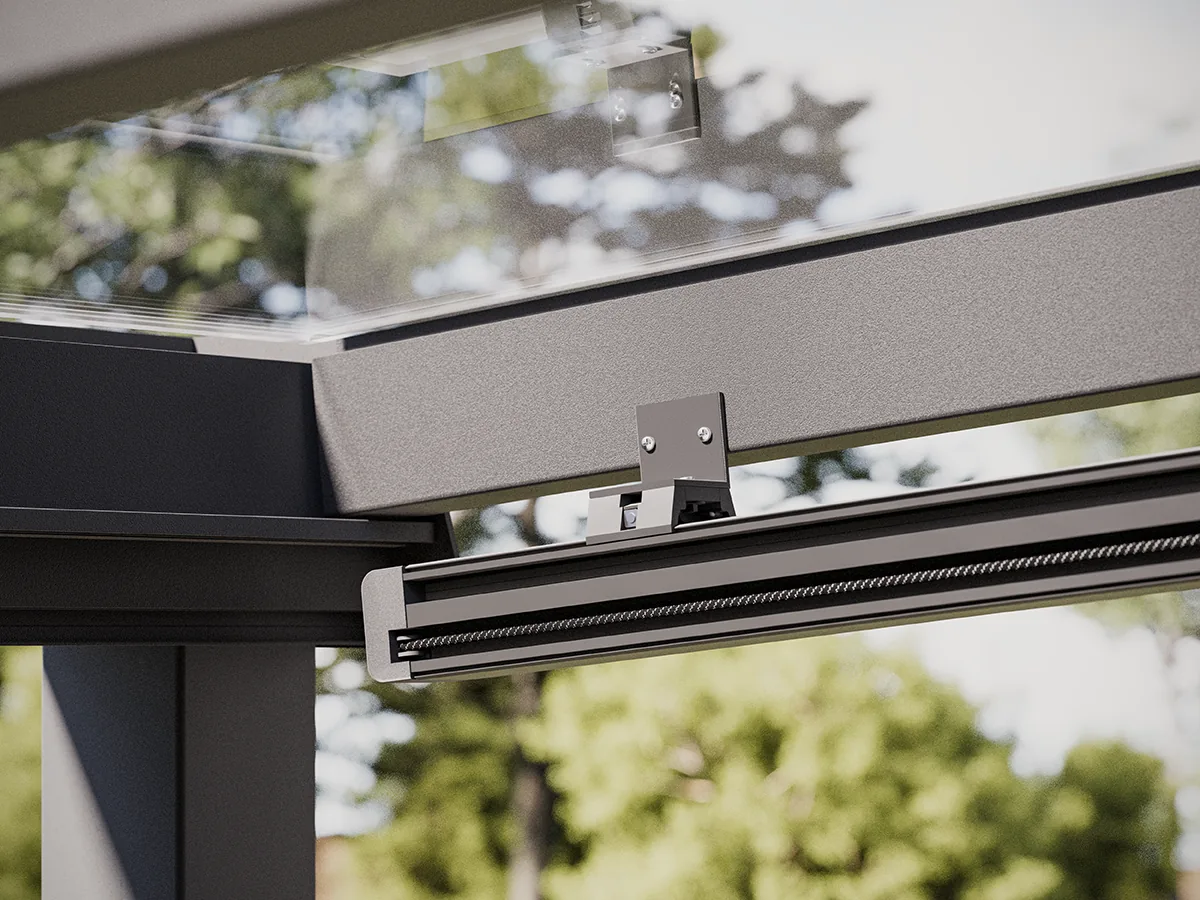
Rail profile of a Sky 1600 ceiling zip screen showing the channel that holds the fabric
Specification overview
| Item | Sky 1600 (shock-absorber type) |
|---|---|
| Position | Ceiling: pergola tops, terraces, balconies with large glass areas |
| Movement control | Shock-absorber (damper) system |
| Fabric hold | Zip bead locked in side rails |
| Fabric | Breathable, privacy-giving, insect-proof, several colours |
| Control | Remote controlled; compatible with smart systems |
| Wind behaviour | Fabric remains stable in the rail system |
| Size and price | Made to measure, quoted per project |
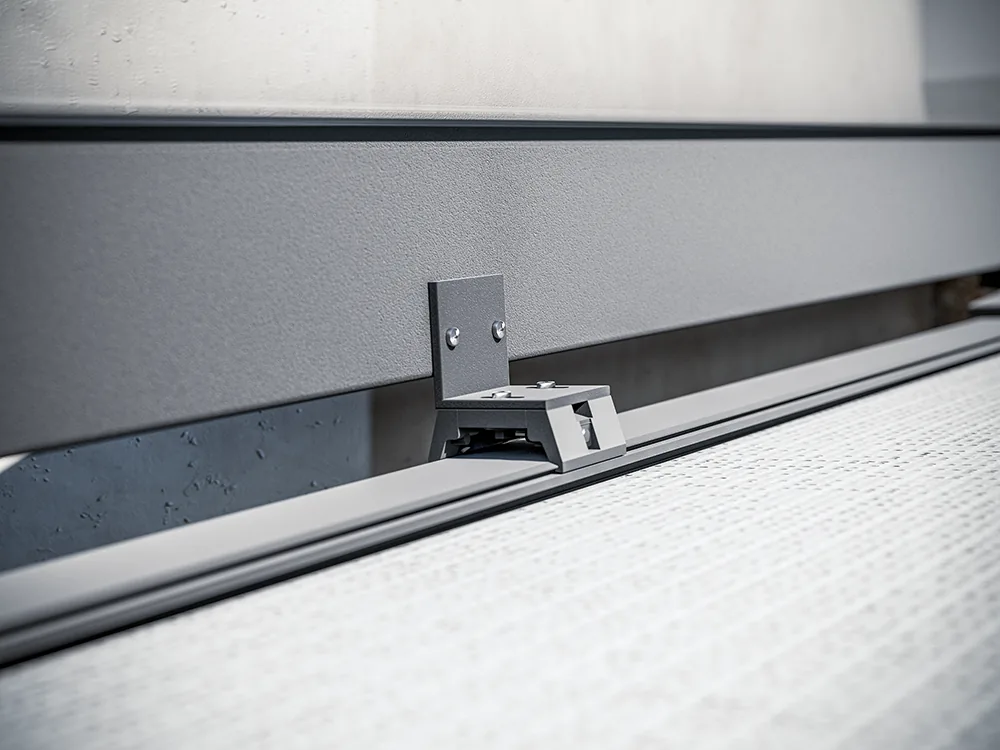
Headbox mounting detail of a Sky 1600 ceiling zip screen fixed to a pergola frame
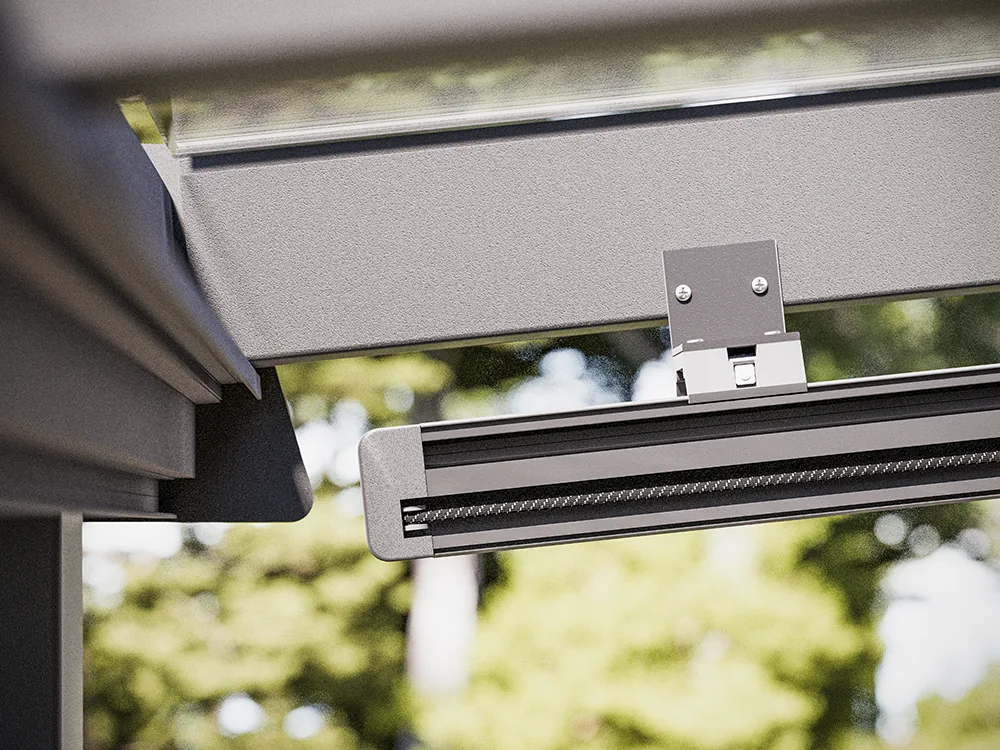
Rail bracket close-up on a Sky 1600 ceiling zip screen fixed to the terrace frame
Limits and planning notes
Sky 1600 shades and reduces weather exposure; it does not replace a waterproof roof and does not insulate like glazing. Retract it in storms or specify a wind sensor. Make sure the supporting frame is straight and rigid, because a damped mechanism will not compensate for a twisted structure. Give the manufacturer the span, the roof angle, the fixing material and any glass above, and agree service access for the drive. A step-by-step list is in the installation and maintenance guide.
Frequently Asked Questions
What is the difference between Sky 1500 and Sky 1600?
Sky 1500 uses a spring to hold the fabric; Sky 1600 uses a shock-absorber system for easier, damped movement and remote operation. Both use zip rails and cover similar spaces.Does it need remote control?
It is designed to be remote controlled and can integrate with smart systems. Wall switches and sensors can be added depending on the controller you choose.Does the fabric block insects and keep privacy?
Yes. The manufacturer describes insect protection and image privacy as features, with breathable fabric so the space keeps air movement.Can it be used in wind?
The rail system keeps the fabric stable and prevents deformation in wind. Retract it in storms, and ask for the tested wind rating of the exact configuration you plan to order.Can fabric and motor be replaced?
Fabric and motor are both replaceable, so the structure stays in service for the long run.Request a quote with the span, roof angle and fabric preference.
Related: Ceiling zip screens · Sky 1500 spring screen · Zip screen model range · Zip screen motorization · Zip screen models