Sky 1500 Spring Ceiling Zip Screen for Pergolas and Terraces
Last updated:
Sky 1500 is the spring-type ceiling zip screen in our manufacturing partner's range. Its fabric runs in a dedicated rail system, so it stays steady in wind instead of flapping. It suits pergolas, terraces and balconies with large glass areas, and it is the simpler overhead option compared with the shock-absorber Sky 1600.
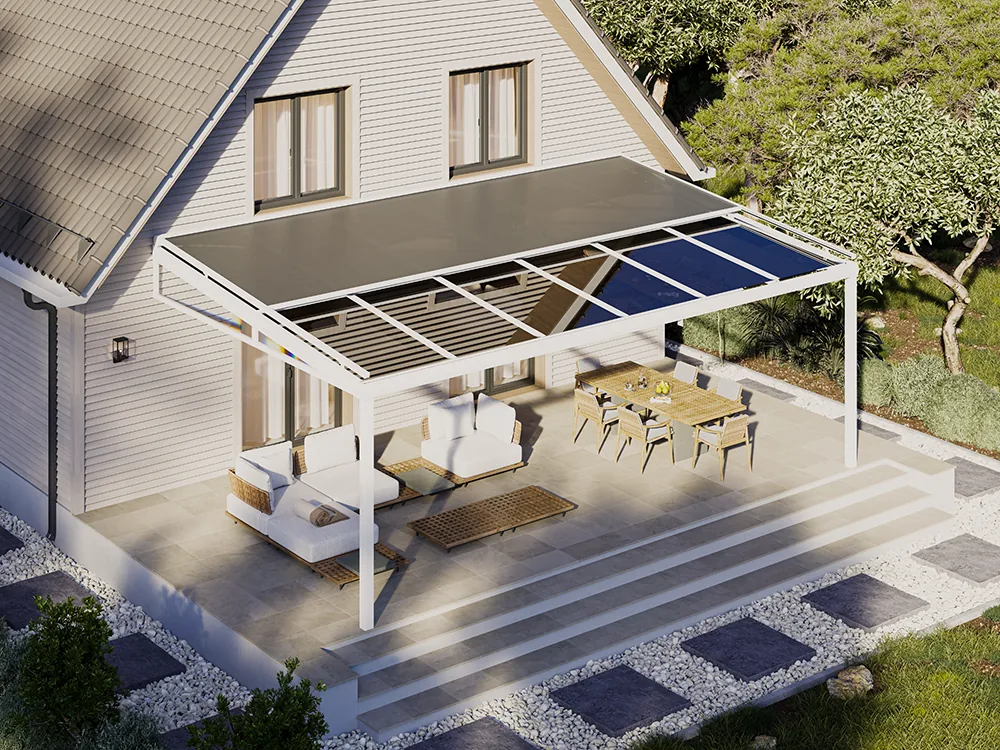
White pergola seen from above with Sky 1500 spring ceiling zip screen fitted between solar panels
What Sky 1500 is
Sky 1500 is a horizontal or gently sloped zip screen: instead of dropping down a wall, the fabric travels across the top of a space and is held at both edges by a rail. It is sold as a ceiling system, meaning it is meant to cover a pergola roof, a glazed terrace top or the opening above a balcony.
The "spring" in the name describes the tension method. A spring-loaded mechanism takes up slack as the fabric is drawn out or pulled back, so the cloth remains flat along its length rather than sagging in the middle. Compared with a damper-assisted system, a spring design is the more straightforward mechanism, which is why it is the usual starting point for ordinary spans.
If you are still deciding which overhead family fits a project, start with the general ceiling zip screen overview. For the shock-absorber alternative, see Sky 1600.
How the rail and spring work together
Three parts do the work:
- The side rails. The edge of the fabric carries a zip bead that slides inside a channel. Wind pressure pushes the cloth against the channel, not out of it, which is why the fabric does not deform when a gust crosses the roof.
- The tension element. The spring keeps a constant pull on the fabric so it does not hang loose between the rails.
- The head unit. The housing carries the roller and drive, and is usually the part you see first when you look at a finished installation.
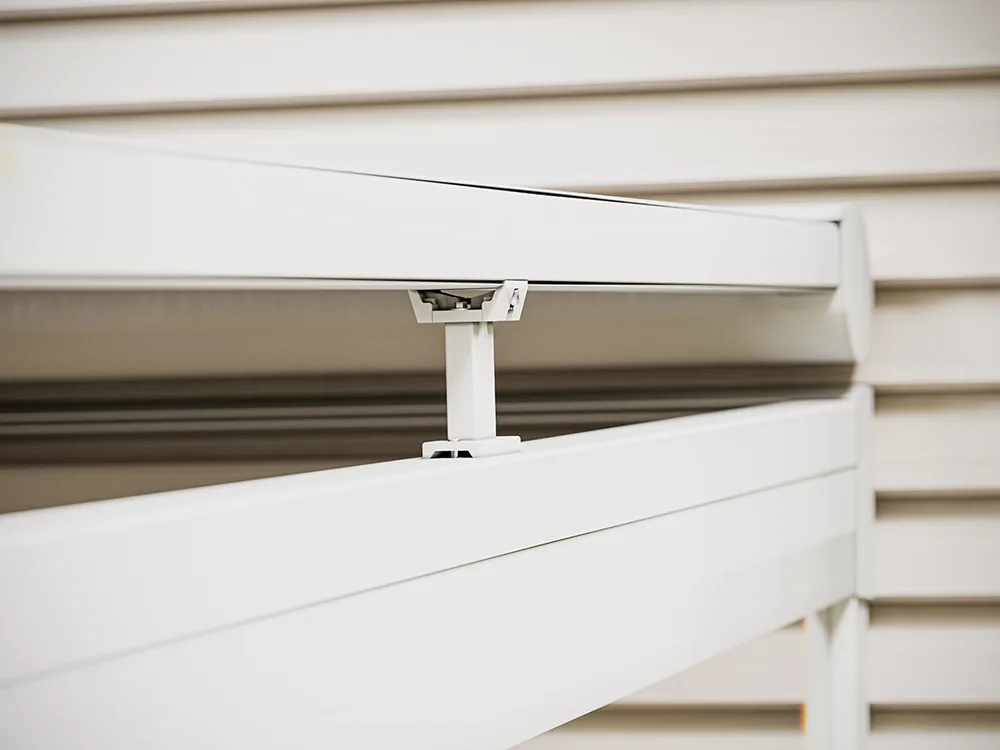
Mounting bracket holding a Sky 1500 spring ceiling zip screen to a pergola beam
Because the rails are the fixing line, the structure beneath them matters as much as the screen. A square, rigid frame lets the fabric travel freely; a twisted or flexing frame makes it bind. Ask for the beam or glazing-bar dimensions to be confirmed on drawings before ordering.
Where it is used
- Glass-topped pergolas. The screen sits over or beneath the glazing and cuts solar gain before it builds up inside.
- Terraces and rooftop dining areas that need shade without a solid roof.
- Balconies with large glass areas, where the sun heats the space behind the glass.
- Hotel and restaurant covers where staff need to adjust shade through the day and the screen must hold in a breeze.
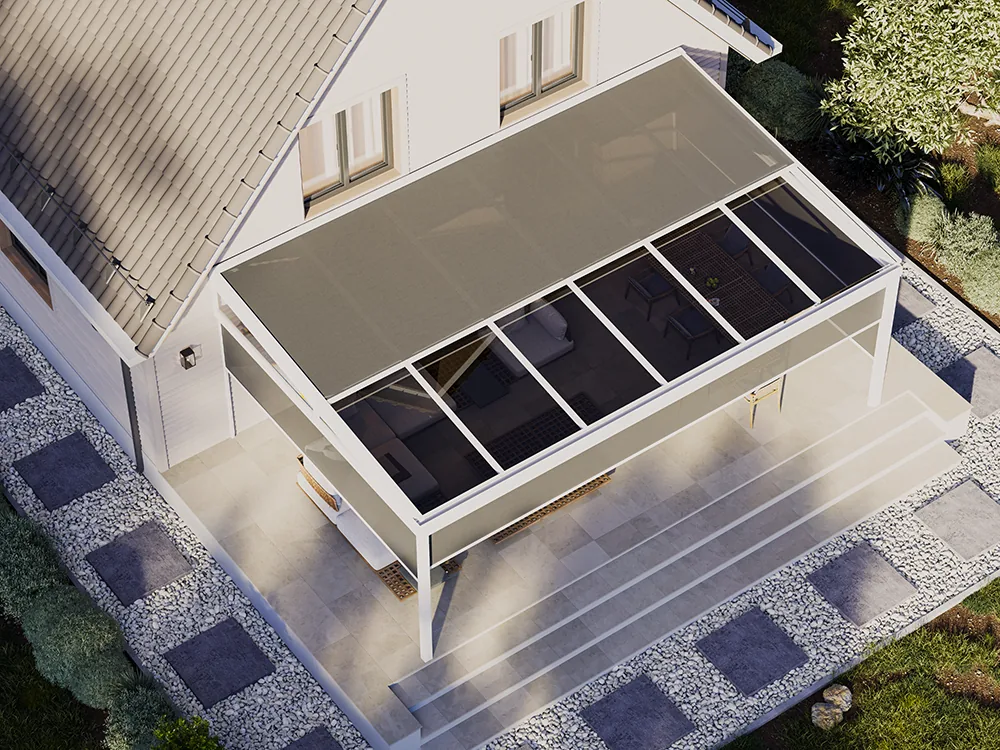
Aerial view of a white pergola with Sky 1500 ceiling zip screens in dark fabric
What it protects against
The manufacturer lists protection from sun, wind and insects, plus UV filtering that keeps the space beneath cooler. Fabric is offered in a range of colours and weaves, so the screen can be matched to the building. In summer the shade reduces the cooling load; in winter a closed screen reduces heat loss from the glass beneath it. Treat these as directional benefits rather than guaranteed energy figures: the result depends on fabric, orientation and what the screen sits above.
For fabric families and how to read a swatch book, see the fabric collection guide.
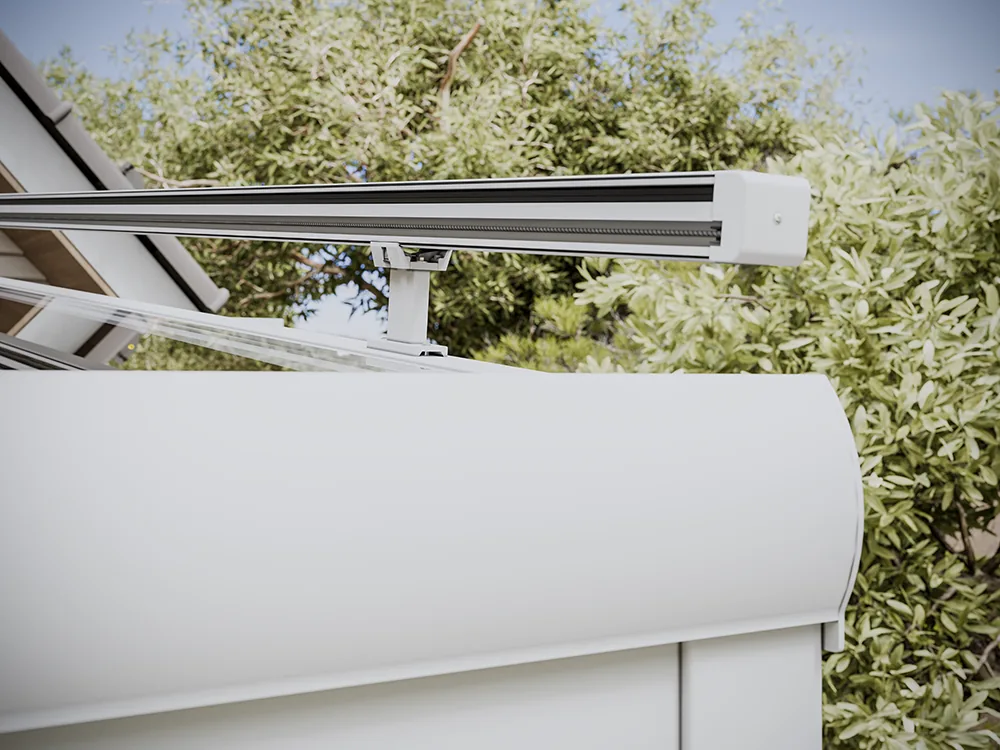
Rail corner of a Sky 1500 spring ceiling zip screen showing zip channel and end fitting
Operation and control
The screen is operated with a single button or a remote. It can be tied into a smart building or home system, so it extends and retracts on a schedule or in response to conditions. In practice, buyers specify a wind sensor to retract the screen in strong gusts and a sun sensor to deploy it when the glass heats up. Motor and control details are covered in zip screen motorization.
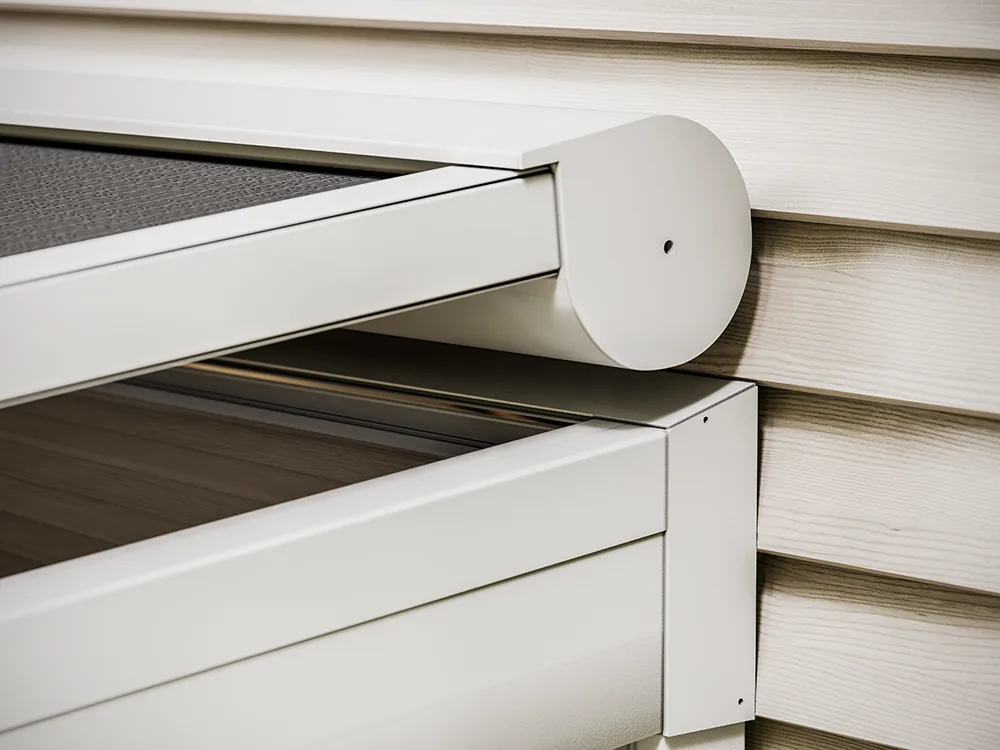
Round headbox end of a Sky 1500 spring ceiling zip screen seen from the side
Specification overview
| Item | Sky 1500 (spring type) |
|---|---|
| Position | Ceiling: pergola tops, glazed terraces, balcony covers |
| Tension method | Spring-loaded |
| Fabric hold | Zip bead locked in side rails |
| Protection | Sun, wind, insects, UV |
| Control | Single button or remote; smart system integration possible |
| Fabric and colour | Several colours and weaves, made to order |
| Size and price | Made to measure, quoted per project |
Limits to state clearly
Sky 1500 is a shading and weather-reduction layer, not a watertight roof. Do not rely on it to carry heavy rain pooling, snow load or a person walking on it. Retract it when storms are forecast or let a wind sensor do so. Very long single spans may call for the shock-absorber version or a divided layout, so give the span early and let the manufacturer advise.
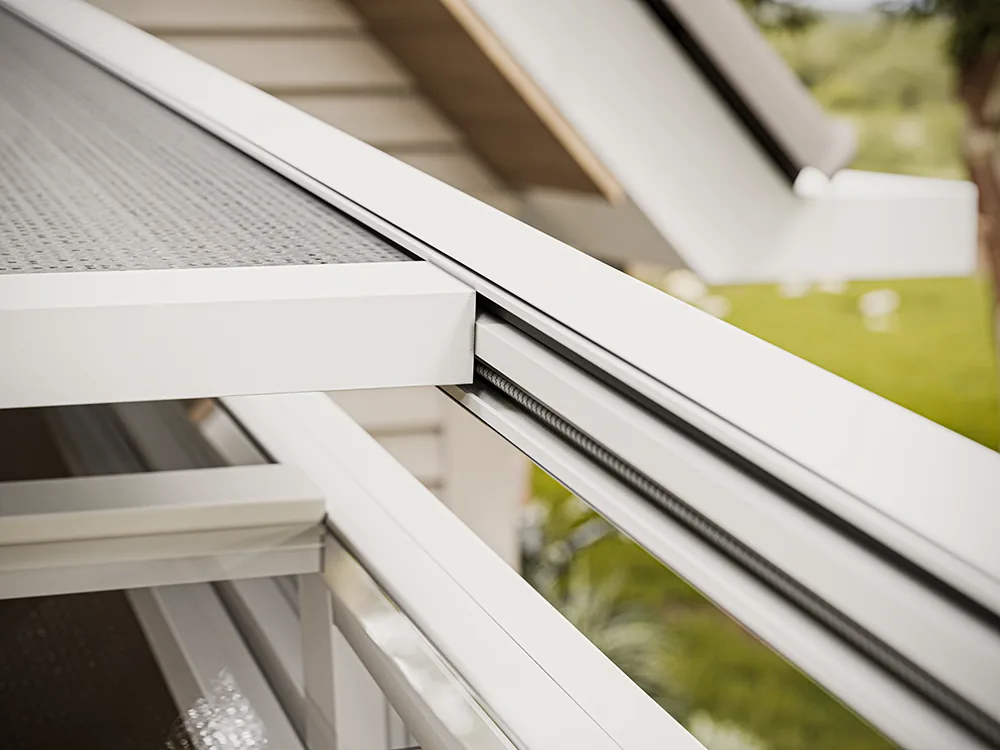
Sky 1500 ceiling zip screen rail profile close-up showing the zip channel and fabric edge
What to send with an enquiry
- Width and projection of the area to be covered, measured in several places.
- Roof angle, or a note that it is flat.
- What the rails will attach to: aluminium, steel, timber or glazing frame.
- Preferred fabric colour and how much light you want to pass.
- Manual or motorised, and any sensors.
- Destination country and quantities if you are a dealer or contractor.
Frequently Asked Questions
What does "spring type" mean for a ceiling zip screen?
A spring-loaded mechanism keeps tension on the fabric as it moves in and out. The cloth stays flat in its rails rather than hanging loose, which helps in wind.Is Sky 1500 suitable for a glass roof?
It is intended for pergolas, terraces and balconies with large glass areas. Confirm the frame can carry the rails and send the roof angle with your request.Can it be automated?
Yes. It works with a single button or remote and can be integrated into smart systems, with wind and sun sensors if you specify them.How does it differ from Sky 1600?
Sky 1500 uses a spring; Sky 1600 uses a shock-absorber arrangement for smoother movement. See the Sky 1600 page and the model range comparison.Can fabric be replaced later?
Yes, the fabric is replaceable if damaged, and motors can be swapped, so the frame and rails remain in service.Request a quote with your dimensions, roof angle and fabric preference.
Related: Ceiling zip screens · Sky 1600 shock-absorber screen · Zip screen model range · Bioclimatic pergolas · Zip screen overview