Outdoor Facade Zip Screens for Villas, Hotels and Offices
Last updated:
Outdoor facade zip screens are vertical fabric curtains that close the outer face of a building, terrace or balcony. The fabric edges lock into side rails, so the screen resists wind, blocks sun and insects, and gives privacy. Our manufacturing partner builds them motorised or manual, up to 6 m wide and 4 m high.
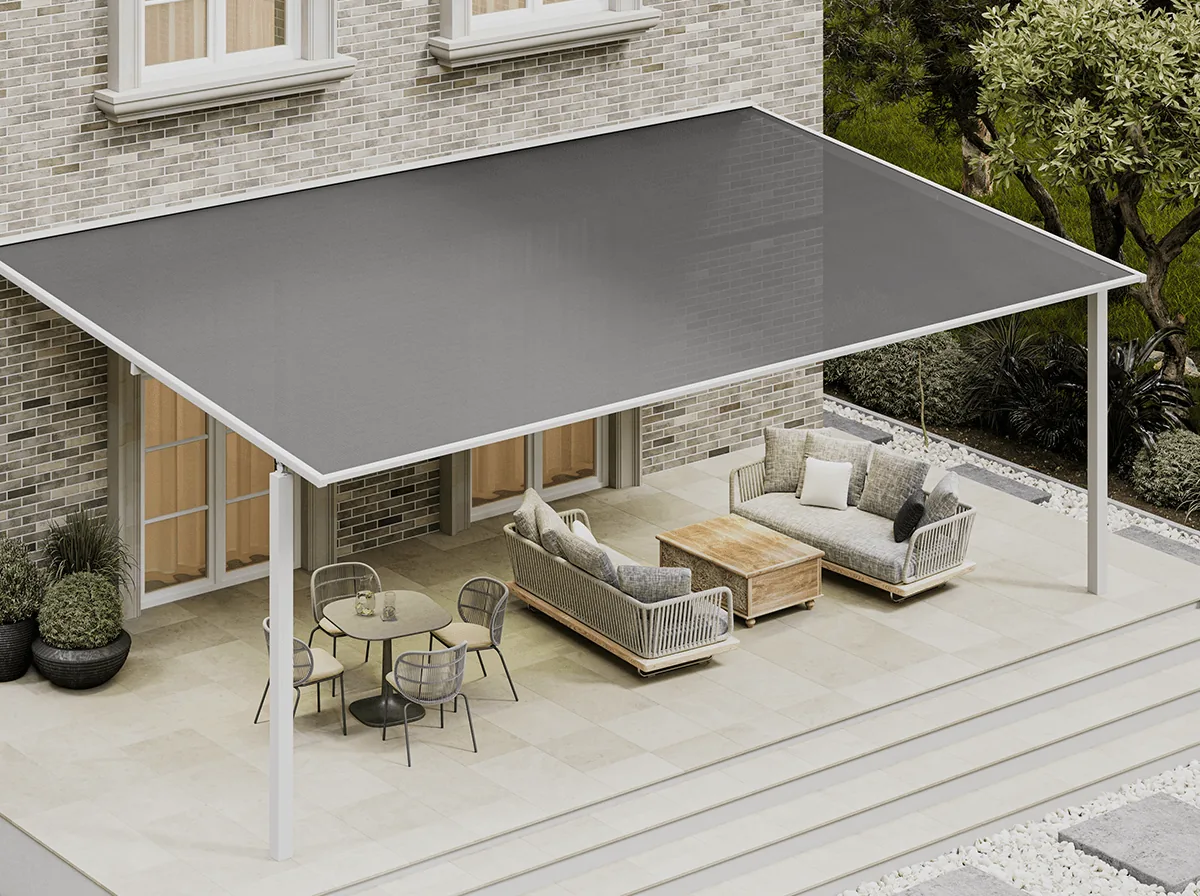
Grey canopy terrace on a house with outdoor facade zip screens closing the open sides
What a facade zip screen is
A facade zip screen is built around a high-strength fabric that is fixed to side guide rails with a zip fastening. The system works with an electric motor or by hand, and it is designed for exterior use where sun, wind and rain reach the surface directly. Compared with an ordinary roller blind, the zip lock is what changes the outcome: a plain blind lifts and slaps in a gust, while a zip screen holds its plane.
The category covers residential villas, apartment terraces, restaurant frontages, hotel pool areas, offices and winter gardens. For a closer look at the plain vertical model, read the vertical zip screen page; this page concentrates on the building-envelope uses and the specification choices that go with them.
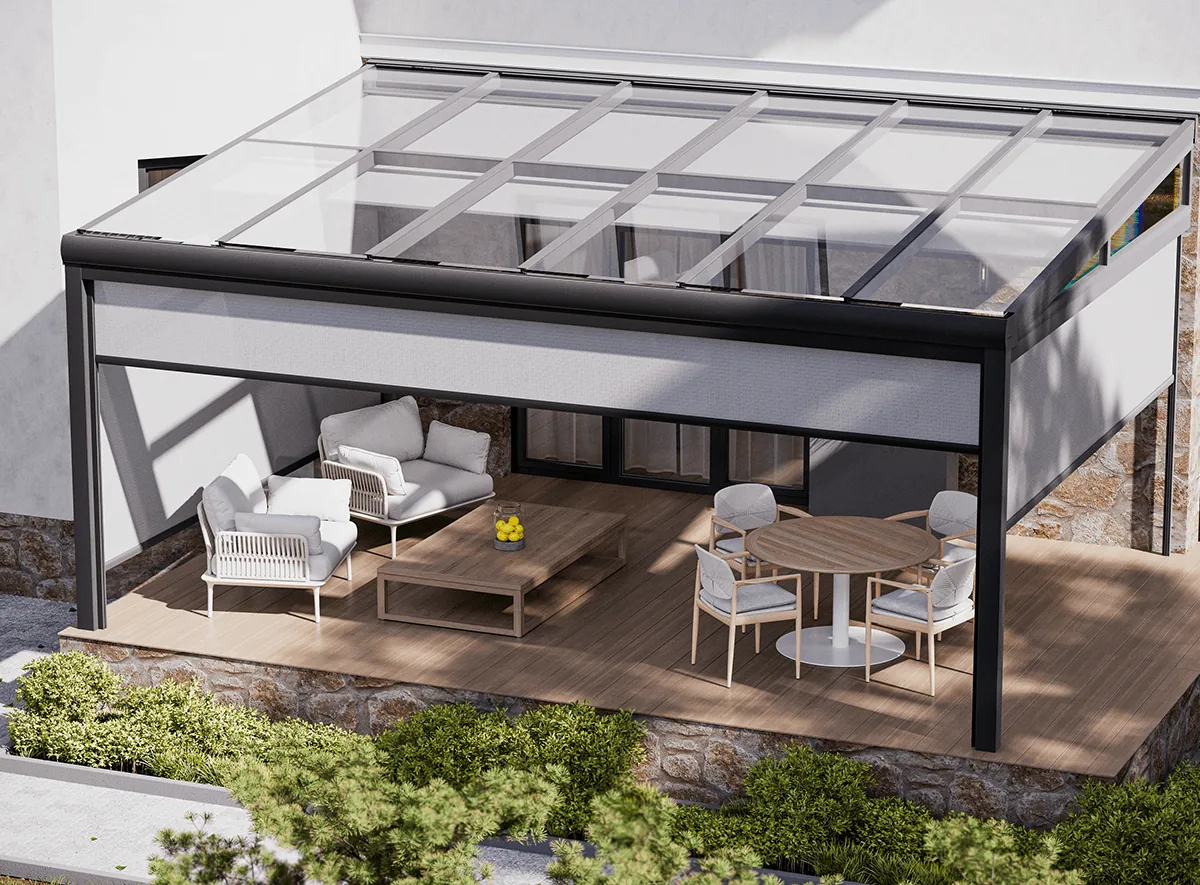
Glass-roofed terrace with zip screens fitted on the facade sides
Technical profile
| Item | Facade zip screen |
|---|---|
| Fabric types | Blackout fabric, or mesh fabric with about 3-10% openness |
| Coating | PVC-coated fabric for durability and water resistance |
| Profiles and rails | Aluminium: light, resistant to corrosion |
| Operation | Motor (remote or smart control) or manual |
| Manual use | Simple mechanical drive, suited to smaller areas |
| Wind | Rated for up to 120 km/h on the manufacturer's tunnel testing, with the zip keeping fabric in the rails |
| Water and dust | High IP rating stated; drainage designed to shed water |
| Maximum single unit | 6 m wide x 4 m high; larger projects built in modules |
Wind and water figures are the manufacturer's statements. Published ratings can differ between models and fabrics, so request the test report for the configuration you actually plan to order, particularly for exposed or coastal sites.
Fabric choices: blackout or mesh
Blackout fabric blocks light fully and gives the most privacy and heat control. It suits spaces where the occupants do not need to look out, or where a bedroom-style darkness or night-time enclosure is wanted. Mesh fabric is woven with small openings, so the screen filters sun while keeping the view; the stated range here is about 3% to 10% openness. Lower openness means more shade; higher means a clearer view and a little more light.
On a restaurant terrace the usual compromise is mesh in a neutral colour, so diners keep their sight line while glare drops. On a villa facing a busy street, a denser fabric helps with privacy. To compare weaves, read the fabric collection guide.
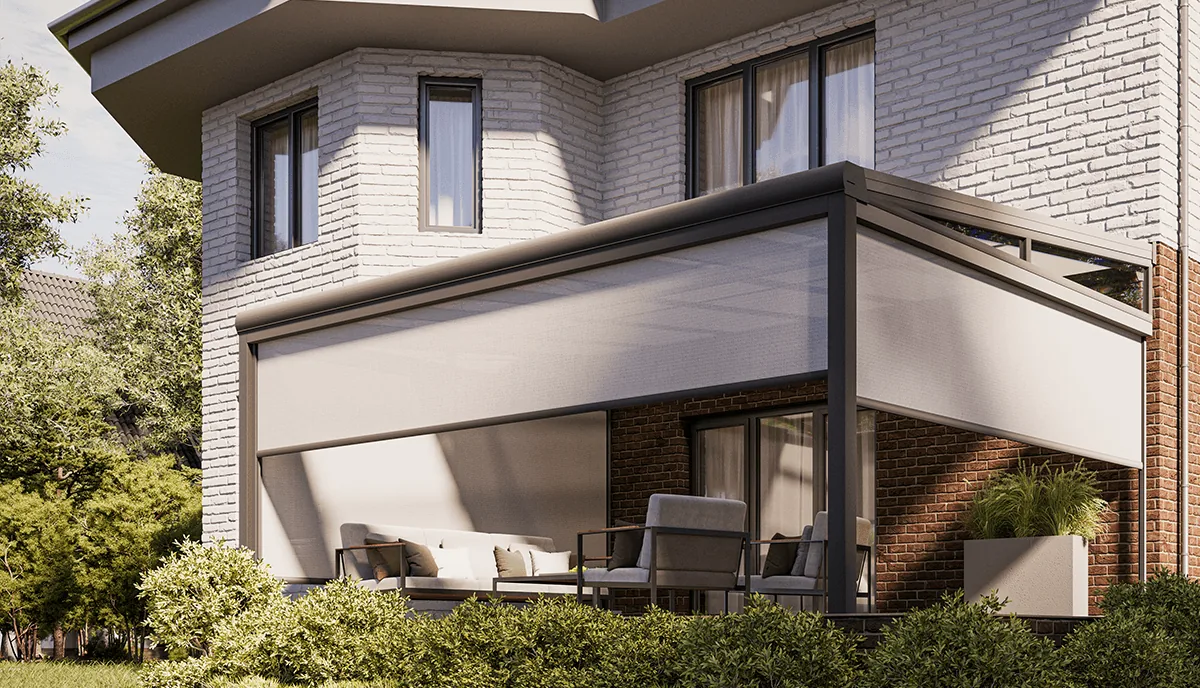
Zip screens at the corner of a house with grey fabric closing a covered sitting area
Where facade screens are installed
- Residential: balconies, terraces, winter gardens, and villa porches that need shade and privacy.
- Cafes and restaurants: open seating areas made usable through more of the year.
- Hotels and resorts: pool areas, open restaurants and lobby entrances.
- Offices: facade sun control that lowers glare and cooling demand.
- Schools and hospitals: shading and indoor comfort.
- Industrial sites: protection for warehouse and production openings, and added security at logistics doors.
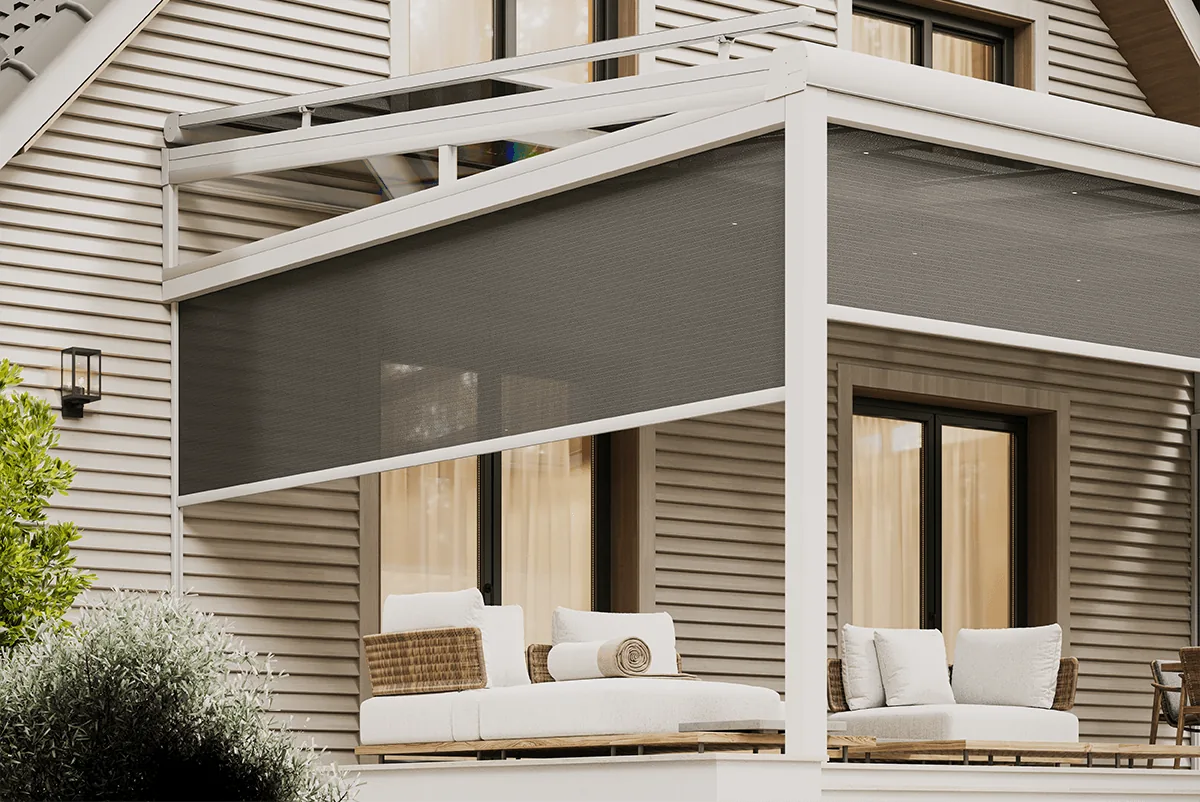
Terrace corner with a facade zip screen enclosing the side opening
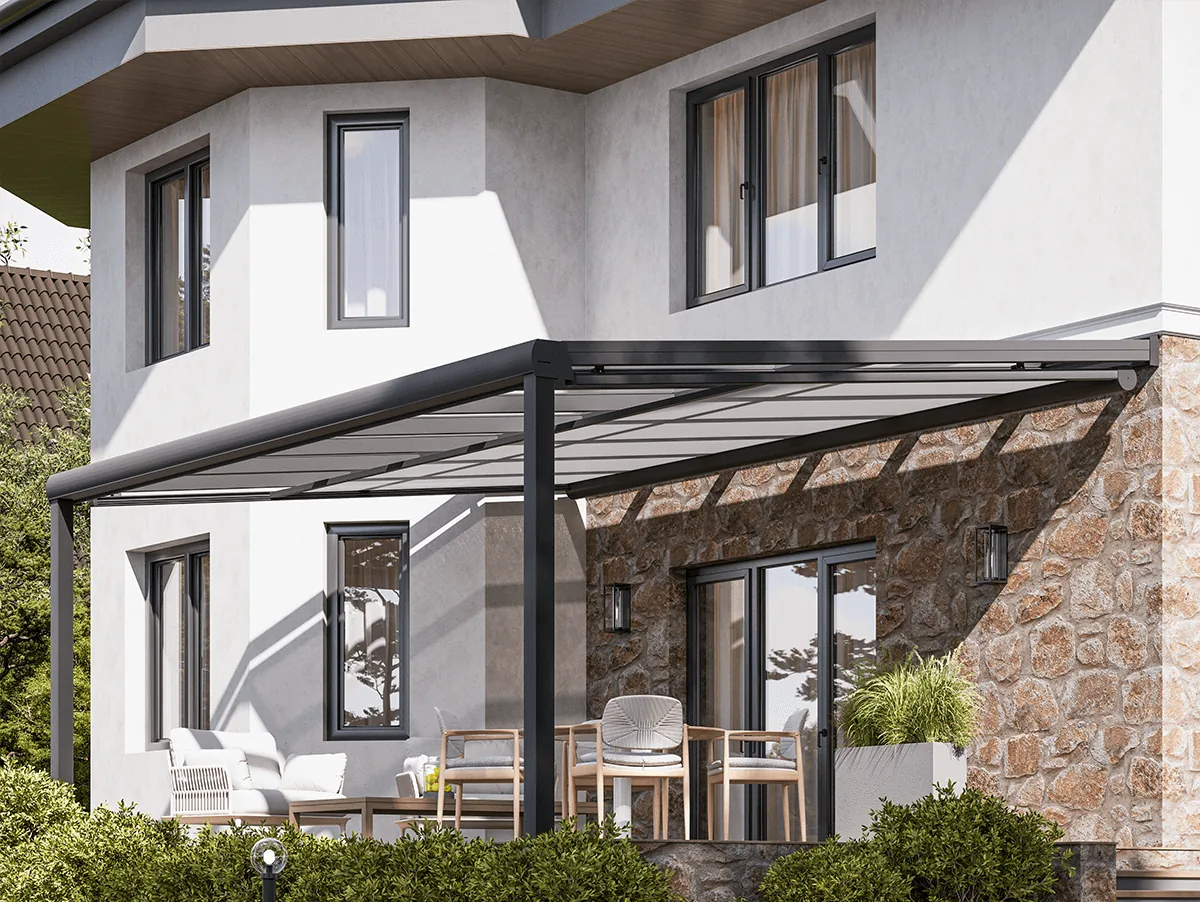
Villa with stone facade fitted with outdoor zip screens in the openings
What you gain
Energy. By blocking sun before it reaches the glass, the screen helps lower interior temperatures and reduces air-conditioning use; in winter, a closed screen cuts heat loss. Protection. It filters UV, which slows the fading of furniture, and shields against wind, rain and dust. Look. The minimalist profile suits modern architecture, with many colours and fabrics. Control. The screen can join a smart-building system, with sun, wind and rain sensors operating it automatically. Service life. Aluminium profiles and quality fabric last for years with regular maintenance.
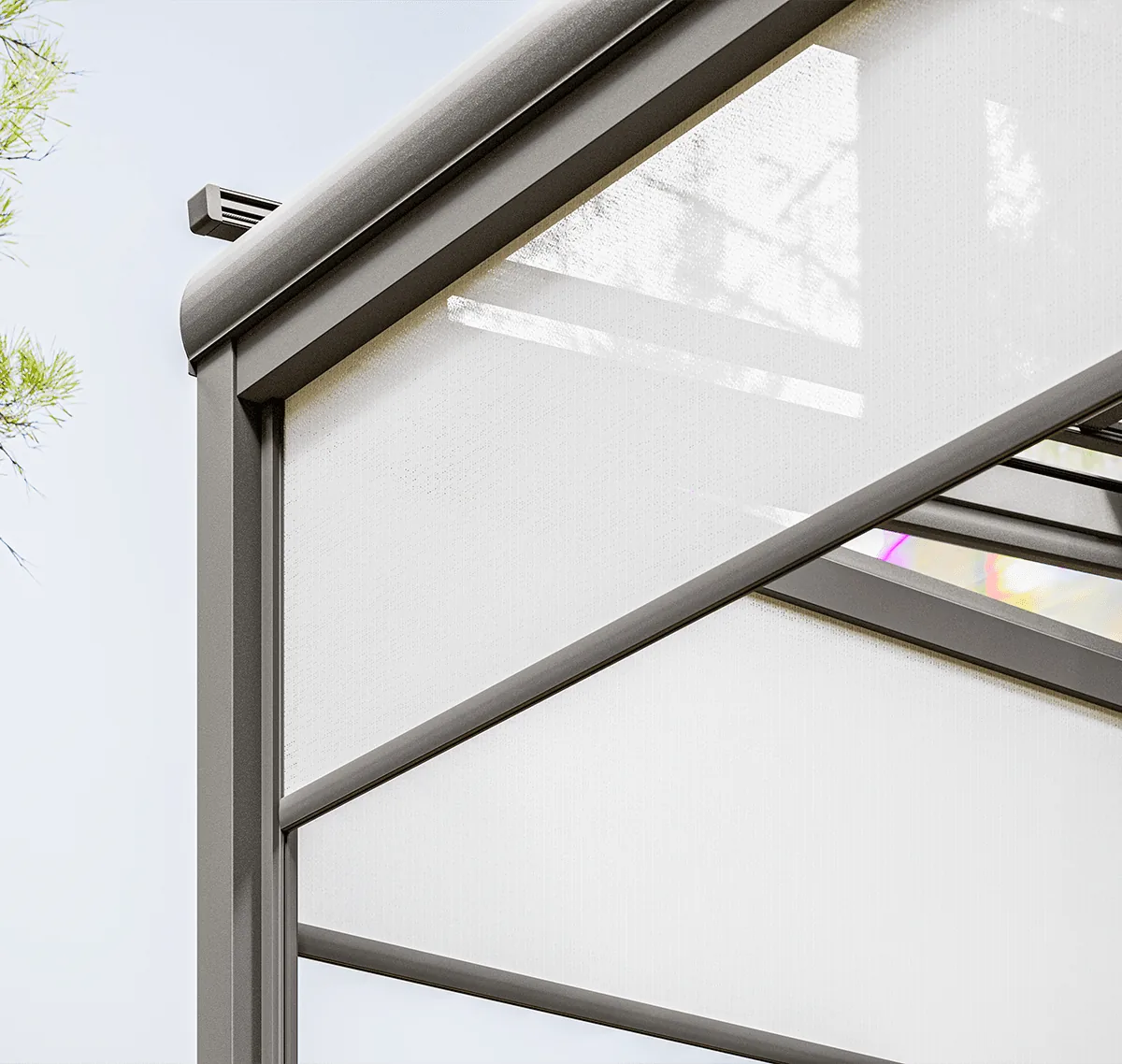
Close-up of a facade zip screen corner showing the rail and fabric edge
Installation in five steps
- Project planning. Dimensions are measured and the right system is selected.
- Housing and rail mounting. The aluminium profiles are fixed to the wall or ceiling.
- Motor and electrical connection. On motorised units, wiring is done carefully.
- Fabric installation. The fabric is fed into the rails through the zip system.
- Test and commissioning. The screen is run to check smooth operation.
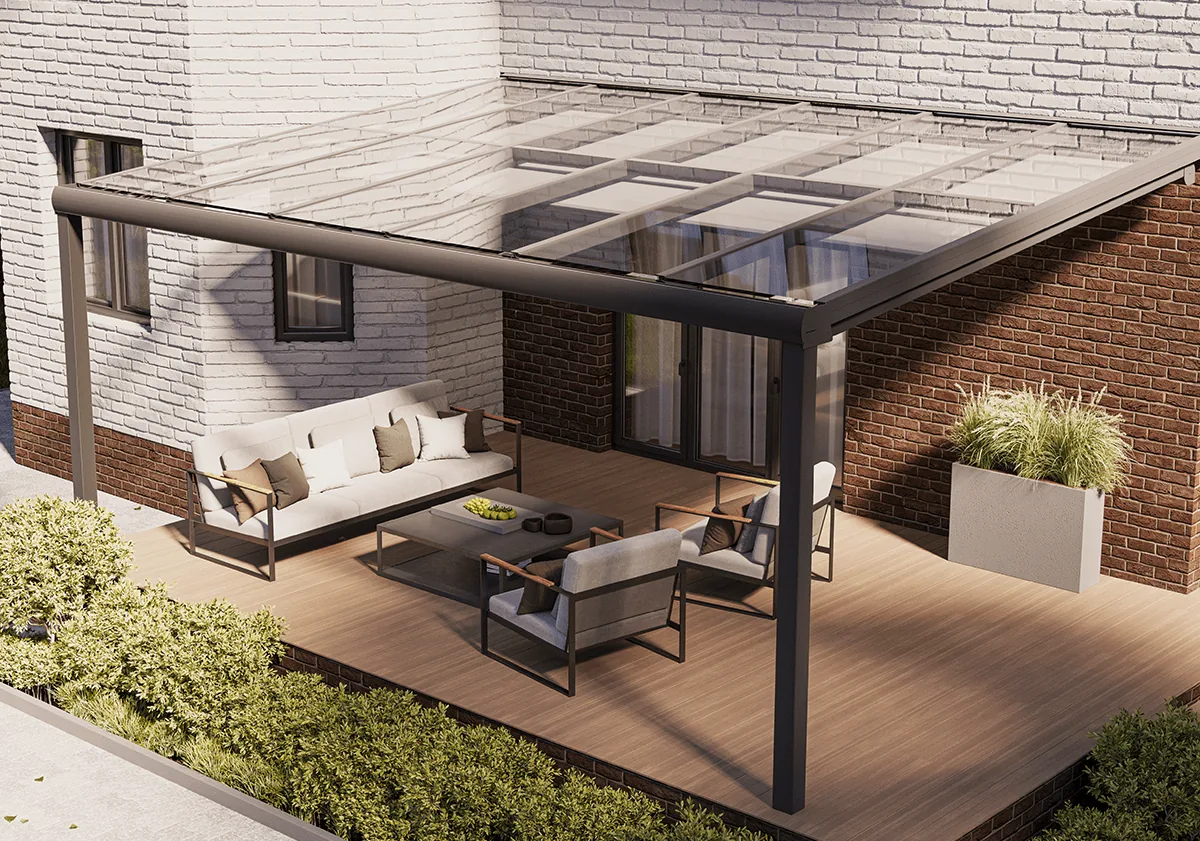
Glass roof terrace seen through a facade zip screen
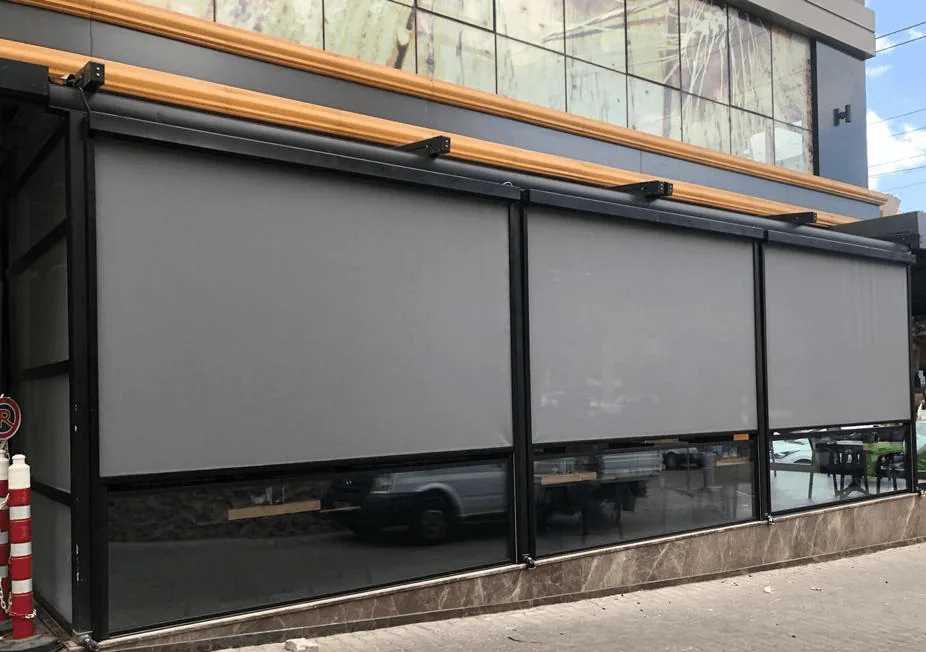
Commercial building with outdoor facade zip screens fitted across its openings
Combining with pergolas and roofs
Facade screens often work with a roof system. On a terrace, the vertical screens close the sides while a bioclimatic pergola, a glass roof or an overhead ceiling zip screen deals with the top. The pergola with integrated zip screens page shows that combination in detail.
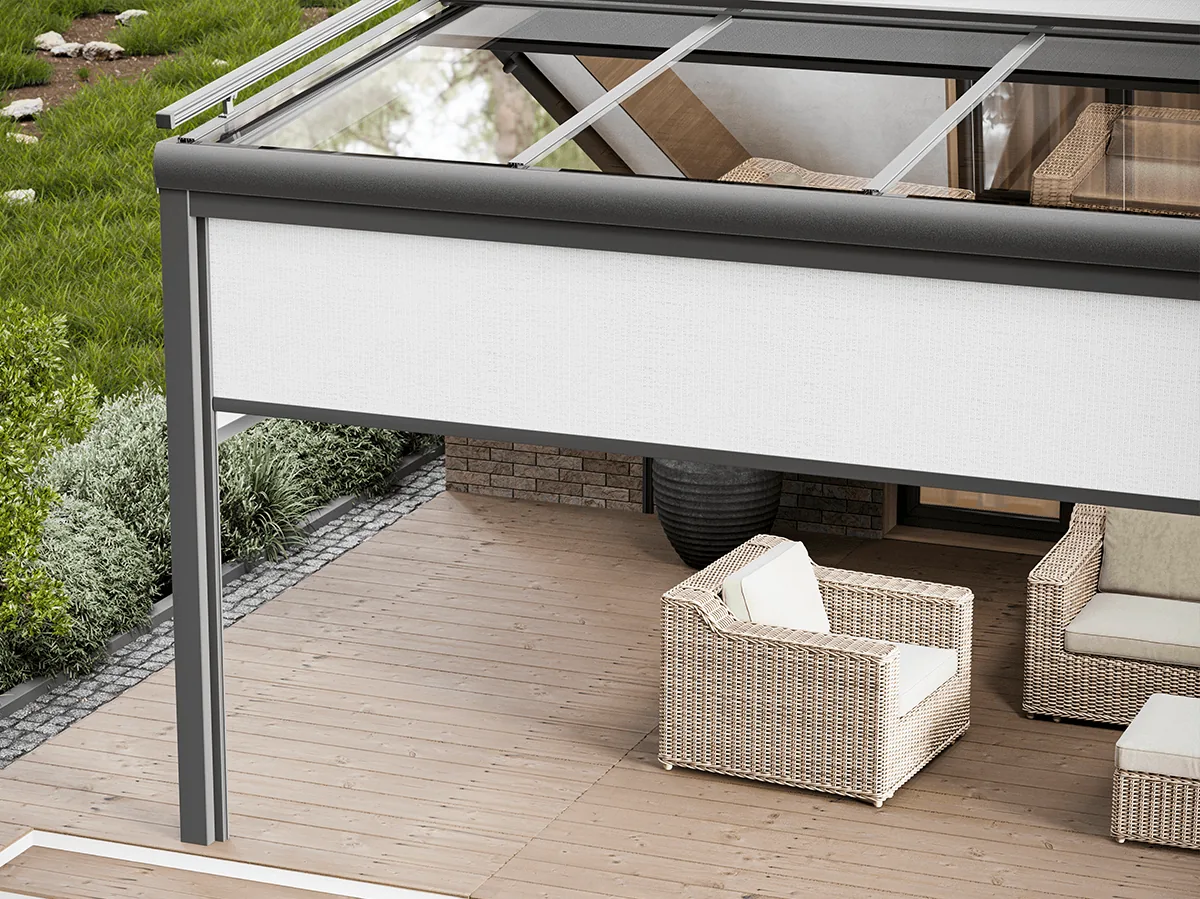
Terrace seating area protected by a facade zip screen along the open side
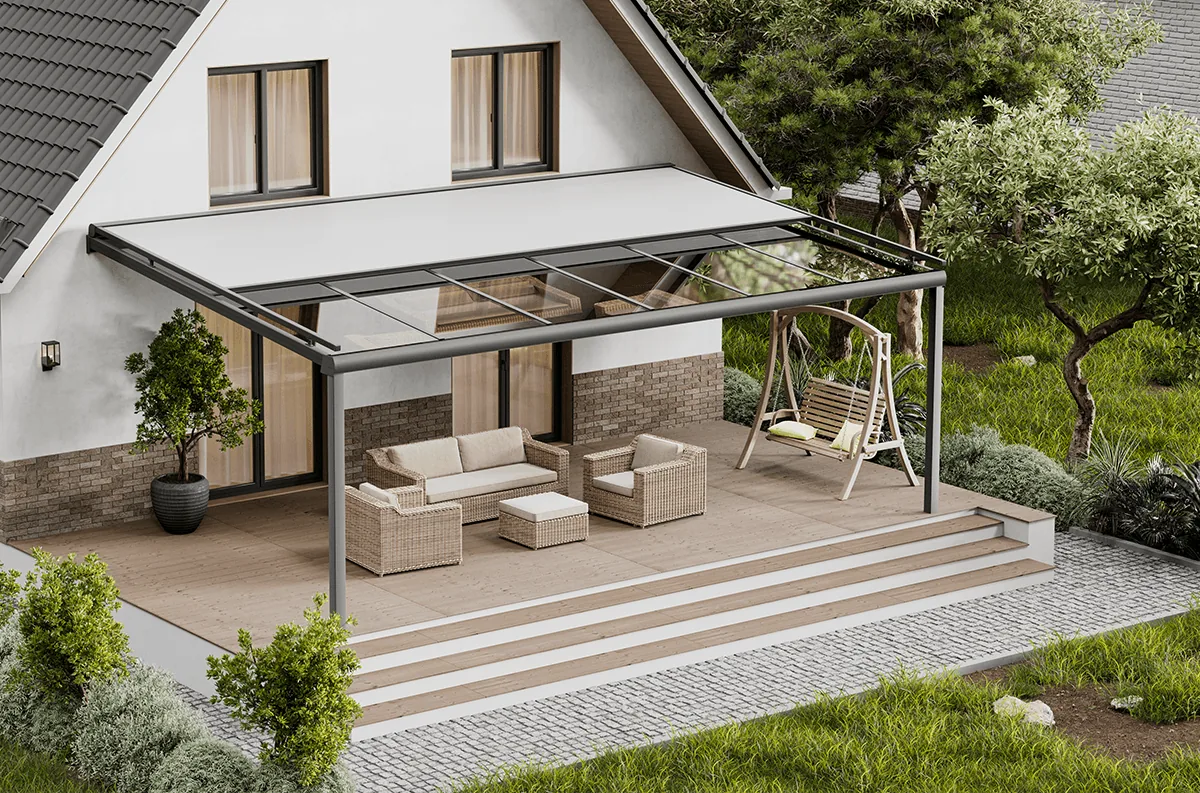
Terrace with a swing seat under a pergola with zip screens at the sides
Limits to state clearly
A zip screen is not a fully sealed wall; it reduces wind, rain and dust, but gaps are always possible at the corners and floor, and it is not an insulated envelope. Very high winds, storms or heavy rain call for retraction, which a wind sensor can do automatically. Manual operation is only sensible for small openings. Fabric choices change view, light and privacy at once, so decide what matters most before you order.
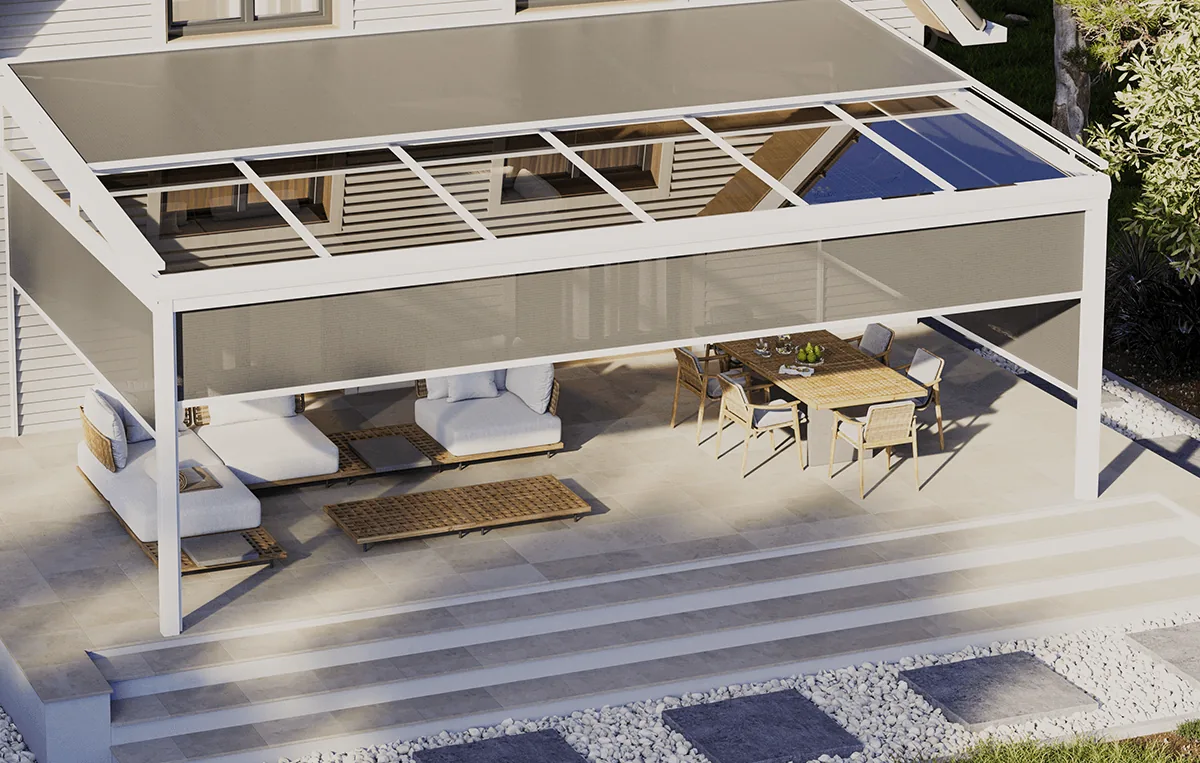
White pergola from above with outdoor facade zip screens around the sides
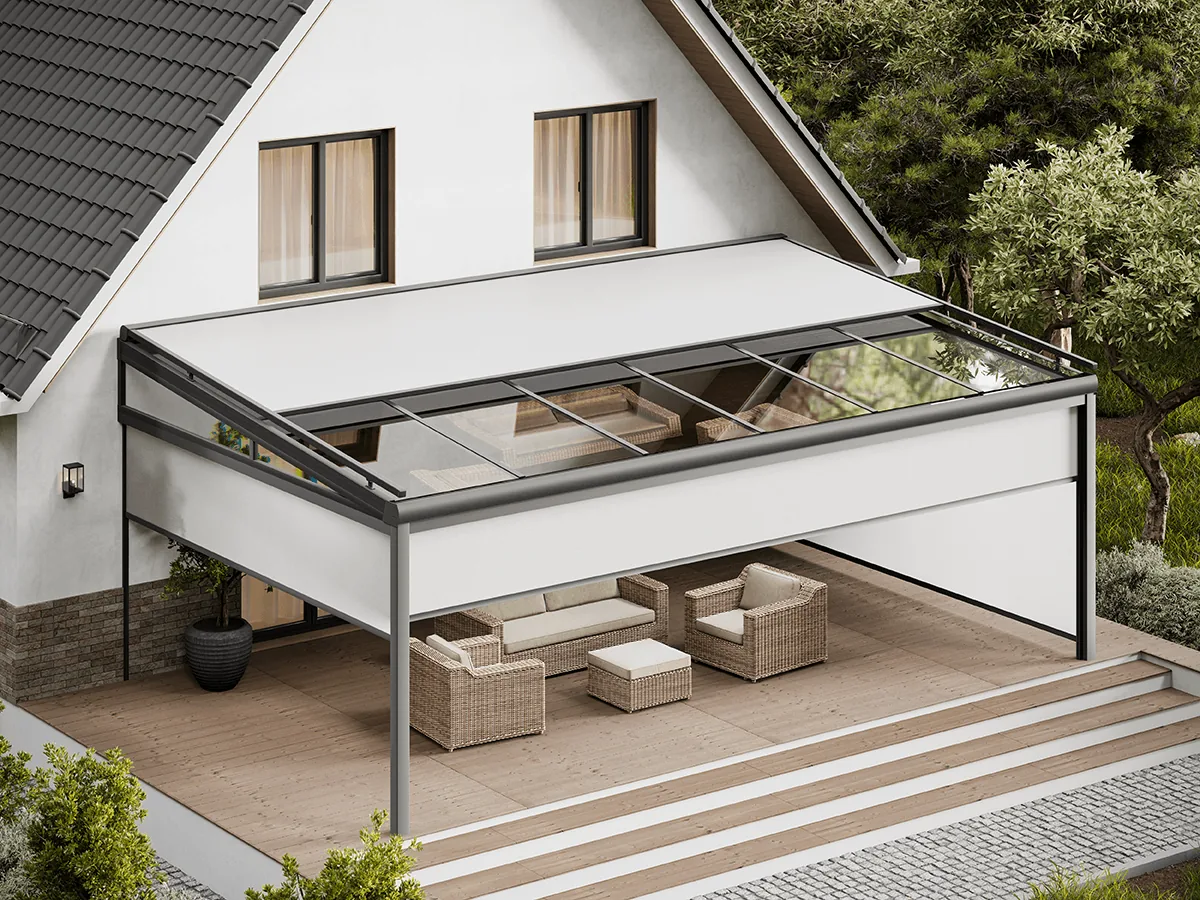
Front of a villa pergola with zip screens lowered across the openings
Frequently Asked Questions
How wide and high can a facade zip screen be?
A single screen can be made up to 6 m wide and 4 m high. Larger openings are divided into modular units placed side by side.Motorised or manual?
Motorised units use remote or smart control and are recommended for larger or higher openings. Manual operation uses a simple mechanical drive and suits small areas only.How much light does the fabric let through?
Blackout fabric blocks light completely. Mesh fabric is described as offering roughly 3% to 10% openness, balancing shade and view.Is the screen weatherproof?
The manufacturer states a high IP rating, PVC-coated fabric and designed drainage. It is a weather-reduction layer, so retract it in storms. Ask for the test report for your configuration.What is the warranty?
The manufacturer states a two-year warranty on its zip screen systems. Confirm scope and conditions in your contract.Request a quote with the opening dimensions, fabric preference and control type.
Related: Vertical zip screens · Zip screen model range · Terrace enclosure options · Installation and maintenance · Zip screen overview