Pergola Systems with Integrated Zip Screens for Terraces
Last updated:
A pergola system with integrated zip screens combines a roofed frame with vertical fabric screens on its sides. The pergola gives shade and shelter overhead; the zip screens close the openings against sun, wind and insects. Made to measure by our manufacturing partner, the set suits terraces, patios, cafes, hotels and villas.
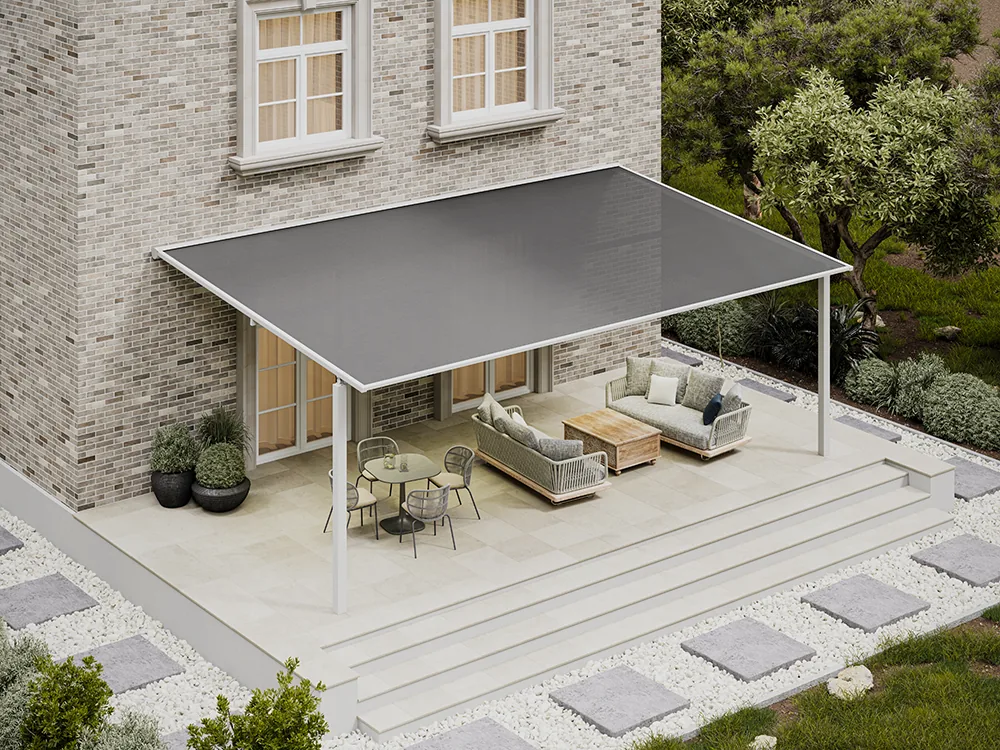
Aerial view of a terrace pergola with zip screens fitted along its sides
What the system is
A pergola is a structure of beams and rafters, usually carried on columns, that creates shade and shelter. Modern pergola systems add motorised parts and weather-resistant materials to make them usable all year. The manufacturer sells them as a veranda or patio set: the frame, a covering for the roof, and zip screens for the sides.
The zip screens are the same type described on the vertical zip screen and outdoor facade pages. Fabric edges lock into side rails, so the cloth stays stable in wind and does not deform. They are operated with a single button, can join a smart-building system and can be set to follow the time of day or the weather. They are particularly useful where a pergola has large glass or open areas on its sides.
Frame materials
The three materials used for pergola frames are:
| Material | Character | Typical use |
|---|---|---|
| Aluminium | Light, strong, resists rust; low maintenance | Most commercial and modern residential projects |
| Wood | Natural look; needs regular maintenance | Classic or traditional architecture |
| Steel | Heavy-duty; high strength | Large structures and heavy loads |
Aluminium is the most common choice for hospitality work because it keeps its finish and does not need repainting. Wood is chosen for appearance. Steel suits spans or loads that aluminium would not carry economically.
Pergolas can be free-standing or fixed to a wall. A wall-mounted pergola uses the building as one edge and reduces posts; a free-standing one stands apart from it, which works for garden dining and pool areas.
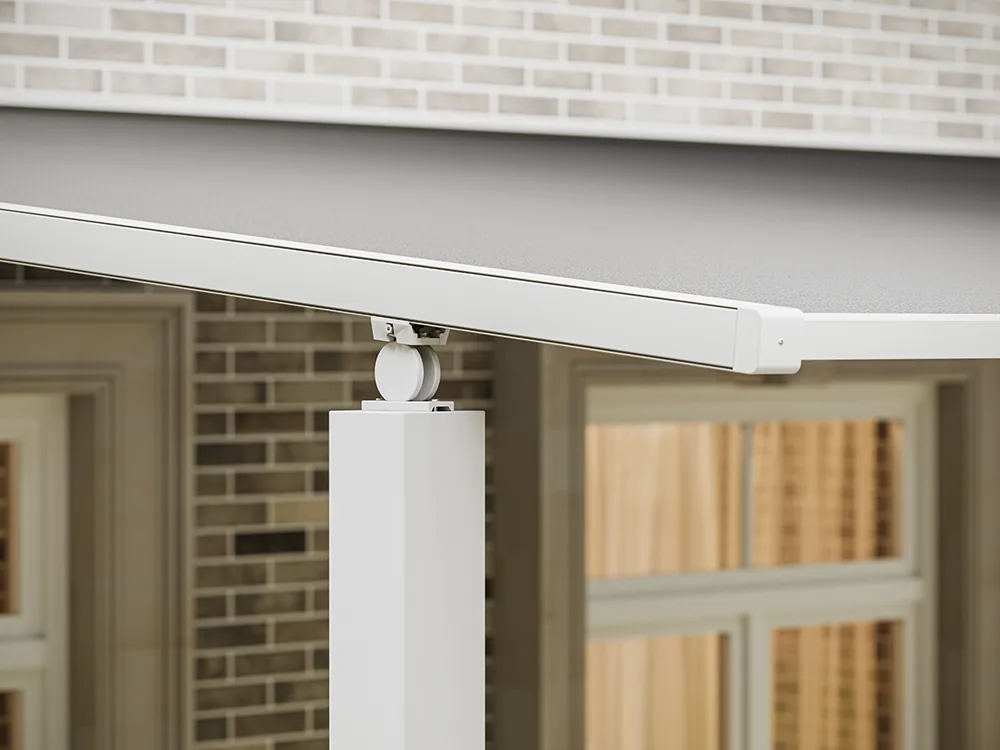
Close-up of a pergola beam with a zip screen housing fixed beneath it
Roof and movement options
- Motorised roof or canopy. Electric motors open and close roof panels, or extend a fabric canopy, from a remote or a smart device.
- Manual operation. Costs less but is less convenient and is not recommended for large or high units.
- Awning-type fabric cover. A folding fabric or PVC cover that shades and shelters from sun, rain and wind. See awning systems.
- Louvre roofs. For a louvred roof that rotates or retracts, look at the bioclimatic pergola range, in scissor and piston designs.
Comfort add-ons
Pergolas often take extra equipment. Integrated LED lighting makes evening use possible. Heaters extend the season into colder weather. The manufacturer's range also mentions sound systems as an option. Sensors can control the roof and screens automatically: in heavy rain or strong wind a self-protection mode can retract them. Specify wind sensing for the screens whenever the site is exposed.
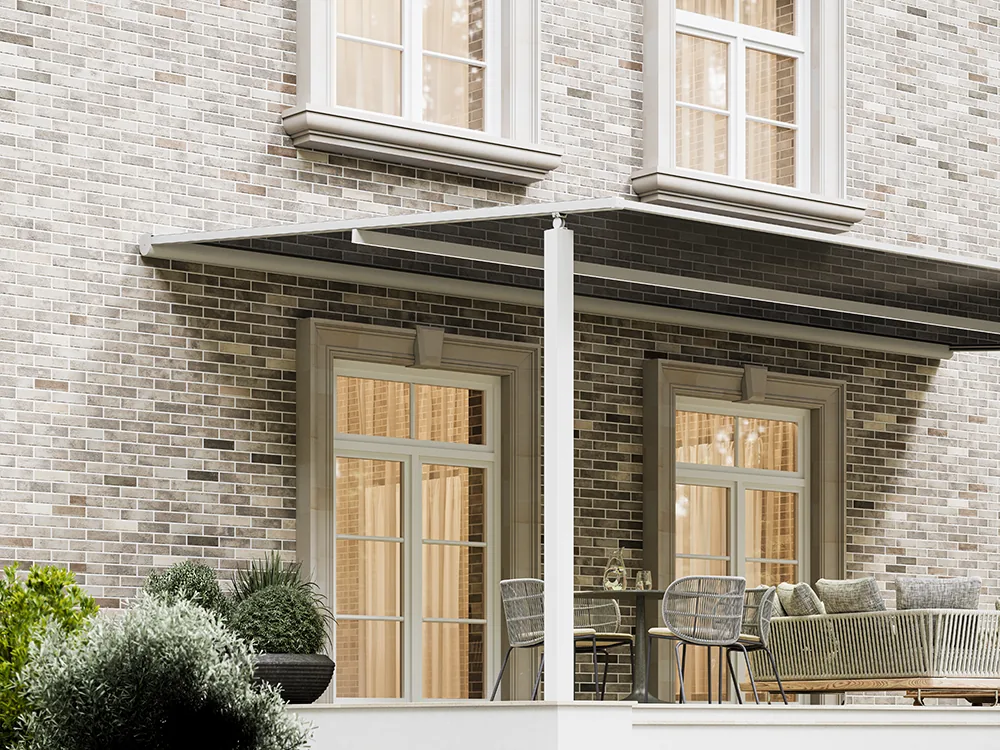
Brick house patio with a pergola and zip screens enclosing one side
Where pergola and zip sets are used
- Residential: gardens, verandas and terraces that become extra living space and stay cooler in summer.
- Cafes and restaurants: open seating areas made usable in more weather conditions.
- Hotels: pool surrounds, open restaurants and event areas.
- Public and social spaces: park shelters and outdoor seating areas in shopping centres.
- Industrial areas: temporary work areas or protected material storage at factories and warehouses.
What you gain
The structure extends living or trading space outdoors and gives a place to relax, dine or host guests. By controlling sunlight it can cut cooling demand in the adjoining rooms. The design range, from modern to classic, helps it fit different buildings. The modular parts shorten installation compared with a built structure. With lighting, heating and screens, the area can become usable across the seasons. Property owners also tend to see a well-designed pergola as a value-adding feature; treat that as a market effect, not a guaranteed return.
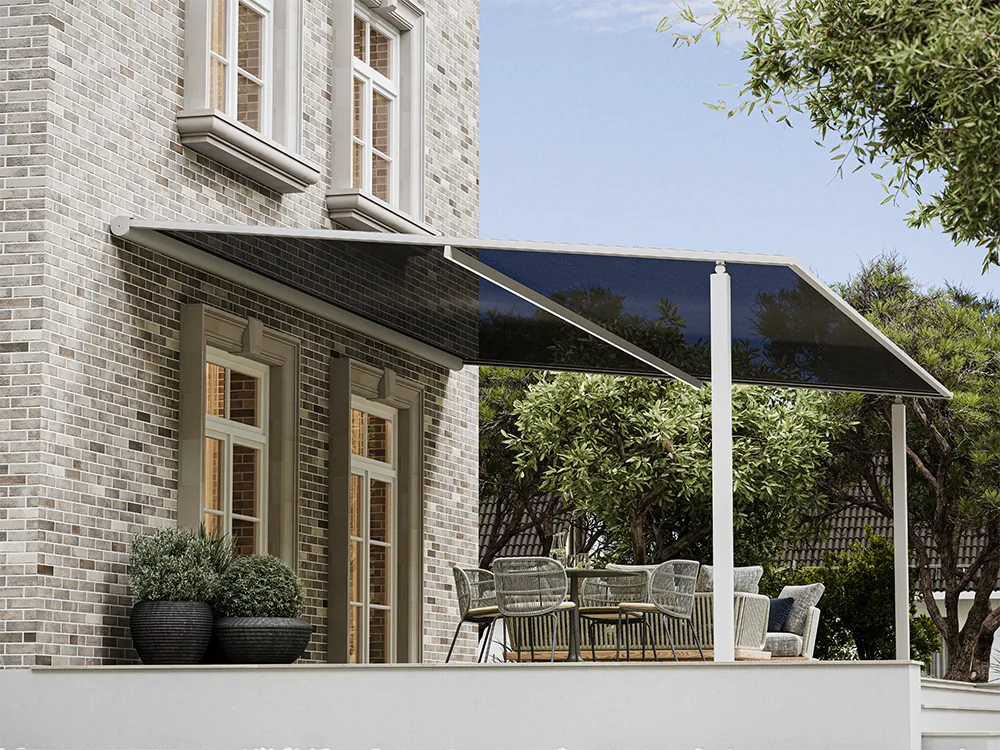
House front with pillar-supported pergola and zip screens lowered between the columns
Planning notes
- Decide the main job of the roof: fixed shade, retractable cover, or louvres.
- Measure the footprint and posts: screens run between columns, so post spacing sets screen widths.
- Choose fabric for each side: mesh for view, opaque where privacy is needed; see the fabric collection.
- Define the control scheme: one remote, a group control, or smart building integration.
- Add sensors: wind at minimum, with sun and rain as needed.
- Check local rules: a fully screened pergola may count as an enclosed space in some jurisdictions.
Limits
A pergola with zip screens is not a sealed room. It gives sun, wind and insect protection but not full insulation, and the screens should be retracted in storms. Wood needs more upkeep than aluminium. Manual systems are for small areas only. For a fully weathertight space, consider guillotine glass or a winter garden instead.
Frequently Asked Questions
What is included in a pergola set with zip screens?
A frame, a roof or canopy, and zip screens for the sides, made to measure. Lighting, heating and sensors are options.Which frame material is best?
Aluminium is the usual choice: light, rust-resistant and low maintenance. Wood suits classic styles; steel suits heavy structures.Can the system be controlled automatically?
Yes. Motors work from remote or smart devices, and sensors can retract the roof or screens in strong wind or heavy rain.Can it be attached to a building?
Both wall-mounted and free-standing versions are available.How is a pergola set priced?
Each set is made to measure and quoted per project, based on size, frame material, roof type, screens and options.Request a quote with the terrace dimensions, post positions and preferred roof type.
Related: Bioclimatic pergolas · Scissor bioclimatic pergola · Piston bioclimatic pergola · Outdoor facade zip screens · Zip screen model range