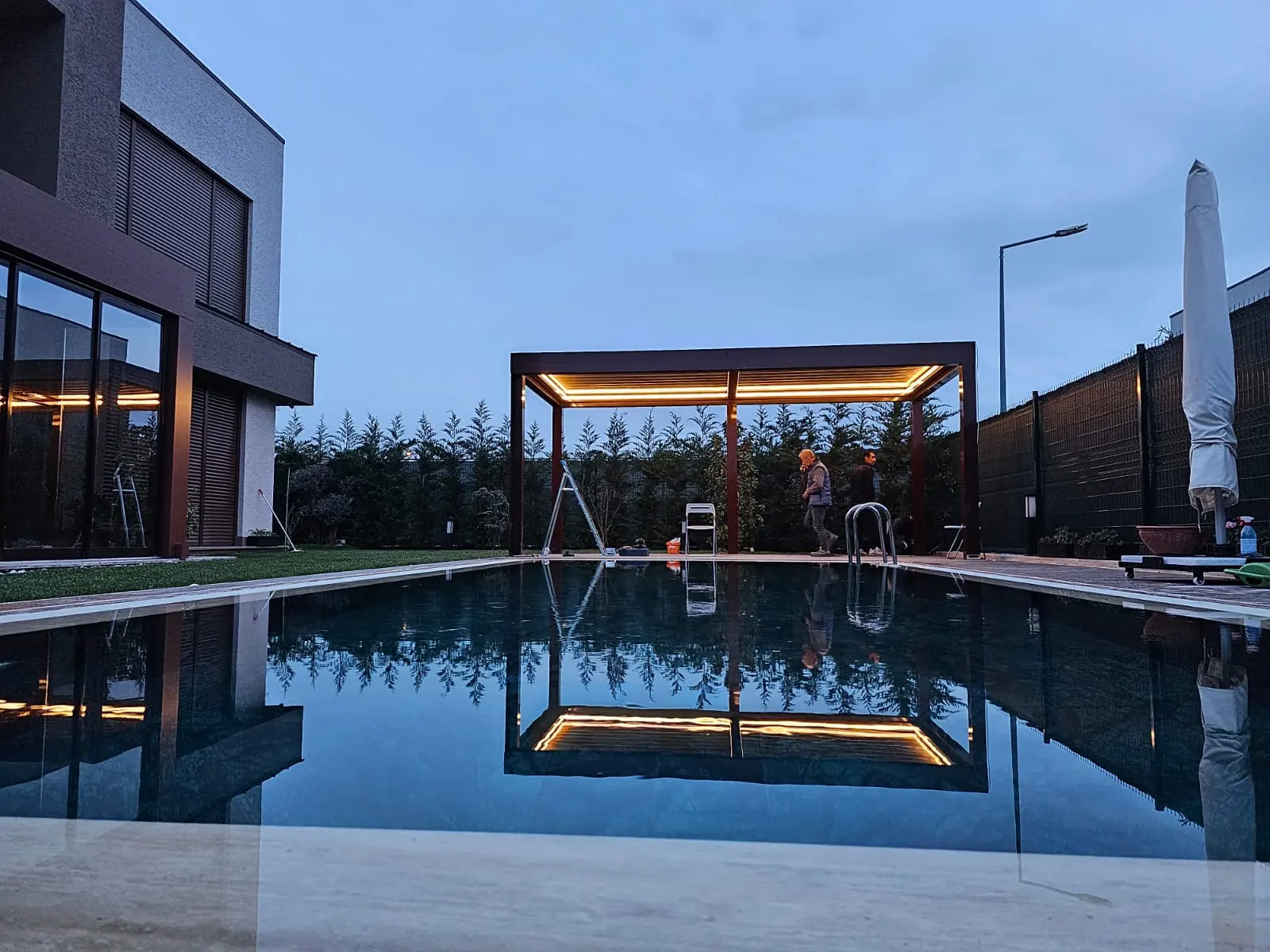
Pergola and Zip Screen Warranty and Spare Parts
A pergola or zip screen warranty usually splits into structure, finish, motor and electronics, and moving parts, each with its own term and its own exclusions. Read the written terms before the order and plan spare parts with the same seriousness, because the first failure arrives years after the paperwork was filed away and forgotten.
What should a pergola or zip screen warranty cover?
A useful warranty is a component warranty, not a single promise about "the product". Before comparing any offer, check that the document answers four separate questions:
- Structure. The aluminium frame, the connections and the fixings — the part that must not move for a decade.
- Finish. The powder coating: colour stability, adhesion, what counts as a defect versus normal weathering.
- Motor, electronics and controls. Drives, control units, remotes, receivers, sensors.
- Moving parts and consumables. Hinges, runners, cables, gaskets, fabric — the parts that see friction and weather, and that most warranties treat differently from the frame.
Warranty coverage
Manufacturers in this field publish different structures, and the pattern that recurs across the published pages is a long structural term with shorter terms for the electrical and moving components. The table below describes those patterns as patterns — not as terms offered here — and the right column is what you should ask the producer to put in writing for the specific system and configuration you are buying:
Table A: component, what published warranties usually cover, typical exclusions, ask for
| Component | What published warranties usually cover | Typical exclusions | Ask for |
|---|---|---|---|
| Frame and structure | Manufacturing defects in profiles, welds and connections | Damage from misuse, impact, unauthorised modification, or forces beyond the design basis | The term in years, and what the design basis means for wind and snow in your region |
| Finish / powder coat | Peeling, blistering, abnormal colour change | Normal weathering, chalking at end of life, damage from corrosive environments or cleaning agents | Which test or standard the finish claim is based on, and how "normal weathering" is defined |
| Fabric | Manufacturing defects in the cloth and its confection | Fading and degradation as a function of exposure, mechanical damage, soiling | Whether exposure-related change is excluded, and what the fabric datasheet states for colour fastness |
| Motor and electronics | Defects in drives, control units, remotes and receivers | Water ingress beyond the stated protection, electrical work not carried out per instructions | The term for the electrical components specifically, and who the authorised service contact is |
| Mechanism (hinges, runners) | Manufacturing defects in moving parts | Wear items, cables and gaskets treated as consumables in many warranties | Which parts are classified as consumables — this is the boundary most disputes start at |
| Glass and closures | Manufacturing defects in glass and its framing | Breakage from impact, thermal stress outside the stated conditions | Whether glass breakage is covered at all, and under what conditions |
The single most useful column is the last one. "Ask for" turns a brochure claim into a line in a contract, and every answer you get in writing is a claim you will not have to argue about later.
Typical exclusions
Warranty exclusions are where the difference between a brochure and a document shows up. The exclusions that recur in published terms, worth checking line by line:
- Extreme weather beyond the design basis. Every structure is engineered to a wind and snow basis; damage beyond that basis is usually excluded. Ask what that basis is for your site — the structural side is explained on the structural loads page — and confirm that it matches your region.
- Misuse and accident. Impact, vehicles, falling objects, loads applied where none were designed.
- Modification. Drilling, cutting, extra fixings or added load without the producer's written agreement — this is the exclusion most easily triggered by a well-meaning installer.
- Installation not per instructions. Mounting, levelling, drainage and electrical connection have documented requirements; a non-compliant installation is a standard exclusion. The installation guidance on the installation page is the reference the claim conversation will start from.
- Commercial use unless stated. Many published warranties are written for residential use; hospitality and restaurant terraces fall outside them unless the terms say otherwise. For a commercial buyer this is the first line to check, not the last.
- Wear items. Cables, gaskets, runners and fabric are commonly excluded or given a shorter term as consumables.
Maintenance duties: owner vs installer
Warranties come with duties, and the duties split cleanly between the parties:
- The installer is responsible for mounting per the manual, levelling and drainage, electrical connection per local rules, and handing over the system with the documentation and a demonstration.
- The operator or owner is responsible for the routine the manual describes: cleaning the structure and the fabric with the recommended products, keeping drainage paths clear, not parking loads against the guides, operating the system within its stated limits, and — the part most often skipped — keeping records.
Spare parts planning
Spare parts are a planning topic, not a complaints topic. The parts that keep a terrace in service are the ones that move, get lost or get wet:
- Motors and drives. The part with the shortest term in most published structures; the one whose failure stops the system completely.
- Remotes, receivers and sensors. Small, losable, and the most common reason a terrace is "broken" when it is actually only unreachable.
- Mechanism parts. Hinges, runners, and the louvre or blade fixings that see movement every day.
- Consumables. Gaskets, cables, seals and clips — cheap individually, expensive when a shipment has to be arranged for four of them.
- Fabric and panels. Replacements for damage; worth knowing the reference and colour of the fabric at order time, not at replacement time.
Claim procedure and evidence
Claims fail for procedural reasons far more often than for technical ones. The evidence that makes a claim move:
- Order and identification. Order reference, system or model, and the opening or position numbers from the installation drawings.
- Dates. Installation date, date the fault was noticed, date reported — the sequence matters when terms differ per component.
- Photographs. Wide shot showing the unit in place, close shot of the fault, and a photograph of the label or plate so the part can be identified without a second visit.
- Installation proof. Some published warranties require evidence that the system was installed per instructions; the installer's commissioning note and photographs satisfy this cheaply at handover.
- What was tried. Remote paired, power confirmed, sensor path checked — the two-minute questions a service desk asks first.
Service for export projects
After-sales at distance runs on documents and local hands:
- Remote technical support is the standard first line: the producer's technical team working from your photographs, part numbers and drawings.
- Local installers carry out anything mechanical; the manufacturer builds and exports, and installation happens with your own team from the manuals and exploded drawings. Plan for a certified installer in your market before the order is placed.
- Parts logistics follow the original shipment's pattern: identify the part against the parts list, pack it protected and labelled, and ship it to whoever receives on site.
- Response expectations should be set in writing at order stage rather than assumed: what counts as a report, who decides, and what happens next. Published terms and the claim route are on the warranty and service page; for dealer programmes where the brand is the dealer's, who carries a claim is agreed per project in the OEM and private-label conversation.
Frequently Asked Questions
How long is a pergola warranty?
It varies by maker and by component, which is why the split matters more than the headline number. Published warranties from other makers in this field commonly show a long structural term — ten years appears on some — with shorter terms of two to three years on motors and controls, and one published model showing five years on the structure and two on the mechanics; one UK maker notes competitors commonly offer two to five years or publish nothing. These are patterns seen in published warranties, not terms offered here: ask the producer for the written terms covering the exact system and configuration you are buying.
Does commercial use void it?
Often, yes, unless the terms say otherwise: many published warranties are written for residential use, and hospitality terraces fall outside them. For a restaurant, hotel or bar this is the first line to check — before the price, before the delivery date. If the intended use is commercial, get the commercial terms in writing at quotation stage rather than discovering the exclusion when a claim is made.
Are motors covered as long as the frame?
Usually not. The recurring pattern is a long structural term with a shorter electrical term — motors and controls at two to three years where the structure is at ten — because motors are moving, powered and serviced parts. Ask for the motor and electronics term specifically, along with the process if a motor fails in year four: replacement route, who pays what, and how long a like-for-like unit takes.
Who pays freight on warranty parts?
Ask and get it in writing. Some terms include parts only, some include parts and transport, and for export projects the international freight question is usually addressed separately from the domestic one. Agree it before the order so that a claim in year three is a logistics decision rather than a negotiation.
What documents does a claim need?
The order reference, system identification, opening or position numbers, installation and observation dates, photographs (wide, close and label), installation proof where the terms require it, and a note of what was already tried. Assembled as one document, that list is the difference between an answer in the first exchange and a week of questions.
Can I buy spare parts after the warranty?
In general yes — that is what a parts list and an ongoing supply arrangement are for — but confirm it at order stage: which parts remain available, how a part is ordered by number, and what the lead time for a single piece is. The alternative, discovering three years later that the receiver you need is no longer made, is entirely avoidable by one paragraph in the original contract.
Sources and standards
- Warranty structures described here follow patterns seen in published warranties from other makers in this field (long structural terms with shorter motor and moving-part terms; some requiring installation proof; many excluding commercial use; consumables commonly excluded) — no warranty period, coverage or service level is claimed for WorldwideTradeX or its producers on this page.
- Process statements follow this site's published pages: manufacturing and quality, export and project supply (factory-direct supply, remote technical support, installation by the buyer's team), and the installation page.
- Wind and snow design basis referenced for the extreme-weather exclusion is explained on the structural loads page; confirm the basis applicable to your site with the producer.
- No response times, spare-part availability periods, transferability of warranties or service levels are stated on this page.
Related pages
Architectural systems · Manufacturing and quality · Zip blinds installation · Export packing and lead time · Pergola structural loads · OEM and private label · Request a quote