Shade Awning Manufacturer: Retractable and Fixed Shade
Last updated:
A shade awning is a practical overhead cover for terraces, gardens and balconies, built either as a retractable unit or as a fixed installation. It is cut to the project from UV-resistant fabric. Our manufacturing partner in Türkiye produces it for sitting areas where the main need is shade, not full weather protection.
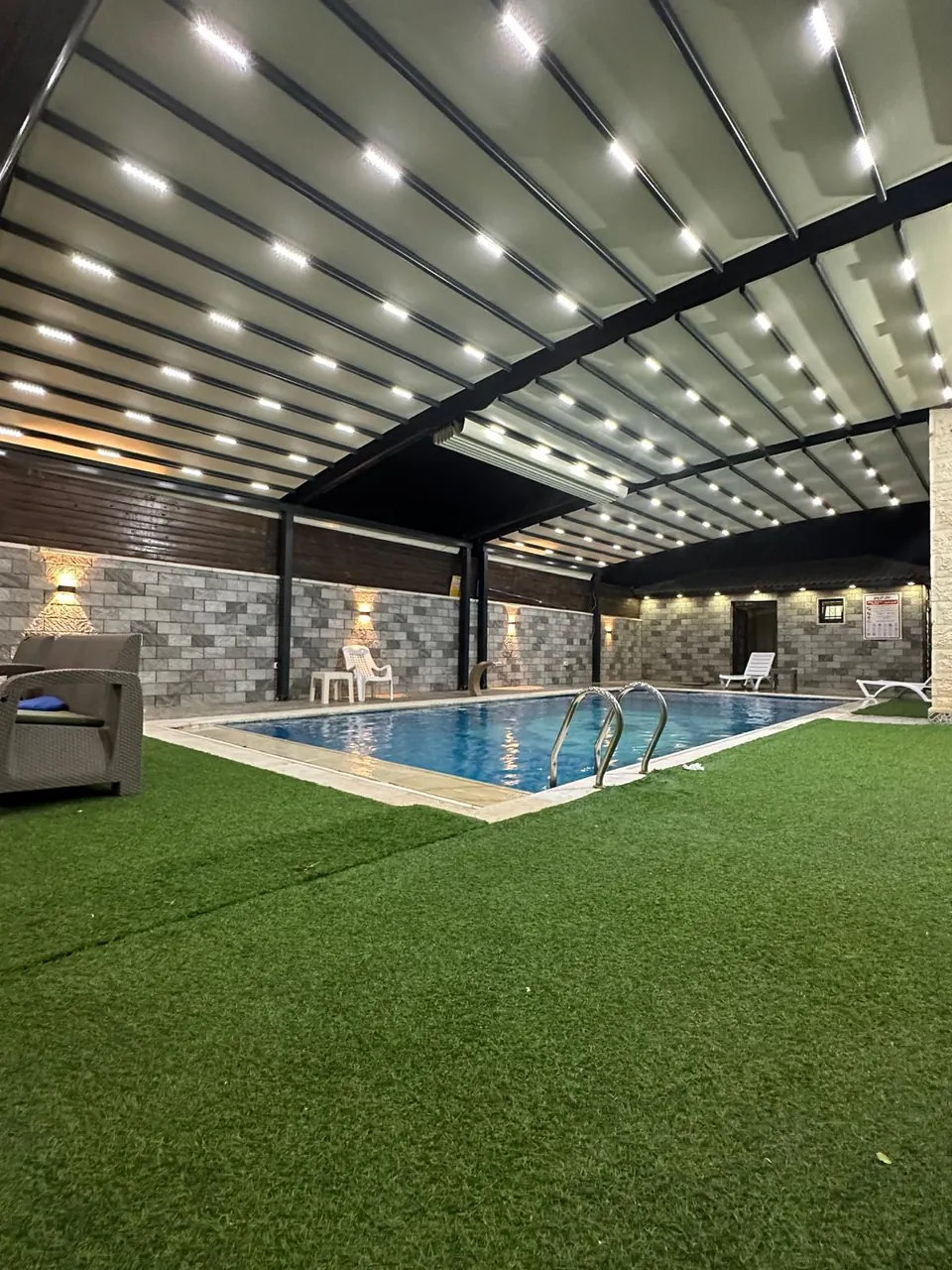
Slatted ceiling with integrated spotlights over a poolside lawn area and indoor pool edge
What a shade awning is for
Of the six awning types, the shade awning is the most general. It is not defined by a mechanism such as folding arms or a cassette, but by the job it does: put a fabric roof over an outdoor area so people can sit there in comfort. Two forms are available.
Retractable. The fabric opens when shade is needed and closes when it is not. This keeps light and sky available in cooler months and puts less long-term stress on the fabric.
Fixed. The fabric stays in place. It suits spots where shade is wanted whenever the area is in use, and it tends to be a simpler structure.
Both are sized for the project. There is no standard catalogue dimension, so a quotation starts from your measurements.
Fixed or retractable: how to decide
| Question | Points to retractable | Points to fixed |
|---|---|---|
| Is winter light wanted? | Yes | No |
| Is the area used all year? | Seasonal use | Constant use |
| Is wind or snow load a concern? | Yes, retract in bad weather | Needs stronger frame and fabric tension |
| Budget priority | Slightly higher | Often simpler |
| Operation by staff or guests | Needs a plan for operation | None needed |
A fixed installation has no moving parts to fail, but it also cannot be removed ahead of a storm. If the site sees heavy wind or snow, the structure and fabric choice must be assessed at design stage, and a retractable form often saves the fabric.
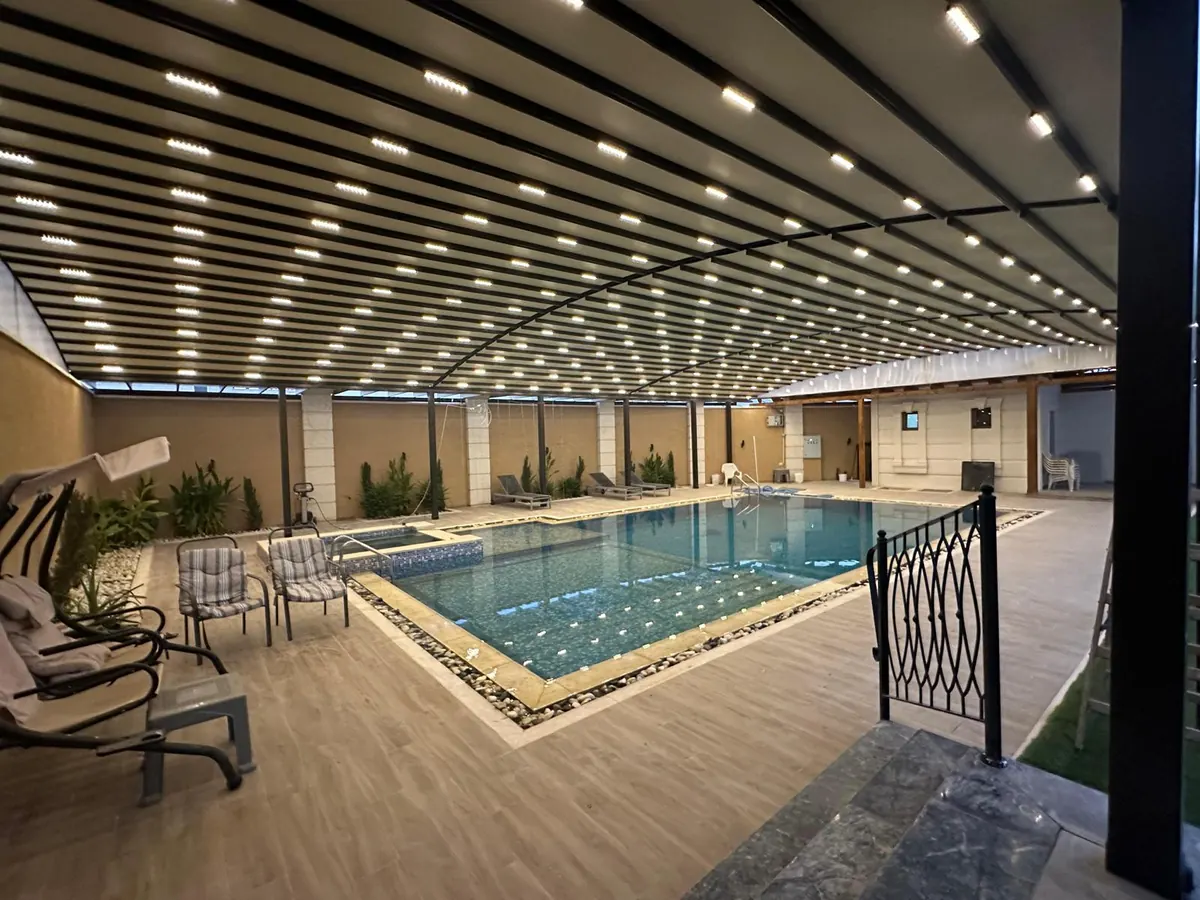
Retractable shade structure with recessed lights above an indoor pool and loungers
Materials
The fabrics are UV-resistant. For shade, this matters more than for most other products, since the whole point is to sit under the fabric in the strongest sun hours. UV-resistant fabric slows fading and ageing and helps the colour look consistent between units.
Choose fabric by what happens beneath it:
- For a restaurant terrace, a lighter colour keeps the area bright and cool.
- For a private garden, a mid or dark tone cuts glare for people reading or working.
- For a poolside area, check how the fabric handles moisture and chlorine in the air, and discuss it with the manufacturer.
Typical applications
- Terraces. Hotel, restaurant and villa terraces where a roof of fabric is needed over seating or a bar.
- Gardens. Shade over a table or lounge area away from the house.
- Balconies. Light cover over a balcony, either fixed for constant shade or retractable.
- Poolside areas. Shade over sunbeds and bars, which can be combined with lighting in the structure.
Planning points for installers
- Fixing surface. The structure needs to fix to the building or to ground foundations. Check the substrate.
- Water. Fabric roofs shed rain only with sufficient slope. If water pools in a fixed fabric, the fabric is stressed and may be damaged. Plan the fall at design stage.
- Wind. Assess exposure. A big, flat fabric catches wind like a sail.
- Access. Plan how staff will operate a retractable unit, and who is responsible for retracting it in bad weather.
- Lighting. If lights are wanted, plan wiring before the structure is fixed.
What a shade awning does not do
A shade awning shades and gives only limited protection from light rain. It is not a weather enclosure and does not block wind, driving rain or cold. If you want to use a terrace through colder months, look at zip screens for the sides and a bioclimatic pergola or winter garden for the roof.
If you need a quick, economical shade over a wall-hung balcony or shopfront, an articulated awning may be a better starting point. The awning systems overview compares all six types in one table.
Quotation checklist
- Area to be covered: width and depth.
- Where the structure will fix: wall, ceiling, ground or posts.
- Fixed or retractable.
- Fabric type and colour; frame colour.
- Manual or motorised operation, if retractable.
- Quantity and destination country.
Care and seasonal routine
Clean the fabric with mild soap and water once or twice a season, and remove debris from the surface so water does not collect. For retractable units, retract the fabric in heavy rain, strong wind and snow, and leave it retracted when the area is out of use for long periods. For fixed units, inspect the fabric tension and the fixings at the start of each season, since a slack fabric flaps in wind and ages faster. If you supply to a hotel or resort, include a short seasonal checklist with the delivery so the facility team knows what to inspect.
Frequently Asked Questions
Can the shade awning be fixed in place?
Yes. It is produced both as a retractable unit and as a fixed installation. Which to choose depends on the use of the area and local weather.
Is it suitable for balconies?
Yes. Terraces, gardens and balconies are the three main applications.
Are the fabrics UV-resistant?
Yes. UV-resistant fabrics are used, which slows fading and ageing in strong sun.
Is there a standard size?
No. Each unit is sized to the project, so send the dimensions of the area to be covered.
Will it protect against rain?
It gives limited cover from light rain, provided the slope allows water to run off. It is not a weather enclosure.
Related: Awning systems overview · Articulated awning · Automatic awning · Awning models and prices · Winter garden