Pergola & Awning Export, Dealer and Project Supply
Last updated:
Export and project supply for architectural outdoor systems works factory-direct: you send dimensions and quantities, the engineering team selects the system and prepares calculations and a quotation, the order is built and test-assembled in Türkiye, and it ships packed for installation by your own team. Dealers, distributors, contractors and architects all use the same route.
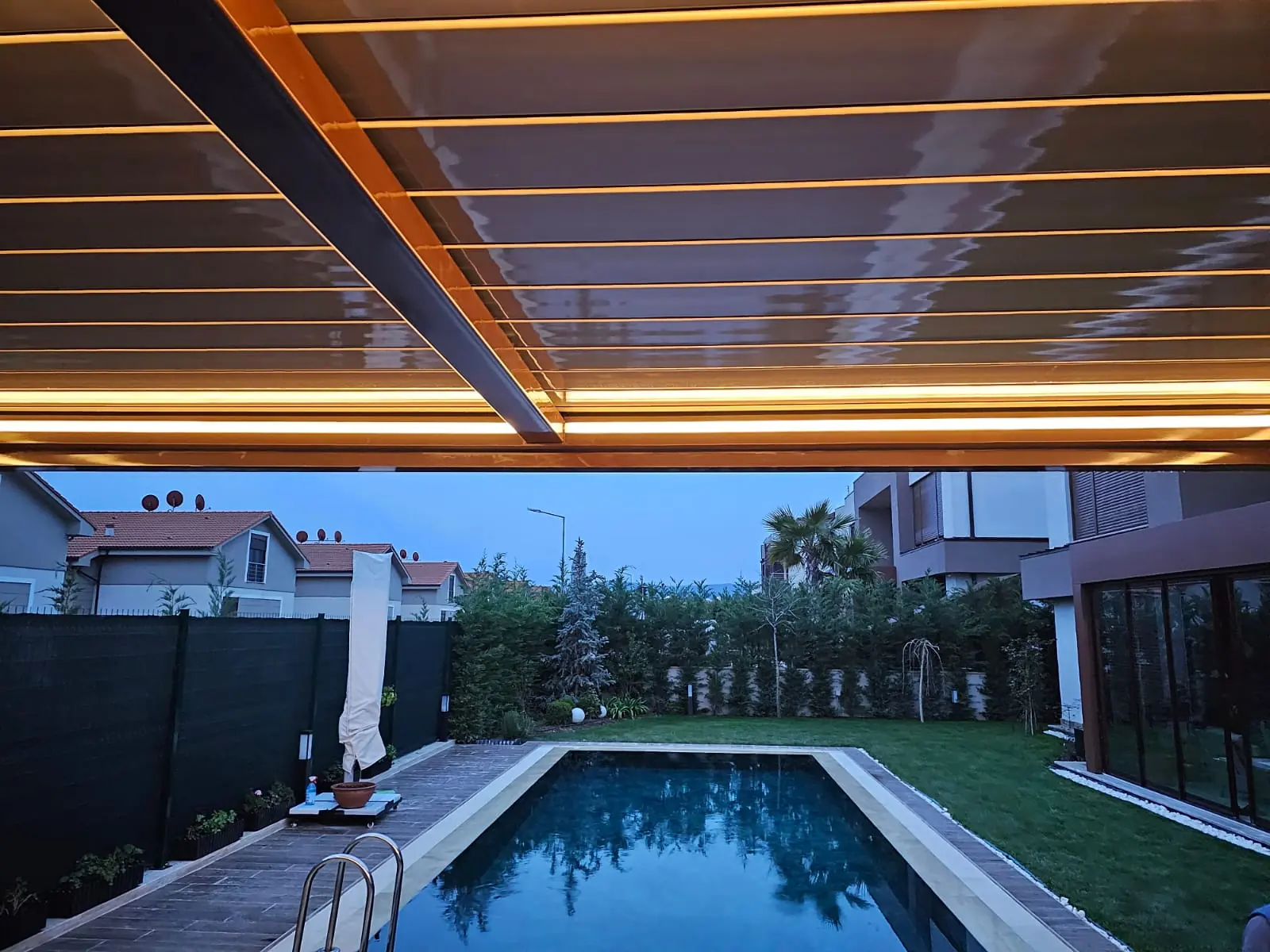
Aluminium pergola and awning systems prepared for export from a manufacturing facility in Türkiye
Who this supply model is for
The programme is built for trade buyers, not for single households. Four groups account for most orders.
- Dealers and distributors who resell in their own region and want a stable factory source with a price list, samples and product training behind it.
- Project companies and contractors who need a defined set of systems for a hotel, restaurant, residential scheme or commercial building, delivered against a build programme.
- Architects and specifiers who need drawings, sections and structural data early, before a tender is closed.
- Brand owners who already sell pergolas or awnings under their own name and want a manufacturer to build to their profile, colour and packaging.
Four steps from enquiry to installation
The workflow is the same whether you order two awnings or forty pergolas. Only the depth of engineering changes.
- Enquiry and engineering. You supply dimensions, quantities and the site conditions that matter: wind exposure, snow load, fixing surface, desired drainage route. The technical team chooses the system, runs the structural calculation for the span and loads, and returns a quotation.
- Production. The order is built in the factory, assembled once as a complete system and tested before it is taken apart again for packing. Motors, sensors and water drainage are checked at this stage, not discovered on site.
- Shipping. Container loading, export documents and freight are managed by the export team. The delivery term (EXW, FOB or CIF) is agreed per project.
- Installation support. Your team installs. The supply includes installation manuals, exploded drawings and remote technical support when a question comes up on site.
What we do not do
The manufacturer builds and exports; it does not send installation crews abroad. Installation is done by the dealer or a local team that follows the documentation. If you need a certified installer, plan for one in your market before the order is placed, not after the container arrives.
Delivery terms at a glance
| Term | Who arranges main freight | Typical use |
|---|---|---|
| EXW | Buyer collects from the factory | Buyers with their own freight forwarder and consolidated loads |
| FOB | Seller delivers to the port of loading; buyer books sea freight | Regular dealers shipping full containers on their own contracts |
| CIF | Seller pays freight and insurance to the destination port | Project companies who want one delivered price per shipment |
The terms are agreed per project because they depend on country, volume and the point of delivery. Treat the table as a starting point for the conversation, not as a fixed offer.
Documentation you should expect
Specifiers lose weeks when drawings arrive late. A normal supply package should give you:
- a system-specific installation manual with the assembly sequence step by step;
- exploded drawings and part lists so site crews can check the delivery against the box labels;
- structural calculation for snow load, wind speed and span on each project;
- technical drawings for architects who need to place the system in plans and sections;
- certificate and test documents relevant to the system you are buying (see manufacturing and quality).
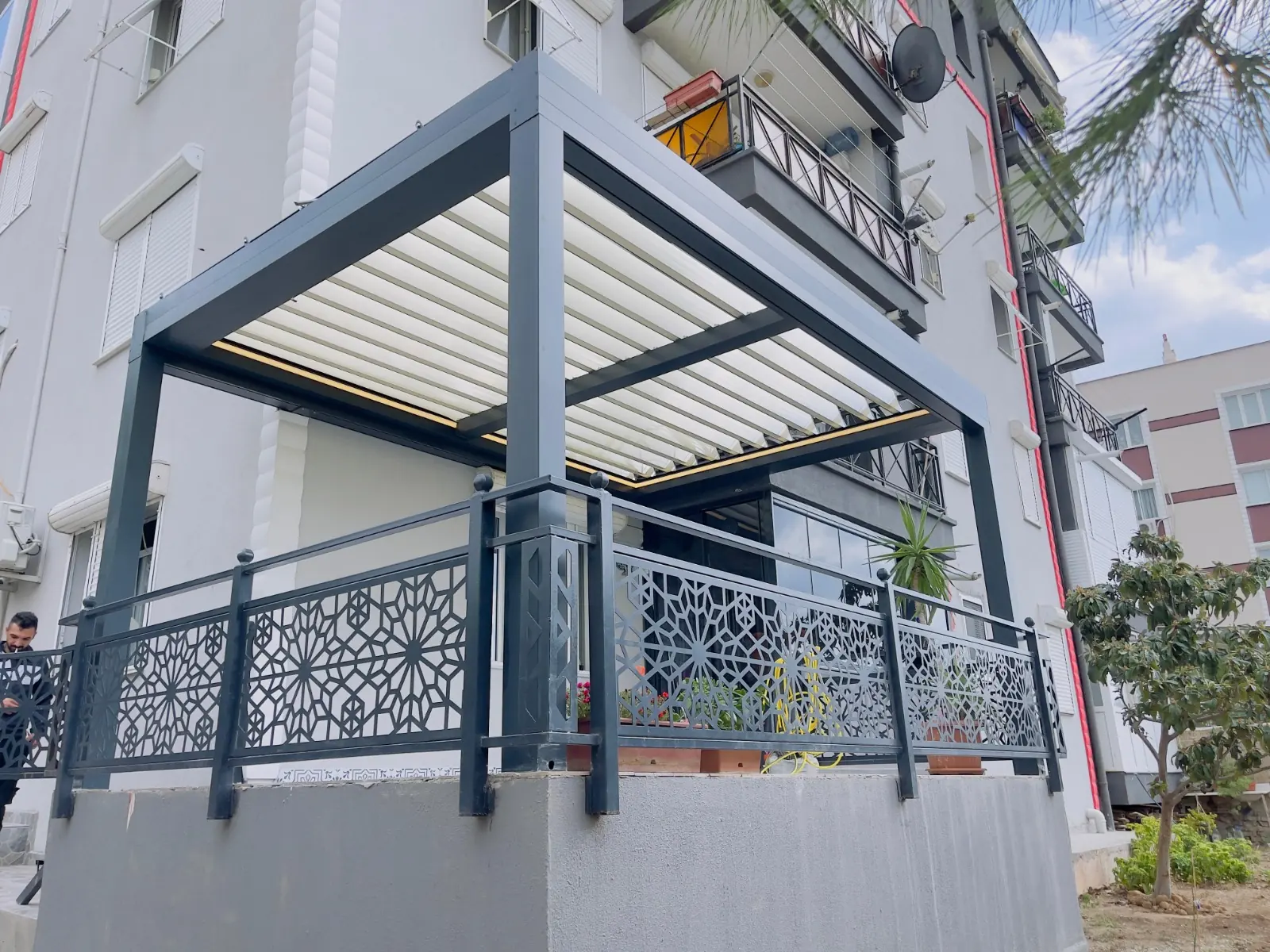
Engineering drawings and fabrication of pergola and awning systems at the manufacturing partner
Customisation: what can change and what cannot
Most orders are standard systems made to measure. Beyond that, the following are normal requests.
- Colour: every RAL colour on aluminium profiles, plus textured and exclusive finishes. Powder coating is done in the factory's own paint shop.
- Fabric: UV-resistant acrylic, polyester and PVC fabrics on awnings and screens; fire-retardant blackout fabric on pergolas.
- Motors and controls: Somfy, Mosel and Cuppon motor and control options, with remotes, sensors and smartphone integration configured per project.
- Add-ons: LED lighting, heaters, rain drainage routing and side enclosures such as zip screens or guillotine glass.
- Size: a scissor bioclimatic pergola reaches 700 cm of façade in a single module and up to 1531 cm of projection in a multi-module layout; guillotine glass goes up to 4000 x 3500 mm. Beyond these limits the technical team engineers a project-specific answer from your measurements.
Dealer programme
A dealer application leads to an evaluation of your region and business model. If it fits, you receive a dealer price list, marketing material, samples and technical training. Architects and project firms who work through dealers can request technical drawing support. Warranty on bioclimatic systems is five years on the motor and two years on the mechanics; for other product groups, ask for the terms in writing with the quotation.
You remain the contact for your own clients and set your own installation arrangements; the factory supplies the product and the technical backing.
OEM and private-label supply
Companies with their own brand can order production to their own profile, colour and packaging. The factory's coating and fabric confection lines are set up for private-label batches, which makes the model workable for pergola and awning brands that do not want to run a production plant. Agree three things before the first order: who owns tooling or special dies, what labelling and packaging rules apply, and which certificate documents you need under your own name.
Project supply: where it works best
Project supply suits hotels, restaurants, residential developments and commercial façades where one specification is repeated across terraces or units. The main benefit is consistency: same profiles, same fabric batches, same motor type, delivered against a schedule that matches the build. The main risk is that late design changes after production release are expensive. Lock dimensions and finishes before you confirm the order, and request a pre-shipment check list so your site team can match packed parts to the drawings.
For examples of finished work, see the project gallery.
How to start a quote
Prepare a short brief with: country and city of installation, system type or the problem you want to solve (shade, rain cover, wind protection, a glazed room), width and projection for each opening, number of units, colour and fabric preferences, motorisation level, and the delivery term you prefer. Photos of the site and an indication of the fixing surface help. Pricing is calculated from your measurements, so a rough size already gives a more useful answer than a general question about price lists.
Frequently Asked Questions
Do you sell to end customers?
No. The supply model is built for dealers, distributors, contractors, architects and brand owners. End customers are referred to a dealer in their region, or you can apply to become one.What does it take to become a dealer?
Submit the partnership form with the dealership request type. The team assesses your region and business model, then comes back with training, documentation and supply terms.Who handles installation abroad?
Your dealer or local installation team. Systems are test-assembled in the factory and packed ready to install, with manuals and exploded drawings, and the manufacturer offers remote technical support during installation.Can I get my own brand on the product?
Yes, through OEM or private-label production. Profiles, colours and packaging can follow your brand; confirm labelling, tooling and certificate documents before the first order.How are export prices built?
From the configured system, size, quantity, options and the delivery term. Because the factory sells directly, there is no intermediary margin between you and production.Request a quote with your sizes and destination country, and the export team will return a system proposal.
Related: Architectural systems overview · Manufacturing and quality · Project gallery · Bioclimatic pergola supplier for Europe · Pergola supplier for the Gulf