Zip Screen Model Range: Vertical, Ceiling and Pergola Compared
Last updated:
Our manufacturing partner's zip screen range has five main models: vertical screens, the spring-type Sky 1500 ceiling screen, the shock-absorber Sky 1600 ceiling screen, outdoor facade screens and pergola-integrated sets. Choose by position first (wall or roof), then by span, control and fabric. This page compares them side by side.
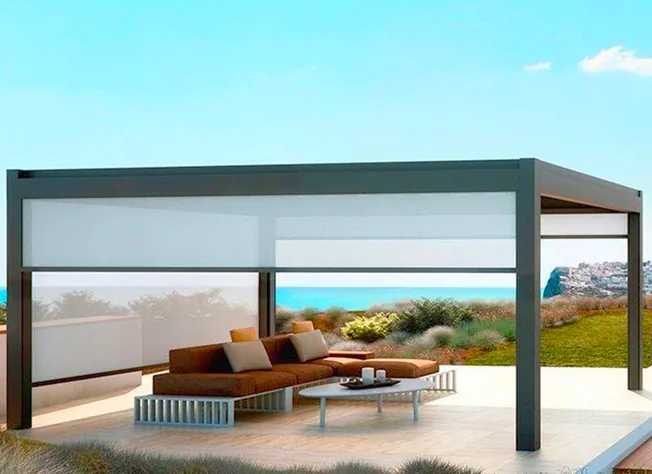
Overview of the zip screen model range showing vertical, ceiling and pergola systems
The range at a glance
Every model uses the same principle: fabric edges are locked into side rails by a zip profile, so the cloth stays stable in wind instead of billowing or pulling out. What changes between models is where the screen sits, how it is tensioned and what it is attached to.
The manufacturer lists the range as:
- Sky 1600, the shock-absorber ceiling zip screen.
- Sky 1500, the spring-type ceiling zip screen.
- Vertical zip screen for outdoor openings.
- Win awning and cassette awning, the fabric awning systems that sit beside the zip range.
- Pergola systems with integrated screens.
- Fabric options, the collection used across the range.
Comparison table
| Model | Position | Tension or movement | Best for | Page |
|---|---|---|---|---|
| Vertical zip screen | Wall, balcony, terrace opening | Drops vertically, fabric held in side rails | Enclosing sides of terraces and balconies; sun and wind control | Vertical |
| Outdoor facade screen | Building front, large openings | Motorised or manual; up to 6 m wide x 4 m high, modular beyond | Villas, offices, hotels, cafes, industrial openings | Facade |
| Sky 1500 | Ceiling: pergola top, glazed terrace, balcony cover | Spring-loaded tension | Large glass areas; standard overhead shade | Sky 1500 |
| Sky 1600 | Ceiling: same spaces | Shock-absorber (damped) movement, remote | Smooth daily operation in hospitality, smart systems | Sky 1600 |
| Pergola-integrated | Pergola sides and roof | Roof plus zip screens, motorised | Complete terrace set from one supplier | Pergola |
Wind figures are not repeated in the table because the manufacturer states them per model and fabric. Figures of up to 90 km/h are quoted for vertical screens and up to 120 km/h for facade screens, which shows that ratings differ by configuration. Treat them as manufacturer statements and request the test report for your exact order.
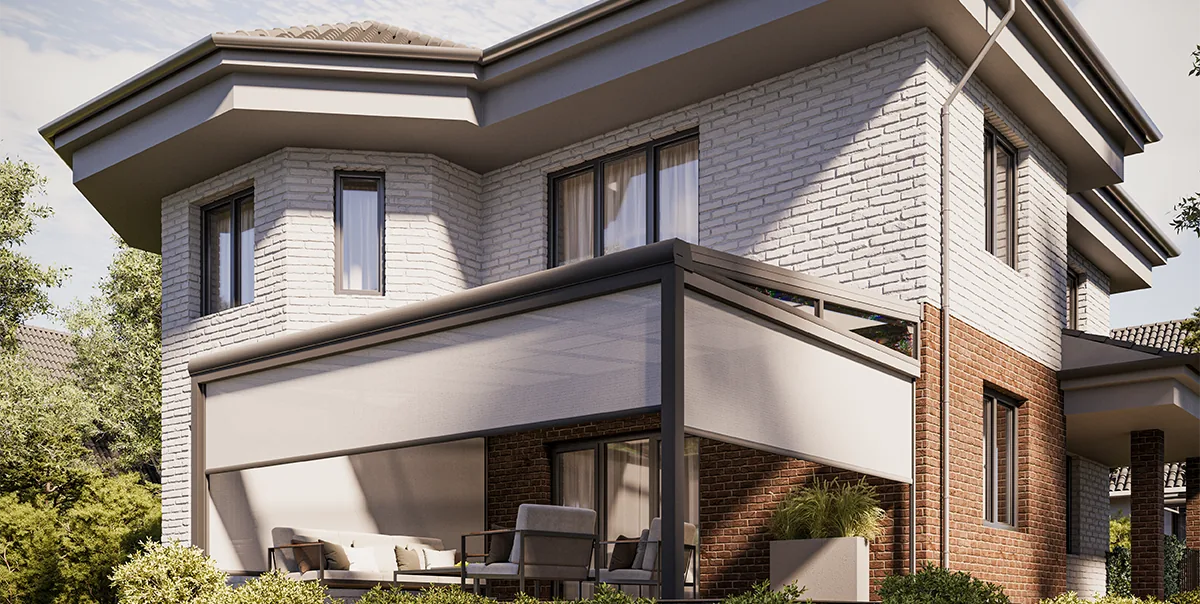
Shock-absorber ceiling zip screen model in perspective view
Model by model
Sky 1600: shock-absorber ceiling screen
Sky 1600 is overhead shading with a damper in the movement. The series is remote controlled, compatible with smart systems, wind-protected and made with breathable fabric that adds insect protection and privacy. It is the better match where the screen is operated often and smooth travel matters, as on hotel and restaurant terraces. Detailed notes are on the Sky 1600 page.
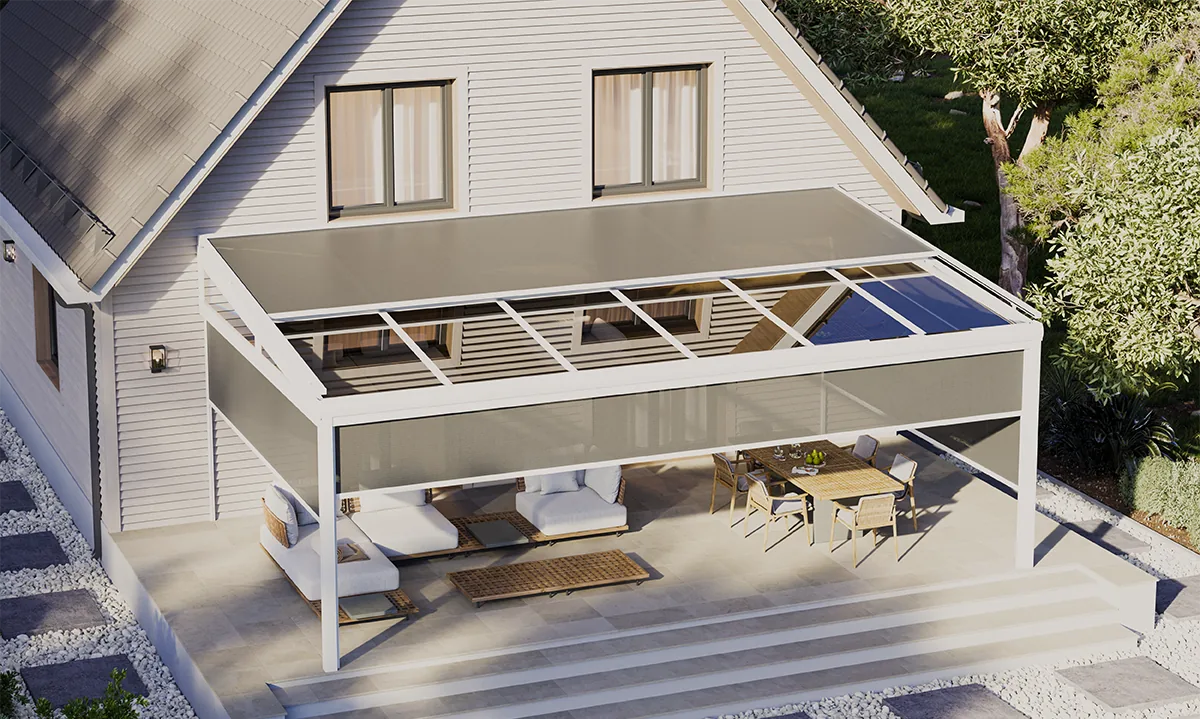
Spring ceiling zip screen Sky 1500 in perspective view
Sky 1500: spring ceiling screen
Sky 1500 keeps tension by spring. Its special rail system holds the fabric stable in wind, and it is aimed at pergolas, terraces and balconies with big glass areas. It is the straightforward overhead option. The Sky 1500 page lists what to send with an enquiry.
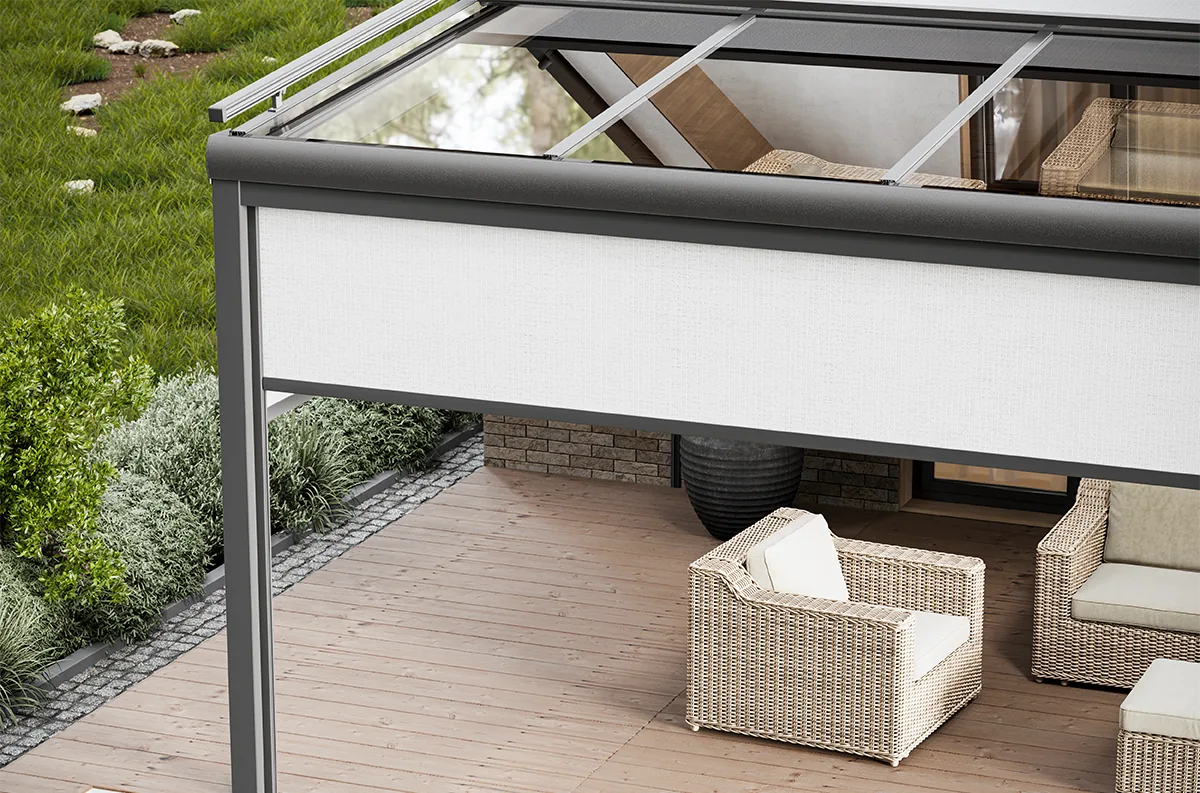
Vertical outdoor zip screen model shown in perspective view
Vertical zip screen
The vertical model is the standard for closing the sides of a space. Fabric options include PVC-coated blackout material that blocks sun completely, and mesh fabrics that give shade with a view. Aluminium housings keep it light and long-lasting, and the zip fit to the side rails reduces air and insect leakage. Operation is by motor or, for smaller openings, by hand.
Outdoor facade screen
The facade version is selected when the screen forms part of a building elevation: commercial buildings, villa fronts, pool areas, logistics doors. It comes with a stated high IP rating, drainage details, and sensors for sun, wind and rain. Single units reach 6 m x 4 m, with modular layouts for larger openings.
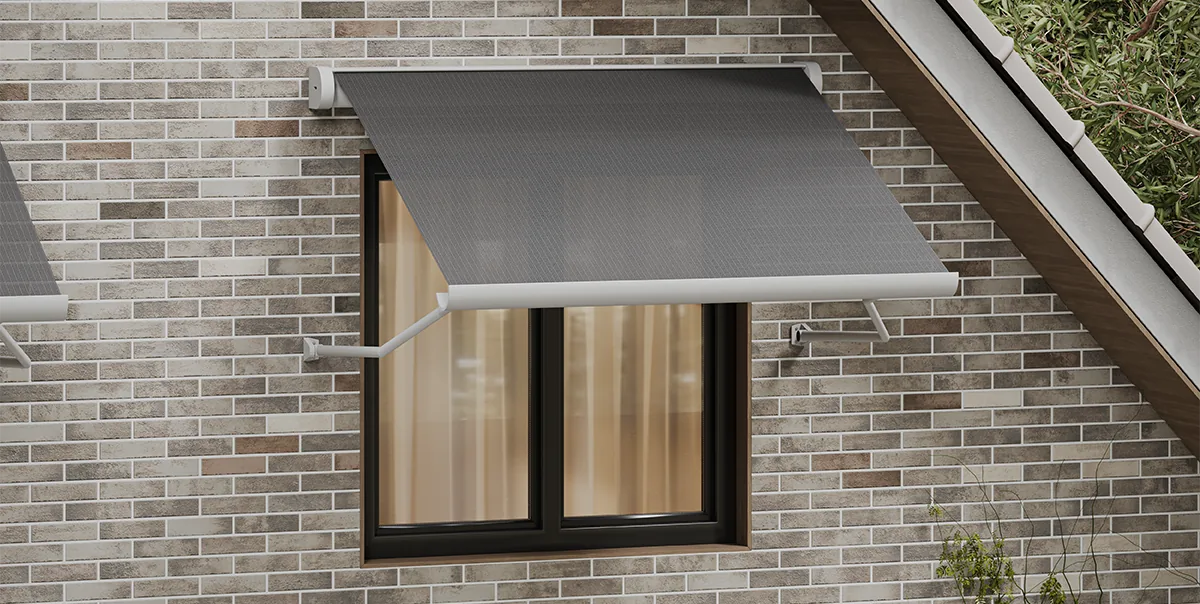
Win awning in perspective view, part of the awning systems beside the zip range
Awnings: the neighbouring category
Win awning and cassette awning systems are fabric awnings rather than zip screens. They give shade from above or at an angle, without the sealed edges, and they are chosen when the aim is shade and an open look. See awning systems for the comparison.
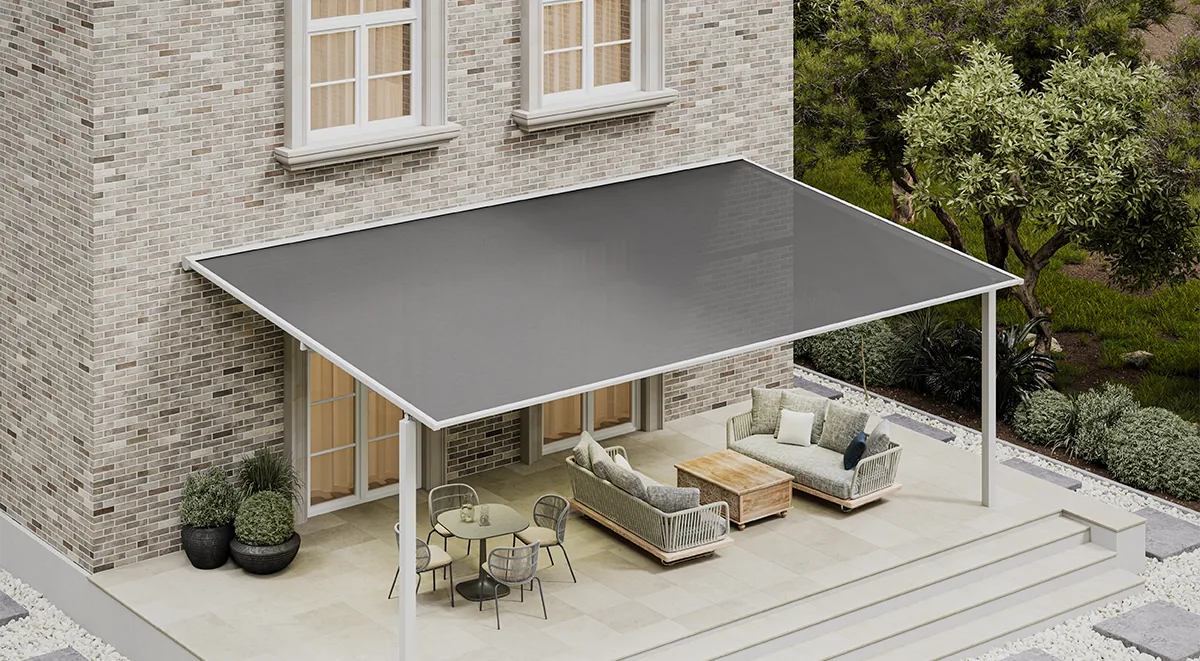
Pergola zip screen set with side screens shown in perspective view
Pergola-integrated sets
A pergola set supplies the roof structure and the side screens together. The frame can be aluminium, wood or steel; the roof can be motorised or manual, with lighting, heating and sensors as options. It is the right model when you are building the terrace and want one supplier for everything. See pergola systems with zip screens and the bioclimatic pergola range.
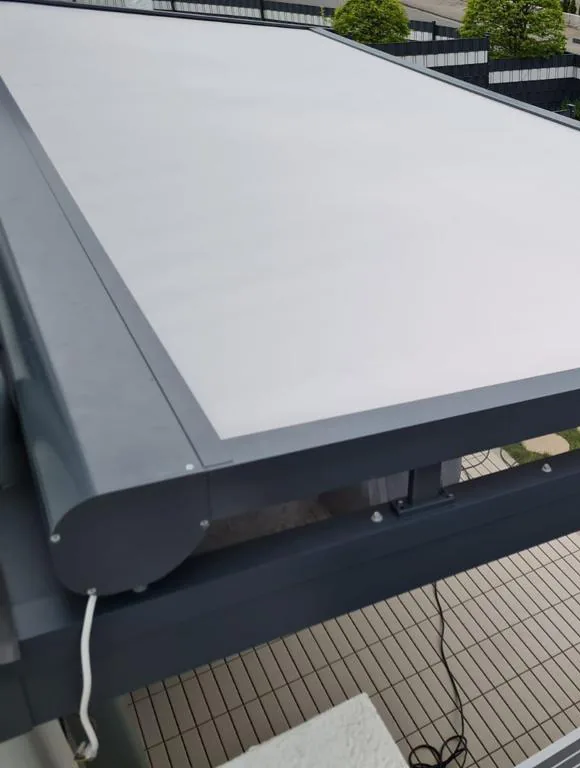
Winter garden glass roof with zip screen seen from the side
Winter gardens and glass roofs
A glass-roofed winter garden is a typical home for a ceiling model, because the glass heats up in sun. Placing a screen on the roof keeps heat out before it enters. Many winter garden projects combine a ceiling screen overhead with vertical screens on the glazed sides.
Decision flow
Work through the questions in order and stop at the first answer that fits.
- Is the screen going on a roof or overhead frame?
- Yes: go to question 2.
- No: go to question 3.
- Daily, by staff or guests, with a smart system: Sky 1600.
- Occasional, standard conditions: Sky 1500.
- Not sure: send the span and use pattern and ask the manufacturer.
- Yes, or wider than a single unit: outdoor facade screen, in modules if needed.
- No, a balcony or terrace side: vertical zip screen.
- Yes, and you want one supplier: pergola-integrated set.
- No, a roof already exists: choose a vertical, facade or ceiling model.
- Darkness or maximum privacy: opaque fabric.
- View with shade: mesh. Read the fabric collection.
- Yes: manual is possible.
- No, or the screen is high or wide: motorise it, and add a wind sensor.
What every model shares
- Protection from sun, wind and insects, with UV filtering.
- Colours and fabric options, with fabric replaceable if damaged.
- Remote control, with smart system integration depending on the controller.
- Made-to-measure sizes; several systems can be installed side by side for very wide areas.
- A manufacturer-stated two-year warranty on zip screen systems.
Common mistakes
- Choosing by catalogue photo rather than by position and span.
- Ordering a ceiling screen without giving the roof angle.
- Using manual operation on large openings.
- Skipping wind sensors on exposed terraces.
- Ordering fabric by colour name rather than reference number.
Frequently Asked Questions
Which model should a restaurant terrace use?
Usually vertical or facade screens on the sides with mesh fabric, plus a ceiling or pergola roof. Choose Sky 1600 when staff open the roof screen often.What is the main difference between Sky 1500 and Sky 1600?
Tensioning. Sky 1500 uses a spring; Sky 1600 uses a shock-absorber system for damped, easy movement and remote control.Can I mix models on one project?
Yes. A common combination is a ceiling screen overhead with vertical screens on the sides.Is a zip screen the same as an awning?
No. A zip screen holds fabric in side rails and can enclose a space; an awning is an open shade cover.How are projects priced?
Every system is made to measure, so dealers and project buyers are quoted per project. Send drawings, quantities and the destination.Request a quote with the model, dimensions and fabric preference.
Related: Zip screen overview · Selection guide · Applications · Ceiling zip screens · Awning systems