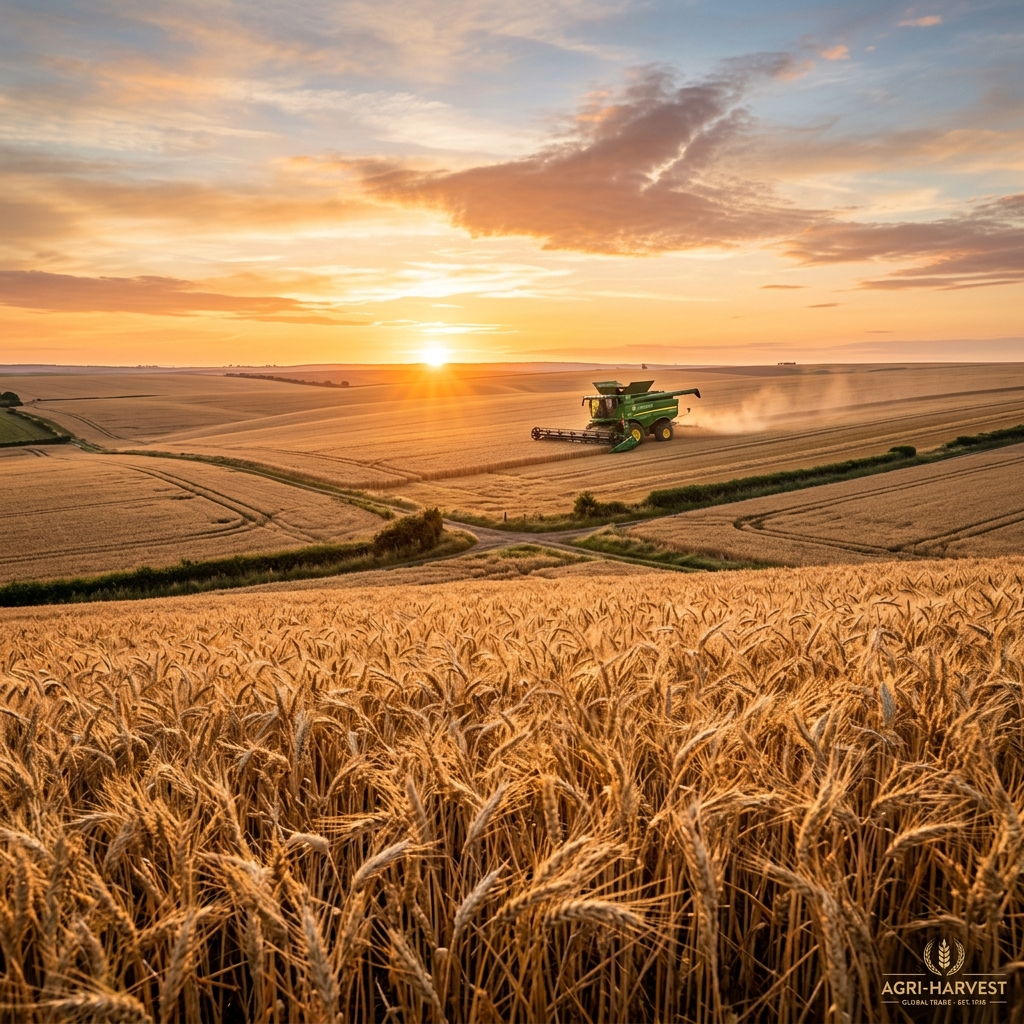
Sugar Beet (Pancar Şekeri) Technical Specification
Last updated:
Executive Summary
Sugar Beet (Pancar Şekeri) is the primary raw material for sugar production in Turkey and Europe. Unlike cane sugar derived from sugarcane, beet sugar comes from the taproot of the Beta vulgaris plant. The Turkish sugar industry operates an integrated system where sugar factories process locally grown sugar beets into refined sugar, molasses, and animal feed byproducts. Turkey's sugar beet cultivation covers approximately 300,000 hectares across central and eastern Anatolia, with major production zones in Konya, Kayseri, Sivas, and Malatya. The technical specification for sugar beet encompasses strict quality parameters including sucrose content (16-22%), impurities, soil contamination, root health, and storage stability. This document provides comprehensive technical details covering cultivation requirements, harvesting protocols, transportation and storage specifications, factory processing parameters, quality testing methodologies, compliance standards (TS 11871 for sugar beet and TS 256 for sugar), and logistical considerations for both domestic and export markets. Send the product form and the volume you need and we will quote beet sugar and its co-products with the analysis attached: request a quote.
1. Botanical and Agricultural Specifications
1.1 Botanical Classification
Scientific Name: Beta vulgaris subsp. vulgaris (Sugar Beet variant)
Family: Amaranthaceae (formerly Chenopodiaceae)
Growth Cycle: Biennial (cultivated as annual for sugar production)
Root Structure: Taproot with conical or cylindrical shape, white or pale yellow flesh
Foliage: Rosette formation with petioles and leaf blades
1.2 Cultivation Requirements
Climate Conditions:
- Temperature: 15-25°C optimal for root development
- Cold tolerance: Germination at 5°C, young plants tolerate -5°C brief exposure
- Frost sensitivity: Mature roots tolerate -5°C for short periods but prolonged freezing damages quality
- Sunlight requirement: Full sun, minimum 8 hours daily for optimal photosynthesis
- Growing season: 180-220 days from planting to harvest
- Soil type: Loam to sandy loam, well-drained soils preferred
- pH range: 6.0-7.5 optimal
- Soil depth: Minimum 40 cm for proper root development
- Organic matter: 2-4% ideal
- Water holding capacity: Moderate, with good drainage essential
| Parameter | Minimum | Optimal | Maximum |
|---|---|---|---|
| pH | 5.5 | 6.5-7.0 | 8.0 |
| Organic Matter | 1.5% | 3.0% | - |
| N (kg/ha) | 80 | 120-150 | 180 |
| P2O5 (kg/ha) | 40 | 60-80 | 100 |
| K2O (kg/ha) | 60 | 100-120 | 150 |
1.3 Cultivation Practices
Seed Quality Standards:
- Purity: ≥98%
- Germination: ≥90%
- Moisture: 8-10%
- Seed size: Uniform颗粒 (1.8-2.2 mm diameter for pelleted seed)
- Treatment: Fungicide and insecticide protection mandatory
- Planting depth: 3-4 cm
- Row spacing: 45-50 cm
- Seed rate: 15-20 kg/ha for pelleted seed
- Optimal planting date: March 15 - April 30 (spring planting)
- Plant population: 60,000-70,000 plants/ha
- Total seasonal water: 400-600 mm
- Critical periods: Germination (first 2 weeks), root expansion (July-August)
- Irrigation method: Drip or center pivot preferred
- Avoid over-irrigation during final 30 days before harvest
- Maturity indicator: Leaf yellowing and drooping, root diameter ≥6 cm
- Optimal harvest period: October 1 - November 15
- Soil temperature at harvest: 5-10°C (prevents freeze damage)
- Must be harvested before soil freezing to prevent quality deterioration
2. Harvesting and Post-Harvest Handling
2.1 Harvesting Equipment and Methods
Mechanized Harvesting:
- Equipment: Single-row or double-row beet harvesters
- Machine types: Kverneland, Ropa, John Deere, CLAAS models
- Harvesting depth: 8-12 cm below soil surface
- Loss rate: Maximum 3% acceptable
- Field drying: 2-3 days after vine cutting (top removal)
- Harvest timing: Morning hours when soil moisture is optimal
- Speed: 2-4 km/h to minimize root damage
- Cleaning: Root washing at harvest site when feasible
| Parameter | Minimum | Optimal | Maximum |
|---|---|---|---|
| Root weight | 1.5 kg | 2.0-3.0 kg | - |
| Root diameter | 6 cm | 8-12 cm | 15 cm |
| Leaf content | - | - | ≤5% by weight |
| Soil contamination | - | - | ≤1.5% |
2.2 Field to Factory Transport
Transport Containers:
- Bulk trailers: 25-30 MT capacity
- Bags: 1 MT polypropylene bags (less common)
- Containers: 20ft container ≈ 24 MT net
- Maximum delay to factory: 24 hours
- Temperature control: Avoid overheating (ventilated trailers required)
- Stack height: Maximum 3 layers to prevent crushing
- Sucrose loss rate: 0.1-0.3% per 24 hours at 15-20°C
- Respiration heat: Can raise temperature 5-10°C above ambient
- Mold growth: Accelerated above 25°C with high moisture content
2.3 On-Site Storage at Factory
Temporary Storage (1-3 days):
- Open yard: Graded gravel surface, proper drainage
- Covered storage: Ventilated sheds preferred
- Stockpiling: Maximum 2-meter height with proper compaction
- Protection: Cover with plastic sheeting if rain expected
| Temperature | Maximum Storage Duration |
|---|---|
| 0-5°C | 30 days |
| 5-10°C | 14 days |
| 10-15°C | 7 days |
| 15-20°C | 3 days |
| >20°C | 24-48 hours |
Storage Best Practices:
- First-in-first-out (FIFO) rotation mandatory
- Regular temperature monitoring (insert probes into stockpile)
- Moisture management: Keep covered during precipitation
- Pests: Rodent control measures required around storage areas
3. Technical Quality Parameters
3.1 Critical Quality Specifications
Primary Quality Metrics:
| Parameter | Unit | Minimum | Optimal | Maximum | Test Method |
|---|---|---|---|---|---|
| Sucrose Content | % | 14.0 | 16-20 | 22.0 | polarimetry (ICUMSA) |
| P Content | % | - | - | 0.30 | colorimetric |
| Glucose + Fructose | % | - | - | 1.50 | enzymatic |
| Alpha-Amino N | mg/100g | - | - | 40 | formal titration |
| Ash Content | % | - | - | 1.00 | gravimetric |
| Dry Matter | % | 18.0 | 20-24 | 26.0 | oven drying |
Contaminant Limits:
| Contaminant | Unit | Maximum | Detection Method |
|---|---|---|---|
| Soil & Sand | % | 1.5 | washing and sieving |
| Clay Lumps | % | 0.5 | manual separation |
| Foreign Matter | % | 1.0 | visual inspection |
| Mold/Damage | % | 2.0 | visual + laboratory |
| Metal Contaminants | ppm | 10 | XRF or AAS |
3.2 Root Quality Assessment
Visual Inspection Criteria:
- Skin: Smooth, no cracks or excessive lenticels
- Color: White to pale yellow flesh, no reddening
- Shape: Regular conical or cylindrical, minimal branching
- Size: Uniform, 8-12 cm diameter preferred
- Stem: Clean cut, no regrowth
- Grade I (Premium): ≤1% defects, sucrose ≥18%
- Grade II (Standard): ≤3% defects, sucrose ≥16%
- Grade III (Industrial): ≤5% defects, sucrose ≥14%
- Rejection: >5% defects, sucrose <14%, or severe damage
- Mechanical damage (cuts, bruises): From harvesting/handling
- Pest damage (beet fly, weevils): Hollows and tunnels
- Disease damage (cercospora, fusarium): Discoloration, rot
- Frost damage: Water-soaked appearance, soft texture
- Drought stress: Small size, high impurities
3.3 Laboratory Testing Protocol
Standard Testing Per Batch:
- Moisture Content: 105°C oven drying for 4 hours (TS EN ISO 6498)
- Sucrose Content: Polarimetric measurement after filtration (ICUMSA Method GS1/2)
- Ash Content: 550°C muffle furnace (TS EN ISO 2176)
- P Content: Ammonium molybdate colorimetric method (ICUMSA GS2/3)
- AAN (Alpha-Amino N): Formal titration (ICUMSA GS2/28)
- Sugar Impurities: Conductivity ash method (ICUMSA GS3/3)
- Heavy metals (Pb, Cd, As) - AAS or ICP-MS
- Pesticide residues - GC-MS/MS
- Microbiological load - plate count and mold/yeast
- Fiber content - gravimetric method
- Per delivery (each truck): Moisture, sucrose, P, AAN
- Per day (composite sample): Full chemical analysis
- Per harvest season: Heavy metals, pesticides (3 samples)
4. Processing and Refining
4.1 Sugar Factory Processing Line
Factory Capacity Categories:
- Small: 500-1,000 MT/day beet capacity
- Medium: 1,000-2,500 MT/day beet capacity
- Large: 2,500-4,000 MT/day beet capacity
- Ultra-large: >4,000 MT/day beet capacity
- Beets to sugar yield: 16-22% sugar recovery
- Beets to sugar: 5-6 MT beets → 1 MT sugar
- Byproducts: 3 MT pulp + 0.5 MT molasses per MT sugar
- Unloading and conveying system
- Root washing and cutting
- Diffusion and extraction
- Purification and clarification
- Evaporation and crystallization
- Centrifugation and drying
- Packaging and storage
4.2 Processing Parameters
Extraction Diffusion:
- Temperature: 70-75°C
- Time: 45-75 minutes
- Counter-current: 4-7 stages
- Water ratio: 3.0-3.5 parts water per part beet
- Diffusion efficiency: ≥95% sugar extraction
- Lime addition: 1.5-2.5% CaO on beet weight
- CO2 saturation: pH 7.8-8.2 endpoint
- Flocculant: Polyacrylamide (0.5-2.0 ppm)
- Filter aid: Diatomaceous earth
- Juice clarity: ≥85% transmittance at 620 nm
- Number of effects: 3-5 stages
- Temperature: 60-110°C (final effect)
- Pressure: Vacuum 50-80 kPa
- Solid content: 60-65% syrup
- Scale formation: Maximum 2 mm/year
- Vacuum pan pressure: 20-30 kPa
- Boiling temperature: 50-60°C
- Stock solution: 65-70° Brix
- Crystal growth time: 45-90 minutes
- Harvest density: 65-75° Brix
- Spinner basket speed: 1,500-2,500 RPM
- Residual moisture: 2-3% on raw sugar
- Wash water: Clean water spray
- Drying air temperature: 100-120°C
4.3 Factory Quality Control
In-Process Testing:
- Raw juice clarity: Every 30 minutes
- Juice pH: Every hour
- Syrup Brix: Every 15 minutes
- Crystal moisture: Every batch
- Final sugar moisture: Each truck load
| Parameter | Unit | Maximum |
|---|---|---|
| Moisture | % | 0.06 |
| Ash | % | 0.15 |
| Polarization | % | 99.6 |
| Color (ICUMSA) | IU | 45 |
| SO2 | ppm | 10 |
| Insolubles | % | 0.02 |
5. Storage and Transportation
5.1 Raw Sugar Storage
Factory Warehouse Requirements:
- Temperature: 15-25°C, maximum 30°C
- Humidity: ≤65% relative humidity
- Ventilation: Continuous airflow minimum 5 air changes/hour
- Flooring: Epoxy-coated concrete, non-porous
- Pallets: Wooden or plastic, raised 15 cm from floor
- Stack height: Maximum 4-5 layers (2-2.5 MT/m² floor load)
| Packaging | Maximum Storage |
|---|---|
| Bulk bins (silos) | 12 months |
| Paper bags (multi-wall) | 6 months |
| PP/PE woven bags | 12 months |
| Super sacks (FIBCs) | 12 months |
Stock Rotation Protocol:
- FIFO (First-In-First-Out) strictly enforced
- Monthly inventory checks
- Temperature and humidity monitoring with alarms
- Rodent and pest control measures
5. Export Packaging Options
Paper Bags (25 kg net):
- Construction: 3-ply or 4-ply kraft paper
- Lining: Polyethylene liner (minimum 100 micron thickness)
- Seaming: Heat-sealed or stitched closure
- Palletizing: 40 bags per pallet (1 MT), stretch-wrapped
- Pallet dimensions: 1,000 × 1,200 mm or 1,100 × 1,100 mm
- Construction: 100% polypropylene woven fabric
- Lifting: 4-corner loop lifting design
- Liner: Optional PE liner (500-750 micron)
- Safety factor: 5:1 or 6:1
- UV protection: Required for outdoor storage
- Waterproof: Fully sealed when liner used
- 20ft container: 24,000-26,000 kg (net)
- 40ft container: 26,000-28,000 kg (net) - more efficient
- Container type: Dry van with ventilation
- Lining: Paper-lined or plastic-sheeted
- Tare weight: 2,000-2,200 kg (20ft), 3,600-3,800 kg (40ft)
```
20ft Dry Container:
- Internal dimensions: 5,905 × 2,343 × 2,393 mm
- Volume: 33.2 m³
- Max payload: 28,000 kg
- 25 kg bags: 1,120 bags = 28,000 kg
- 1,000 kg FIBCs: 28 units = 28,000 kg (theoretical, practical: 24-26 MT due to weight limits)
5.2 Domestic Transportation (Turkey)
Road Transport:
- Truck types: 20-30 MT capacity bulk trailers
- Distance: Up to 1,000 km (domestic market)
- Time limit: 24-48 hours maximum
- Temperature monitoring: Required for long distances
- Wagon type: Covered hopper wagons
- Capacity: 60-70 MT per wagon
- Major routes: Central Anatolia → Marmara region
- Partner: Turkish State Railways (TCDD)
- Port loading: Mersin, İskenderun, Izmir, Bandirma
- Vessel types: General cargo or bulk carriers
- Containerized: 20ft/40ft dry containers
- Bulk: 10,000-30,000 MT per vessel
- Transit times: Mediterranean: 3-10 days; Black Sea: 1-3 days; Asia: 20-45 days
6. Compliance and Certifications
6.1 Turkish Standards (Mandatory)
TS 11871 - Sugar Beet:
This is the primary standard for raw sugar beet specifications.
- Sucrose content minimum: 14.0%
- P content maximum: 0.30%
- Soil contamination maximum: 1.5%
- Foreign matter maximum: 1.0%
- Defect tolerance: ≤5% for Grade III
Standard for refined sugar products.
- Polarity: ≥99.6% for refined sugar
- Moisture: ≤0.06%
- Ash: ≤0.15%
- Color (ICUMSA): ≤45 IU
- SO2: ≤10 ppm
- Insolubles: ≤0.02%
Quality management system requirement for sugar factories.
TS EN ISO 22000:2018:
Food safety management system for processing facilities.
6.2 International Certifications
HALAL Certification:
- Required for Middle Eastern and Muslim-majority markets
- Process verification: No animal-derived processing aids
- Certification body: HALKON, HALKAR, or international HALAL agencies
- Validity: 1 year, renewable
Environmental management system (increasingly required by exporters).
BRCGS Food Safety:
British Retail Consortium Global Standard (for European market access).
Kosher Certification:
Required for specific markets (Jewish communities, USA).
6.3 Export Documentation
Required Documents:
- Commercial Invoice (3 originals + copies)
- Packing List (2 originals + copies)
- Certificate of Origin (Form A or EUR.1)
- Phytosanitary Certificate (for raw agricultural products)
- Quality Certificate (laboratory test results)
- Weight Certificate (mill scale or container weight)
- BL/Air Waybill (transport document)
- HALAL Certificate (if required)
- Safety Data Sheet (SDS) for sugar
- Pre-shipment inspection: 3-5 days before loading
- Document preparation: 1-2 days after loading
- Customs clearance: 1-3 days
- Total: Minimum 5-7 days lead time for export shipments
7. Market and Pricing
7.1 Turkish Sugar Beet Market
Production Statistics (2024):
- Cultivated area: ~300,000 hectares
- Number of factories: 15 major sugar factories
- Total production: ~3.5-4.0 million MT sugar equivalent
- Yield: 50-70 MT beet/ha
- Recovery rate: 16-18% sugar from beet
- Konya Plain: 60,000-70,000 hectares
- Kayseri Region: 40,000-50,000 hectares
- Sivas Region: 30,000-40,000 hectares
- Malatya Region: 25,000-35,000 hectares
- Eskişehir-Çankırı: 20,000-30,000 hectares
- Total designed capacity: 4,500-5,000 MT/day beet
- Operating capacity: 70-85% utilization
- Peak season capacity: 3,500-4,000 MT/day effective
7.2 Pricing Structure
Beet Purchase Prices (2024/2025 Season):
The Turkish Sugar Institution (TSİ) sets official purchase prices quarterly.
| Sucrose Content | Price (TRY/ton) | Price (USD/ton)* |
|---|---|---|
| 14-15% | 1,800-2,000 | 55-60 |
| 16-17% | 2,100-2,300 | 65-70 |
| 18-19% | 2,400-2,600 | 75-80 |
| 20-21% | 2,700-2,900 | 85-90 |
| >22% | 3,000+ | 95+ |
*Approximate exchange rate: 32.5 TRY/USD (subject to market fluctuations)
Contract Pricing Mechanisms:
- Base price: Set by TSI quarterly
- Quality bonus: Additional payment for sucrose >16%
- Penalty deductions: For P content >0.25%, soil >1.0%
- Payment terms: 30-60 days after delivery
7.3 Export Pricing
FOB Pricing Reference:
| Grade | FOB Mediterranean (USD/MT) | Notes |
|---|---|---|
| Refined White Sugar | 480-520 | ICUMSA ≤45 |
| Raw Sugar | 450-490 | ICUMSA ≤150 |
| Powdered Sugar | 520-560 | ICUMSA ≤25 |
Price Influencing Factors:
- Global sugar prices (ICE Futures)
- Exchange rates (USD/TRY, EUR/USD)
- Logistics costs (freight, port charges)
- Demand-supply balance (global and regional)
- Government policies (export taxes, quotas)
- Weather conditions (affecting production forecasts)
8. Frequently Asked Questions
What is the difference between TS1 and TS2 sugar beet specifications?
TS1 (Premium Grade):
- Sucrose content: ≥18%
- P content: ≤0.25%
- Soil contamination: ≤1.0%
- Defect tolerance: ≤1%
- Purity: ≥98%
- Used for: Premium sugar production, premium contracts
- Sucrose content: ≥16%
- P content: ≤0.30%
- Soil contamination: ≤1.5%
- Defect tolerance: ≤3%
- Purity: ≥95%
- Used for: Standard commercial sugar, industrial use
How is sugar beet quality assessed at factory receiving?
Receiving Inspection Process:
- Weight verification (truck scale)
- Visual inspection (sample taken from each truck)
- Rapid sucrose test (portable polarimeter)
- Moisture analysis (quick moisture meter)
- P content testing (laboratory batch analysis)
- If parameters within limits: Weighted and processed
- If contaminants detected: Penalty deductions applied
- If severely contaminated: Truck may be rejected
What causes sucrose loss during storage?
Primary Causes of Sucrose Degradation:
- Respiration: Live beet roots continue respiring, consuming sucrose
- Microbial Activity: Yeast and bacteria metabolize sugars
- Enzymatic Activity: Invertase enzymes break down sucrose to glucose + fructose
- Temperature: Higher temperatures accelerate all degradation processes
- Moisture: High moisture content promotes microbial growth
- Rapid processing (within 24-48 hours)
- Temperature control (cool storage)
- Proper ventilation
- Avoid mechanical damage (bruising increases degradation)
- Remove soil contamination (soil contains microbes)
What is the optimal harvesting moisture content?
Harvest Timing Based on Moisture:
- Root moisture: 75-80% (80-85% fresh weight)
- Soil moisture: 40-60% (not too wet, not too dry)
- Weather: Dry conditions preferred for harvest
- Lower sucrose content (not fully matured)
- Higher moisture → more weight to transport
- Increased susceptibility to disease
- Frost damage (reduces quality)
- Root lodging (roots fall over, difficult to harvest)
- Increased sugar loss during storage
- Weather delays
How does P content affect sugar processing?
P (Phosphorus) Impact on Refining:
- High P content: Causes foaming in diffusion and evaporation
- P combines with calcium to form insoluble phosphates
- Phosphates scale heat exchange surfaces
- Reduces heat transfer efficiency
- Increases chemical consumption (lime, flocculants)
- P ≤ 0.20%: Excellent, no processing issues
- P ≤ 0.25%: Good, minor adjustments needed
- P ≤ 0.30%: Acceptable with monitoring
- P > 0.30%: Penalty deductions, potential rejection
What are the major pests and diseases affecting sugar beet?
Major Pests:
- Beet Fly (Pegomya hyoscyami): Larvae tunnel into leaves, cause "leaf Miner"
- Beet Cyst Nematode (Heterodera schachtii): Root damage, reduced uptake
- Aphids: Virus transmission (beet yellows virus)
- Wireworms: Root feeding damage
- Cercospora Leaf Spot (Cercospora beticola): Leaf spots, reduced photosynthesis
- Rhizoctonia Root Rot (Rhizoctonia solani): Root decay, dark lesions
- Fusarium Wilt (Fusarium oxysporum): Vascular disease, plant death
- Beet Yellow Vein Mask (BYVM): Virus disease, yellowing
- Resistant varieties (Rz genes for nematodes)
- Crop rotation (3-4 years minimum)
- Fungicide/insecticide applications
- Sanitation (remove volunteer plants)
- Proper field drainage
Can sugar beet be stored over winter?
Winter Storage Possibility:
Yes, but with significant caveats:
Conditions Required:
- Soil temperature: Consistently below 5°C (ideally 0-3°C)
- Snow cover: Protective insulation (15-20 cm minimum)
- Drainage: Excellent, no standing water
- Root health: Undamaged, disease-free
- In-field storage: Leave in ground, top with straw/snow
- Clamp storage: Pile on prepared area, cover with plastic and straw
- Silos: Climate-controlled storage (expensive)
Even under optimal conditions, expect 2-4% sucrose loss over winter.
- Spring-harvested beets: Lower quality, higher impurities
- Recommended: Harvest before freezing, process immediately
What is the difference between sugar beet and feed beet?
Sugar Beet vs Feed Beet (Mangel Wurzel):
| Characteristic | Sugar Beet | Feed Beet |
|---|---|---|
| Purpose | Sugar production | Animal feed |
| Sucrose content | 16-22% | 8-12% |
| Root shape | Conical, uniform | Irregular, variable |
| Skin thickness | Thin, smooth | Thick, rough |
| Fiber content | Low (1-2%) | High (4-6%) |
| Moisture | 75-80% | 80-85% |
| Yield | 50-70 MT/ha | 80-120 MT/ha |
| Market | Sugar factories | Livestock farms |
Sugar beets are specifically bred for high sucrose content and low fiber, while feed beets prioritize biomass production and hardiness.
9. Technical Appendices
Appendix A: Key Laboratory Test Methods
ICUMSA Methods (International Commission for Uniform Methods of Sugar Analysis):
GS1/2 - Polarity Measurement:
- Principle: Polarimetric determination of sucrose concentration
- Apparatus: Digital polarimeter
- Sample prep: Filtered juice, 200 mm tube
- Temperature: 20°C
- Accuracy: ±0.01°Z
- Principle: Molybdenum blue colorimetric method
- Apparatus: Spectrophotometer at 660 nm
- Sample prep: Ashed sample, digestion with sulfuric acid
- Detection limit: 0.001%
- Principle: Formal titration method
- Apparatus: Automatic titrator
- Sample prep: Defenticated juice
- Measurement: pH endpoint at 8.2
Appendix B: Factory Equipment Specifications
Beet Transport Systems:
- Conveyor belts: 50-100 MT/hour capacity
- Bucket elevators: 80-150 MT/hour
- Screw conveyors: 30-60 MT/hour
- Pneumatic conveying: For powdered materials
- Counter-current diffusion: 4-7 stages
- Extraction efficiency: ≥95%
- Juice yield: 70-75% from beet weight
- Diffusion time: 45-75 minutes
- Multiple effect evaporators: 3-5 effects
- Steam consumption: 0.4-0.6 kg steam/kg water evaporated
- Final syrup concentration: 60-65° Brix
- Spinner centrifuges: 1,500-2,500 RPM
- Separation capacity: 20-50 MT/hour per unit
- Residual moisture: 2-3%
Appendix C: Recommended Testing Schedule
Daily Testing:
- Moisture (raw beet)
- Sucrose (raw beet)
- P content (3 samples/day)
- AAN (2 samples/day)
- Juice clarity (every 30 minutes during operation)
- Ash content
- Fiber content
- Conductivity ash
- Microbiological (mold/yeast count)
- Heavy metals (Pb, Cd, As)
- Pesticide residues
- Fatty acid profile (for oil content)
- Full contaminant screening
- Equipment calibration verification
- Laboratory proficiency testing
Appendix D: Troubleshooting Guide
Low Sucrose Recovery:
- Check beet quality (low sucrose content)
- Verify diffusion parameters (temperature, time, water ratio)
- Inspect cutter condition (fibrous beets cause issues)
- Review juice purification (losses in clarification)
- Check evaporation efficiency (sugar degradation)
- Verify centrifuge settings (speed, feed rate)
- Check dryer temperature and airflow
- Review packaging conditions (humidity)
- Inspect storage facilities
- Check P content (high P causes foaming)
- Review defoamer addition rates
- Inspect diffusion parameters
- Verify juice purity (impurities increase foaming)
- Check juice pH (incorrect pH causes precipitation)
- Review lime addition
- Verify CO2 saturation endpoint
- Implement cleaning schedule (CIP)
FAQ
What is the typical MOQ for this commodity?
Bulk contracts usually start from one vessel or container lot. Exact MOQ depends on product, packing, and destination — send an RFQ for a firm number.
How is quality verified before shipment?
We supply batch COA documents and can arrange SGS/Intertek inspection at the loading port as specified in the SPA.
Which Incoterms do you offer?
FOB, CIF, CFR, and DAP are standard. The right term depends on your logistics capability and risk preference.
Are prices fixed or market-based?
Prices are market-based and benchmarked to relevant indices. Current quotes are issued via RFQ — we do not publish fixed standing prices.
Can you support private label or destination packing?
Where the product allows, yes — packing format, labels, and lot documentation can be aligned to your market requirements.
For project-specific terms, contact WorldwideTradeX via RFQ.